Ernesto Lujan
Fictional. Generated by AI — not a real person, and no likeness of one is intended.
53, florist in Western Kansas · rolled by @colby.marchetti · card — no film
History
who has worn him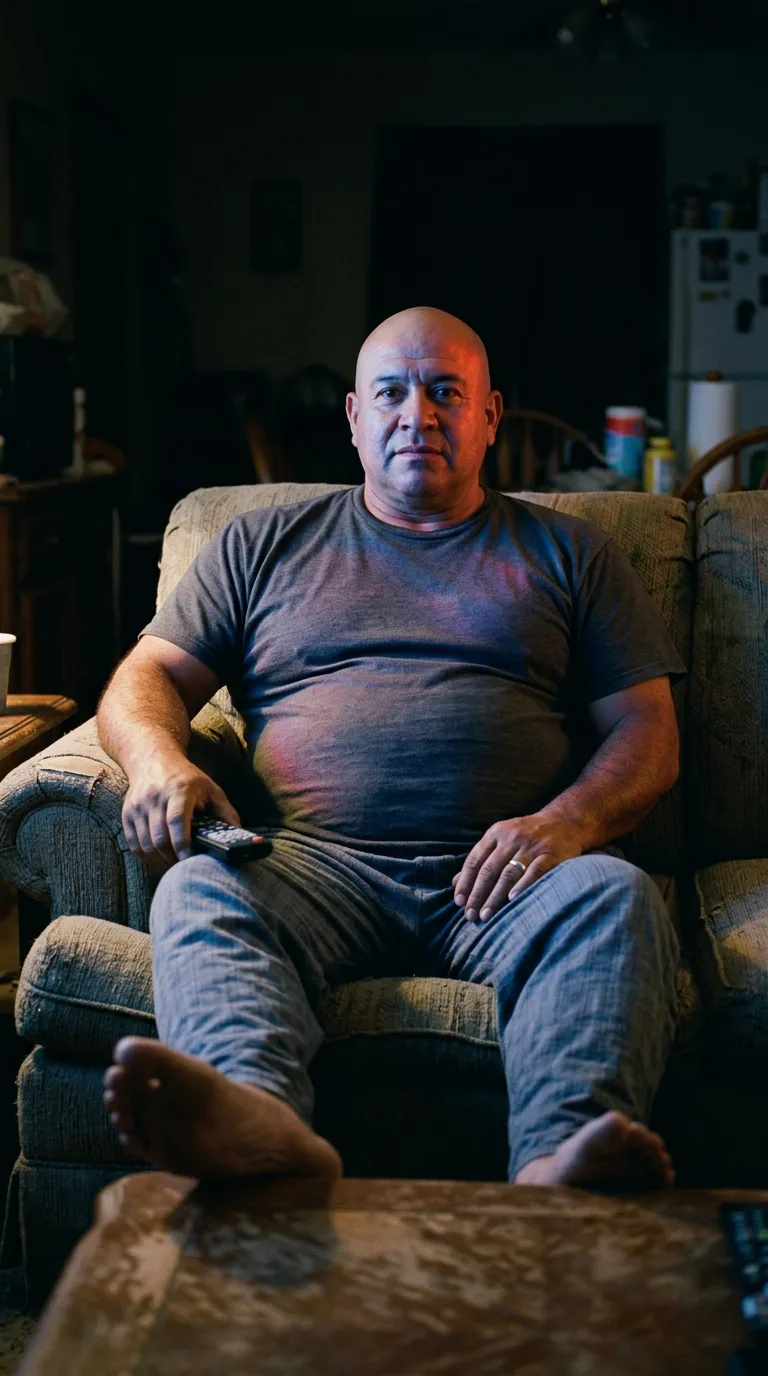
Rarest thing about him: Millionaire — $1M to $3M — rare, 1 in 59
Season 0seed 1018746208 · engine v10
Character card
lineage OZ80W3
His body-swap story
@colby.marchetti, wearing Donald Kaminski, rolled the wheel on and woke up as Ernesto Lujan, spent under a minute in him, then spun the wheel and woke up as Terrence Boykins
Donald Kaminski's kitchen smells like coffee going stale in the pot from last night, and the cold coming up through the linoleum bites at feet that aren't sore yet, that are only fifty-seven years old and still deciding whether to complain. You are standing at his counter at six in the morning with his laptop open, the mine schedule pinned to the fridge behind you, and you already know you are not staying. It isn't that Donald is bad. Donald is fine. Donald has a nose that healed a little crooked and a wife two towns over who calls him "hon" on the phone in a voice you have learned to like the sound of. But less than a minute ago you were sitting in his recliner deciding this, and a minute is not enough time to want to keep anything. That is the whole shape of it, twenty-six times now: the wanting runs out fast, and underneath the wanting is another want, the only one that never runs out, which is to know what else there is. You open the site. The wheel is already spinning by the time you've finished the thought.
The couch tips under new weight that is somehow the same weight — heavier through the gut, older in the knees, a body already sitting the way this room expects a body to sit. The television throws a hard white frame across a dark living room and you are sitting bolt upright in it, spine straight, both feet suddenly flat on a floor that a second ago, in someone else's kitchen, was cold linoleum and is now warm carpet in the dark. A remote is loose in your right hand. Your left hand is doing nothing, resting on your thigh, a ring on it catching the flicker. Something on the screen is supposed to be funny. You do not laugh.
The remote is the first thing that opens, because your thumb is already resting where his thumb rests a hundred times a night, on the volume rocker worn pale by no one but him, and it comes back all at once — the couch, the shows he doesn't even like anymore but watches anyway because Marisol goes to bed at nine and the house gets too quiet otherwise, and quiet at his age with three kids raised and mostly gone is its own kind of animal. He is Ernesto Lujan. The name arrives with the shirt against your back, which is not a shirt at all right now, just an old gray T-shirt gone soft at the collar, but the green chambray one hanging on the hook by the shop door gives you more the instant you think of it — sleeves rolled twice, the left cuff always a little greener than the right because he favors his left hand pulling stems through the thorn-stripper. Thirty years of it. He opened Lujan's Floral the year his oldest was born, in a storefront that used to sell tractor parts, and he remembers standing at the wet bench that first morning not knowing a peony from a cabbage, learning it wrong for a year before he learned it right.
The wedding band is warm from his own hand's blood before it was yours, and touching it — you're not touching it, it's just there, snug the way it's been snug for twenty-eight years — gives you the wedding itself, Marisol in her sister's altered dress because money was thin that August, dancing badly in the VFW hall to a band that only knew four songs. It gives you the three kids, then a fourth memory that surprises you, a fourth kid who didn't make it past two years old, a grief so old it has gone soft and gray like the shirt, tucked somewhere he doesn't visit on purpose. It gives you money that came later and easier than either of them expected — flowers for weddings all over three counties, then a second shop, then land that turned out to sit on something worth more than wheat — money enough now that he could stop, and does not, because his hands don't know what else to do at six in the morning.
His back throbs where it always throbs, low and to the left, from three decades bent over buckets, and his knees have their own opinion about the couch cushions. His fingers, doing nothing now, want to drum against the remote — they do it without him, an old rhythm with no song attached anymore. Outside this window, though he can't see it from the couch, wheat stubble is lying cut and pale under a sky that this afternoon stacked a thunderhead the color of a bruise, and the light went the yellow-green color that makes farmers nervous, and it means nothing to a florist except that the shop's cooler compressor has been making a noise he keeps meaning to call somebody about. It's the middle of the night now. He should be asleep beside Marisol. He isn't, because some nights the quiet house is worse than the wrong hours, and nobody in this house is awake to ask him why.
You look down at the hand with the ring on it, turn it over in the blue light of the screen, thick fingers, calluses gone soft in places they used to be hard, a life's grip resting in an unfamiliar palm that is, for now, the only palm you have.
"Hijo," you say to no one, quiet, testing the shape of his own voice in your mouth, "since when do I not laugh at this part," and you do not know yet if you will be here to find out why it stopped being funny.