Terrence Boyd
Fictional. Generated by AI — not a real person, and no likeness of one is intended.
28, teacher in Los Angeles · rolled by @anthony.dcosta · card — no film
History
who has worn him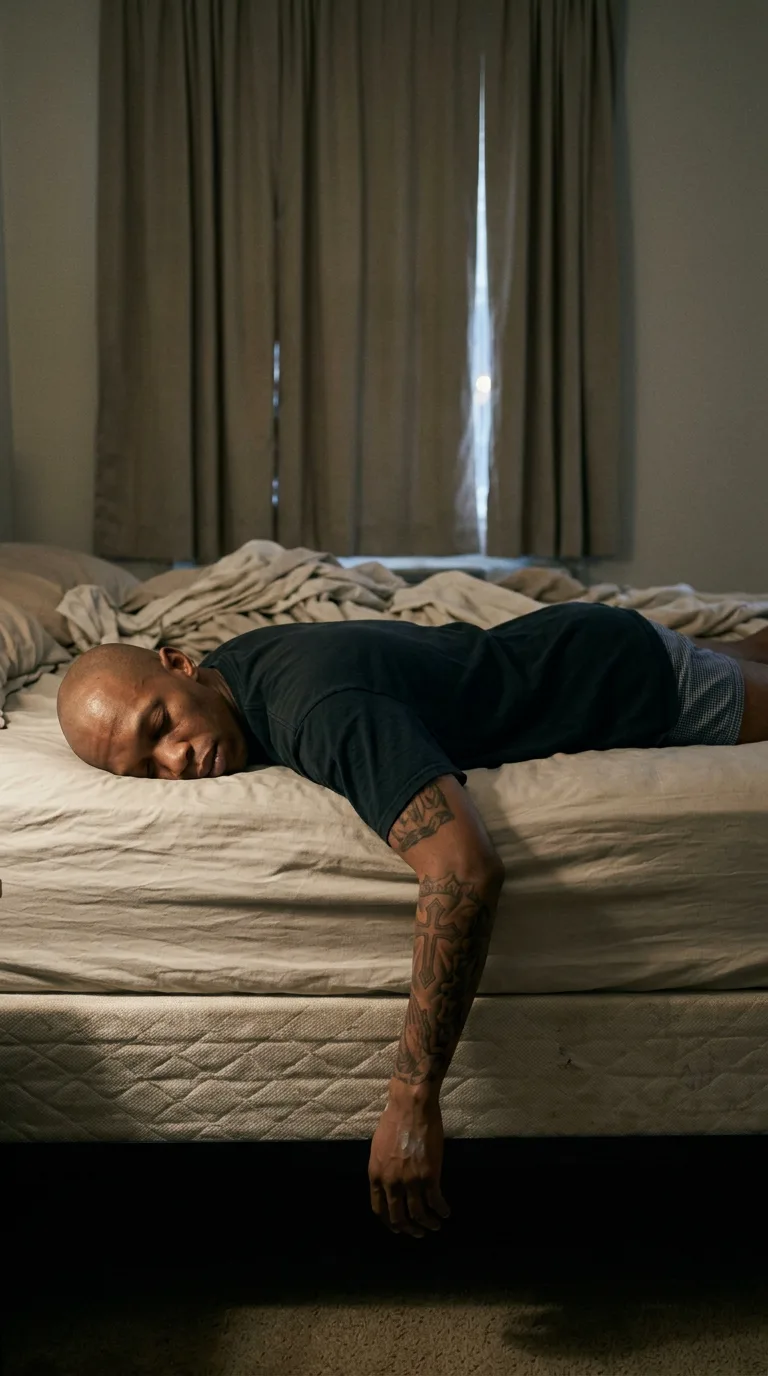
Rarest thing about him: Buddhist — epic, 1 in 63
Season 0seed 1838612498 · engine v10
Character card
lineage 10Z9BP
His body-swap story
@anthony.dcosta, wearing Danilo Reyes, rolled the wheel on and woke up as Terrence Boyd, spent under a minute in him, then spun the wheel and woke up as Anthony Dcosta
You are standing in Danilo Reyes's kitchen holding Danilo Reyes's key ring, and it is not enough. Three minutes ago you paid for this — the light brown hair, the average shoulders, the little apartment smelling of gun oil and cheap coffee — and already the fit of him has gone thin, like a shirt you tried on in a store mirror and immediately regretted. His memories rise when your fingers close on the keys: a locksmith's van idling on Flatbush, a woman's voice through an intercom, decades of small competent hours picking the same ten locks over and over. It is a whole life and it is nothing. You did not spin the wheel to stand in someone's nothing. You feel his hand — your hand, for these three minutes — already itching toward the site again, the way a tongue finds a sore tooth. You do not decide so much as notice that you have already decided, the way you always do. The wheel is still open in the other window. You spin it.
The bed comes up under you before you understand you have a body again. Sheets, cool and damp with someone else's sleep-sweat, a mattress with a soft crater worn into it, an arm that was hanging off the edge now folding up on its own, unasked, and pulling itself to a stranger's chest. Breath goes from a ragged catch to something slow and deliberate in the space of one inhale. You are on your back. You were not on your back a second ago — he never sleeps this way, some deep unspoken rule of his body knows that even before you do — and the wrongness of the posture is the first thing that is yours and not his: a small, silent, correctable thing, and you correct nothing, because you are not him, you are only wearing where he stopped.
The room comes in through the skin before it comes in through the eyes. Sheets against your back — cheap cotton, softened by a hundred washes — and that alone gives you a flash: laundry night, a shared machine three courtyards over, quarters lined up on the lid like a countdown. The gap in the curtains lets in a blade of streetlight that has no business being streetlight at this hour, and some part of you that is starting to be him supplies the truth without needing to be told outright — that he keeps these hours because the after-school program runs late, because grading never happens before midnight, because a man who stands in front of twenty-eight kids all day comes home and the silence of his own apartment is the loudest thing he owns.
Your palm finds the sheet again, and there it is — a whole morning, sleeve by sleeve. Him at the closet an eternity ago it feels like, pulling the pale blue oxford off its hanger, working the buttons up from the waist with the practiced blindness of a hundred identical mornings, cuffs rolled twice because rolled cuffs read as put-together without reading as trying. The lanyard over his head, laminated card knocking his sternum, a small dumb comfort like a rosary. Belt notched to the hole that means the year has been a little heavier than the year before, chinos already carrying a fleck of dried paint from some mural unit he ran with his sixth-graders, because the school doesn't replace clothes and he never thought to buy pants just for painting.
The sleeve tattoo comes up warm under your own touch even lying still — cross, praying hands, ink laid into him one long afternoon in a chair on Crenshaw when he was twenty-two and trying to put something permanent where his grandmother's church had been before he stopped going. He hasn't set foot in a pew in years. He sits some mornings now instead, cross-legged on a cushion that cost more than it looked like it should, doing something quieter with the same hunger. Nobody at school knows that. Nobody at school knows the half of him — not the two years he doesn't talk about, not why he doesn't drink anymore, not that the gap in his teeth used to make him hate photographs until a woman he doesn't think about anymore told him she liked it, and then she was gone and the liking stayed.
The body itself announces its own weather: a soft give at the middle that thirty push-ups a night hasn't touched, shoulders a little rounded from bending down to desk height forty times a day, a low familiar ache behind one knee from a pickup game two Sundays back that he told no one about because there was no one to tell. The hands know things without him supervising them — how to hold a piece of chalk at the exact angle that doesn't squeal, how to fold a note in thirds one-handed while still talking, and when the hands have nothing to do at all, how to crack the knuckles one by one, left then right, an old tic with no memory attached to it, just a thing they do.
You lie there a moment longer in his stillness, hands folded at your chest like something laid out for viewing, and you notice how much room there is in a man like this — not empty, exactly. Just quiet. Just unclaimed by anyone in particular, the way a Friday morning apartment is unclaimed, the way scraping by is unclaimed, waiting on someone, anyone, to want it.
You bring the right hand up in front of your face and turn it over, and the ink moves with it, cross and praying hands catching the last of the streetlight through the curtain gap. You flex the fingers. You crack two knuckles without meaning to, the body doing it before you decide to let it.
"Okay," you say, to the empty room, in a voice with a gap in the front teeth shaping it. "Okay."