Terrance Boykins
Fictional. Generated by AI — not a real person, and no likeness of one is intended.
22, trucker in San Francisco · rolled by @colin.hasbrook · card — no film
History
who has worn him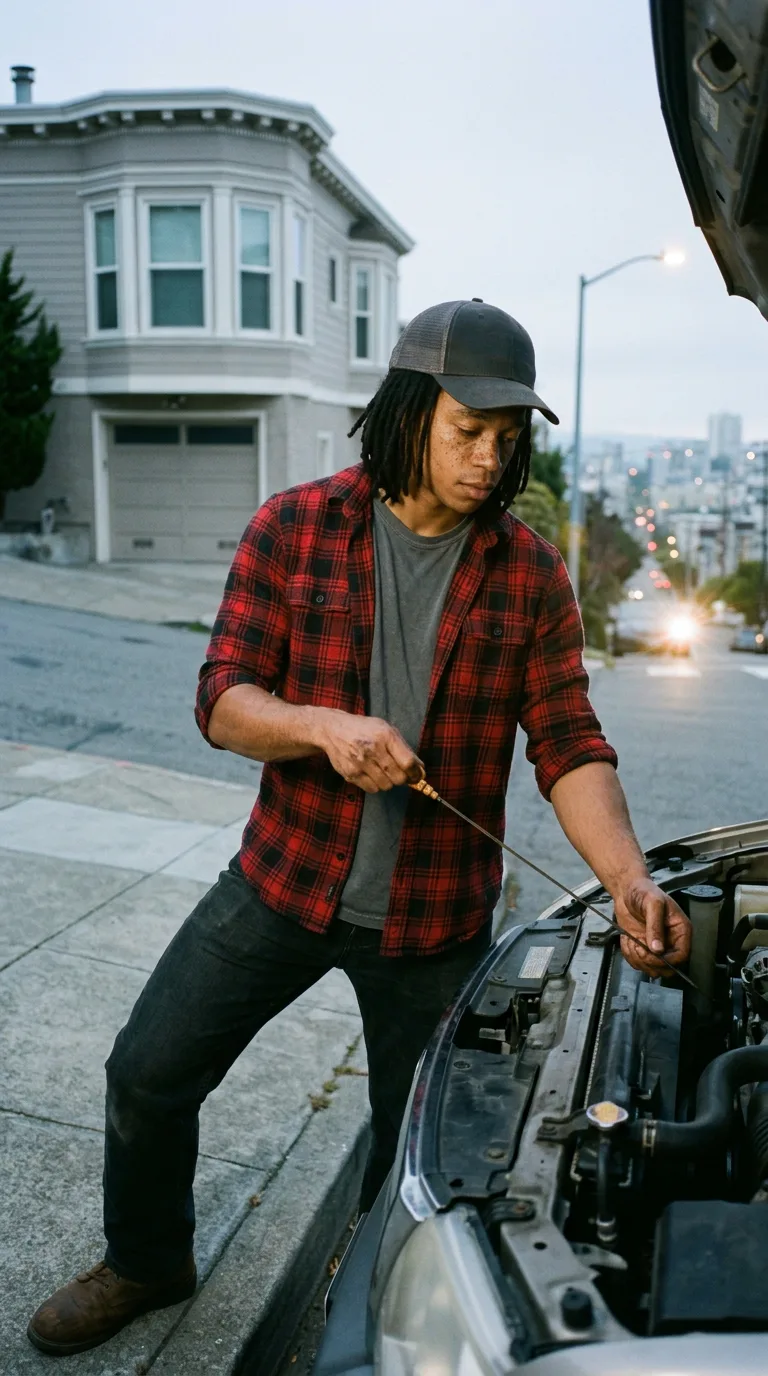
Rarest thing about him: High blood pressure — rare, 1 in 29
Season 0seed 824360909 · engine v10
Character card
lineage 2NZHHJ
His body-swap story
@colin.hasbrook, wearing Dennis Okabe, rolled the wheel on and woke up as Terrance Boykins, spent under a minute in him, then spun the wheel and woke up as Marco Villareal
Dennis Okabe's knees don't want to bend anymore, not the way this job needs them to. You've been him forty seconds — the mop bucket still rocking on its casters, the fluorescent tube overhead doing that dying flicker it's done for three shifts running, and the smell of pine cleaner so deep in this body's memory that it's not even a smell anymore, it's just Tuesday. He is 44 and standing in a break room in Nashville doing math nobody asked him to do: how many more years of this hallway, this bucket, this knee. You didn't come back into him to feel that. You came back because you felt it, and because the boredom under it has a texture now, a specific gray, and because somewhere in the building a supervisor half your real age called you "chief" this morning like it was funny. You set the mop against the wall. You are already gone before your hand leaves the handle.
The wheel doesn't ask if you're sure. It never has, three hundred and thirty-five times before this one, and it doesn't now — there's just the drop, no fall to it, just the world swapping under you like a cut in a film, and you are bent at the waist over an open engine bay with a dipstick in your fingers and the last of Nashville's break-room light gone to Pacific gray-blue instead.
The body catches itself before you do. That's the strange part, every time — muscle keeps its manners for a beat after the man who taught it manners is gone. Your — his — hand finishes the motion, wipes the dipstick on a rag that's already black with a hundred wipings, slides it back into the tube, pulls it again. Checks it against light that isn't really light yet, just morning deciding whether to commit. You do this once wrong, some fumble your hands don't recognize as fumbling, and then you do it again slow, and again, and nine more times after that, each one deliberate as a man defusing something, because you don't yet know this dipstick, this engine, this height you're standing at, which is six inches shorter than the one you left.
Then the shirt tells you. Red flannel, unbuttoned over a gray tee, and the second your borrowed shoulders settle into it a whole morning comes up at once, warm, half-lit: him pulling it on in the under-house garage forty minutes ago, sleeve by sleeve, the fabric soft in a way that means it's been washed until it stopped being new, and the particular give of the collar where his neck has stretched it over two years of wearing this exact shirt on cold mornings before a run. Terrance. The name arrives with the shirt, plain as a tag. Terrance Boykins, twenty-two, and this garage under the bay window is his, rented cheap from a landlord who never fixed the driveway, and the driveway is steep enough that he always sets the parking brake twice, out of a fear that isn't really about the truck.
The cap comes next, through his own hand resting on the brim without thinking — and with it, his mother's voice, low, from a kitchen that smelled like Sunday even on a Tuesday, telling him freckles come from her side and don't let anybody tell him different. Church clothes hung on a door that used to be his door, in a house he doesn't live in anymore. He believes something, still, in the specific tired way of a man who hasn't been to service in months but still says the grace his grandmother taught him before a truck-stop breakfast, mouthing it if nobody's looking.
The dipstick's oily weight in his fingers gives you the rig itself — eleven years of highway, the CB he talks to nobody on anymore because everyone he liked on it retired or died, the log book with hours he's fudged twice, ever, and regretted both times. His hands know torque before his mind does; they know which bolt on this specific engine strips if you're not gentle, know it the way you know a person's temper. Calluses along the palm heel, a burn scar he doesn't have because you don't get to give him one — just weather, just wear, just twenty-two years of being outside more than in.
And a girl. Not this second — a whole run of seconds, evenings, her laugh through a phone speaker propped against a gas pump, the way she texts him a photo of nothing, a bird on a wire, just to say she's thinking about him while he's three states out. Warm, uncomplicated, going somewhere. And behind that, further back, another one — the one he still turns his head for if her name comes up, the one who left for Sacramento and a nursing program and didn't ask him to follow, and he didn't, and some nights on the road that not-asking sits in the cab with him like a third passenger. High blood pressure runs quiet under all of it, a doctor's voice once telling him to watch his salt, cut back, and him nodding and not really changing anything, because he's twenty-two and feels made of rope and second wind.
The engine breathes up at you, warm, faintly of gasoline, and the whole street behind you is doing its slow gray wake-up — a car's headlights swinging up the block, somebody's kitchen light coming on in the bay-windowed house above this driveway. Your hands — his hands, dark-knuckled, sure — are still holding the dipstick like it might tell you something new.
You pull it free, look at it without reading it, and then you look at your own palm instead, turning it in the half-light like you're checking it for something that isn't there.
"Damn," you say, to no one, low, almost fond. "Didn't know I missed being this young."