Samir Haddad
Fictional. Generated by AI — not a real person, and no likeness of one is intended.
40, soldier in Dallas · rolled by @marco.villagrana · card — no film
History
who has worn him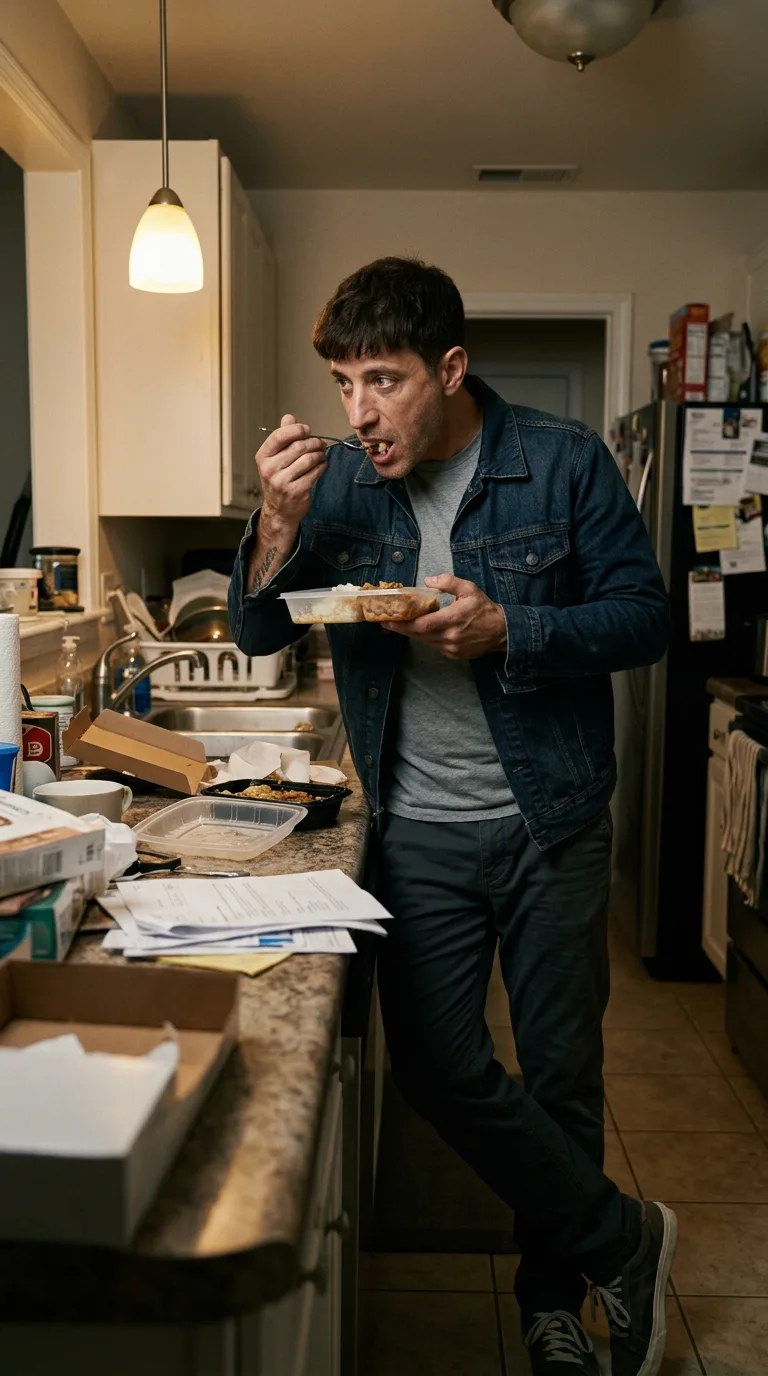
Rarest thing about him: Bisexual — epic, 1 in 29
Season 0seed 1680954341 · engine v10
Character card
lineage LJL8SV
His body-swap story
@marco.villagrana, wearing Julián Reyes, rolled the wheel on and woke up as Samir Haddad, spent 4 minutes in him, then spun the wheel and woke up as Vincent Paladino
—
The mop bucket has a wheel that sticks, and you have been fighting it for the length of a Sunday afternoon that belongs to Julián Reyes, not to you, not really, not anymore than any of the others belonged to you once you'd worn them a while. Three hours and twenty-three minutes is enough time to learn a body's complaints — the beauty mark you keep catching in mirrors like it's a smudge, the skinny wrists that ache from wringing mop heads, the hazel eyes that are, annoyingly, not so different from what you're about to trade them for. It isn't boredom exactly. It's that this apartment smells like bleach and someone else's cigarettes from two tenants ago, and Julián's shift ends in forty minutes into a life you already know the shape of: sore feet, a check that won't stretch, a mother who calls and asks why he still hasn't finished school. There's nothing wrong with it. That's almost the whole problem. You want weight in your arms. You want tired that comes from something you chose. You go back to the site with mop water still cooling around your ankles.
The wheel spins. It always feels like a held breath deciding to let go.
The fork is halfway to your mouth and then it is not your mouth, not the mouth you had, and the light in the room is a kitchen light, warm and low over a counter cluttered with takeout containers and bills gone soft at the corners. The fork comes down on its own, set on the counter like someone else's hand did it out of habit. A coat — canvas, heavy at the shoulders — slides off and drops onto a chair. You sit. You eat the rest of the container in even mouthfuls, methodical, unhurried, looking at nothing in the dark window because there is a window there and it has gone black outside and given you your own reflection instead, a face with one eye that won't quite look where the other one does.
It is evening here. It was afternoon where you were. The gap between the two feels like static for a second, and then it stops mattering, because his hands are on the edge of the counter and his hands remember things.
The fork first — its handle, the cheap kind that comes in a drawer nobody bought, and behind it a kitchen at eleven at night, coming off a twelve-hour shift that started before dawn, standing exactly like this because sitting at a table alone felt like something you'd have to explain to yourself. Samir Haddad eats standing up most nights. Has for years. It isn't sad to him, or it wasn't, until somebody once said it was and he couldn't unhear it.
The coat, canvas and cold at the cuffs even inside — that's this morning's memory, coiled into the fabric like it never left: dark still outside the barracks, breath fogging, boots already on before his brain was, the particular ritual of getting dressed for a day that starts before the sun does. He'd sat on the edge of the bunk and laced the boots by feel, not by sight, the way you learn to when four hundred mornings taught your fingers the pattern. Undershirt first, static-clinging in the dry heat of the room. Then the ACU top, the fabric stiff with detergent, sleeves rolled with two efficient turns because rolling them three times looked sloppy and Samir has never once in his adult life looked sloppy on purpose. The dog tags went on last, over his head, the chain catching for half a second on his ear the way it always does, and he'd thought, the way he thinks most mornings without deciding to, of his ex — Daniel, four years gone now, who used to say the tags were cold against his chest when Samir came to bed still wearing them, half-joking, always half not. Samir hasn't stopped thinking about him. He doesn't examine why. It arrives with the tags every single day, the way pain arrives with weather.
The body underneath all of it is forty years used well and hard: shoulders that carry a pack without complaint, calves that know eleven miles before breakfast, and lungs that have to be managed, always, an inhaler in a pocket he checks by muscle memory before he checks anything else. Asthma since he was nine. Nobody in his unit thinks about it because he's made sure nobody has to. His fingers, resting now on the countertop's edge, twitch once, twice — an old tic, drumming out some rhythm that isn't music, that's just what they do when the rest of him has stopped giving them orders. Under your palm, the granite is cool and real and his.
The container is a memory too, plastic and thin, this exact chicken-and-rice thing he buys because it's fast and filling and there's no one to cook for besides himself, hasn't been in a long time, not since the apartment before this one, not since a man who liked to cook and didn't like the Army and eventually didn't like Samir enough to stay for either. Church on the Sundays he isn't too tired, mainline, unremarkable, comforting the way an old coat is comforting. A beer sometimes with the guys, never more than that, never needed more than that. He doesn't smoke. Tried once at nineteen and it made him feel like he was drowning slightly, which, given the asthma, he supposed he technically was.
The window holds his reflection and yours now, layered, and one eye drifts a little outward like it's looking for something the other one already found.
You lift your hand off the counter and turn it over, palm up, then down, watching the calluses catch the light — a stranger's hand, a soldier's hand, rough at the knuckles in a way Julián's never was. You bring your eyes up into the black glass of the window, into your own reflected face, and you hold there.
"Forty-six," you say, out loud, to no one, to the empty kitchen, to whatever in you keeps count.
You don't know yet if that's a low number or a high one tonight.
—