Ryan Hoefling
Fictional. Generated by AI — not a real person, and no likeness of one is intended.
35, nurse in San Francisco · rolled by @tyler.iverson · card — no film
History
who has worn him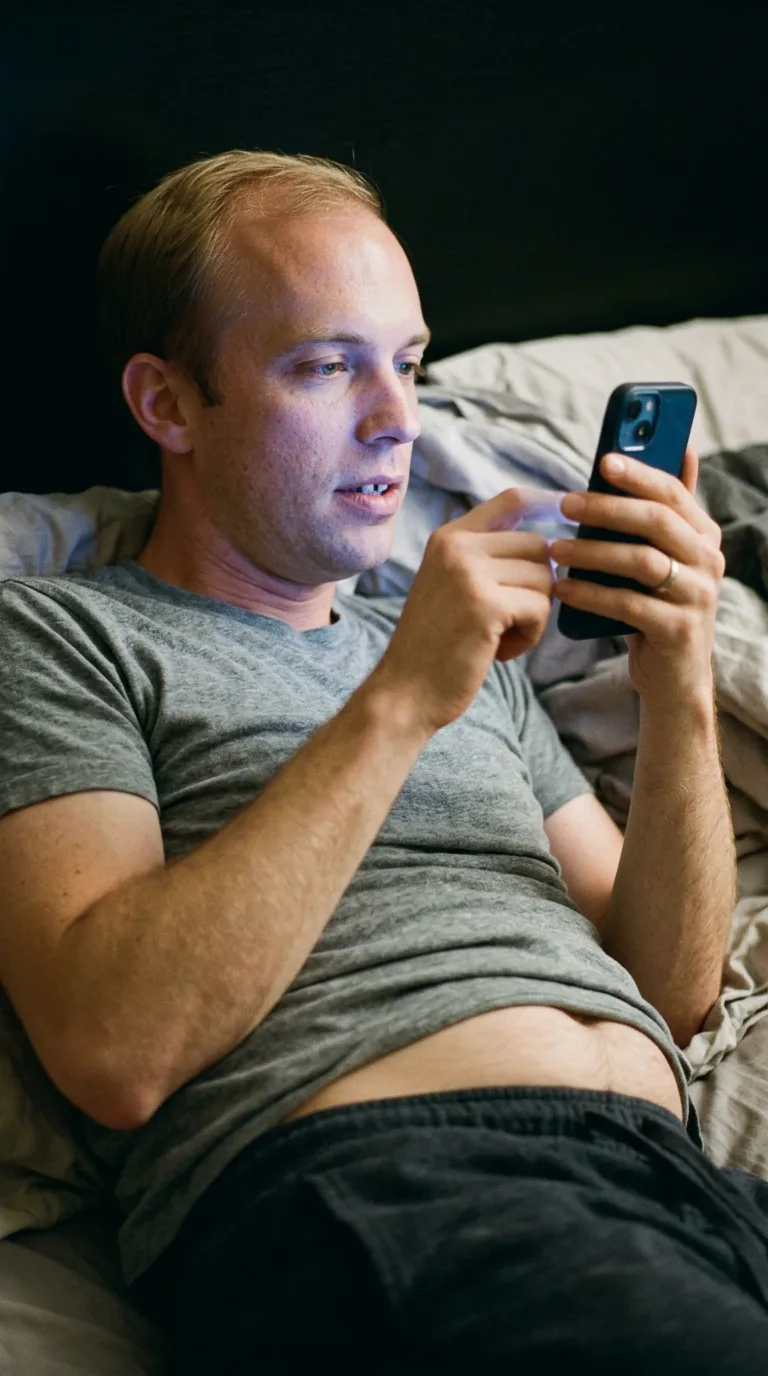
Rarest thing about him: A gap between the front teeth — rare, 1 in 24
Season 0seed 245306334 · engine v10
Character card
lineage 9IC4OB
His body-swap story
@tyler.iverson, wearing Fadi Haddad, rolled the wheel on and woke up as Ryan Hoefling
Fadi Haddad's hands smell like river water even here, standing in a kitchen that isn't his, at an hour that isn't his either. Sixty-two years old, gray going silver at the temples, a nose that healed crooked forty years ago. You have been him for two minutes. Two minutes is long enough to know his knees ache on the stairs, that the fridge hums wrong, that somewhere down in the marrow of him there is a boat he loves and a daughter he doesn't call enough. It is not what sent you back tonight.
What sent you back is the boy. Colton. Eighteen, red-haired, a delivery driver in New Orleans, and you wore him a full day and an hour — long enough to eat his mother's red beans, long enough to text his girlfriend back with his own stupid heart still doing the typing even while you drove him, long enough to sit at a break table and listen to a coworker complain, gently, fondly, about a husband. A nurse. Migraines, a gap-toothed smile, a wedding ring he never took off even to sleep. Colton had laughed along. You had laughed along, in his mouth, and something in you had already decided.
You open the site on Fadi's borrowed phone, thumb clumsy in an old man's grip, and the wheel spins the way it always spins, indifferent, and it gives you the exact man you asked it for without asking to be asked.
The scroll keeps going under a thumb that isn't yours yet and then is. Gray-blue light on a cheek that isn't Fadi's weathered brown, on a jaw gone soft, on a mouth with a gap between the front teeth that the camera would love. You are lying on your side in the dark, six inches of glass from your face, and the last thing the old fisherman's body felt is the first thing this one doesn't — no ache in the knees, no river-smell, just a soft low hum behind the eyes that will turn into pain if you let it. The thumb speeds up. Steadies. The feed blurs past, unread.
The shirt is what opens first, because it's what's touching him most — an old gray T-shirt, soft from three hundred washes, and it gives you a Tuesday: pulling it over his head in a locker room that smelled like bleach and old coffee, the fluorescent tube overhead ticking, a coworker two lockers down laughing at something on a phone. Charting. The word arrives whole, unglamorous — a keyboard, a badge on a retractable clip, blue scrubs gone soft at the seams, twelve hours on feet that were never built for it. He likes it and hates it in the same breath, the way you like and hate anything that pays the mortgage on a garage apartment tucked under someone else's bay window, cold concrete, a driveway steep enough to scare visitors.
The ring is next, and it's heavier than it looks. A wedding band, plain, worn smooth on the inside from being twisted in idle moments — a habit, you realize, from the same place as the nail-biting, a tell his wife used to catch across a dinner table and reach over and still his hand with her own. You get her in pieces: her voice more than her face, low and amused, telling him to stop worrying so much, it's just a headache, take the pills. An ex-wife arrives too, unbidden, sharper-edged, a version of him from years back who flinched more, apologized more, before this current quieter marriage sanded some of it down. Two women who both know this mouth, this gap in his teeth, better than you ever will by morning.
The migraine is already starting, a wire pulled tight above his left eye, and you understand without being told that this is the hour it usually comes, after a shift, in the dark, phone-light making it worse and him unable to put the thing down anyway. His thumbnail is chewed to nothing. Not anxious, exactly — just a body doing a thing it does without asking permission, the way this whole hand has apparently done for thirty-five years.
You feel how skinny-fat he is, softness over a frame that used to run and doesn't anymore, five-nine and unhappy about a stomach he catalogs and then forgives himself for, most days. Blond hair still full on top, betrayed at both temples, an M pushed back into his skull that he touches sometimes in mirrors with something between amusement and grief. Straight, married, no kids, no faith, no drink, no smoke — a life assembled out of restraint and comfort, seventy-five to two hundred thousand dollars of it sitting quiet in accounts he doesn't check often enough. Somewhere in there, small and unimportant until now, is Colton's face at a break table, laughing at a story about this exact man's migraines, this exact ring.
The scroll finally stops. The phone lowers an inch, unguided.
You look at your hand — the bitten nails, the band, the softness at the knuckle — and turn it over once, slowly, like checking it's real.
"Okay," you say, to no one, to the dark, to the ceiling of a garage under someone else's window. "Okay."