Russell Ferro
Fictional. Generated by AI — not a real person, and no likeness of one is intended.
60, retired in New York · rolled by @colby.marsh · owned by @toby.lankford · card — no film
History
who has worn him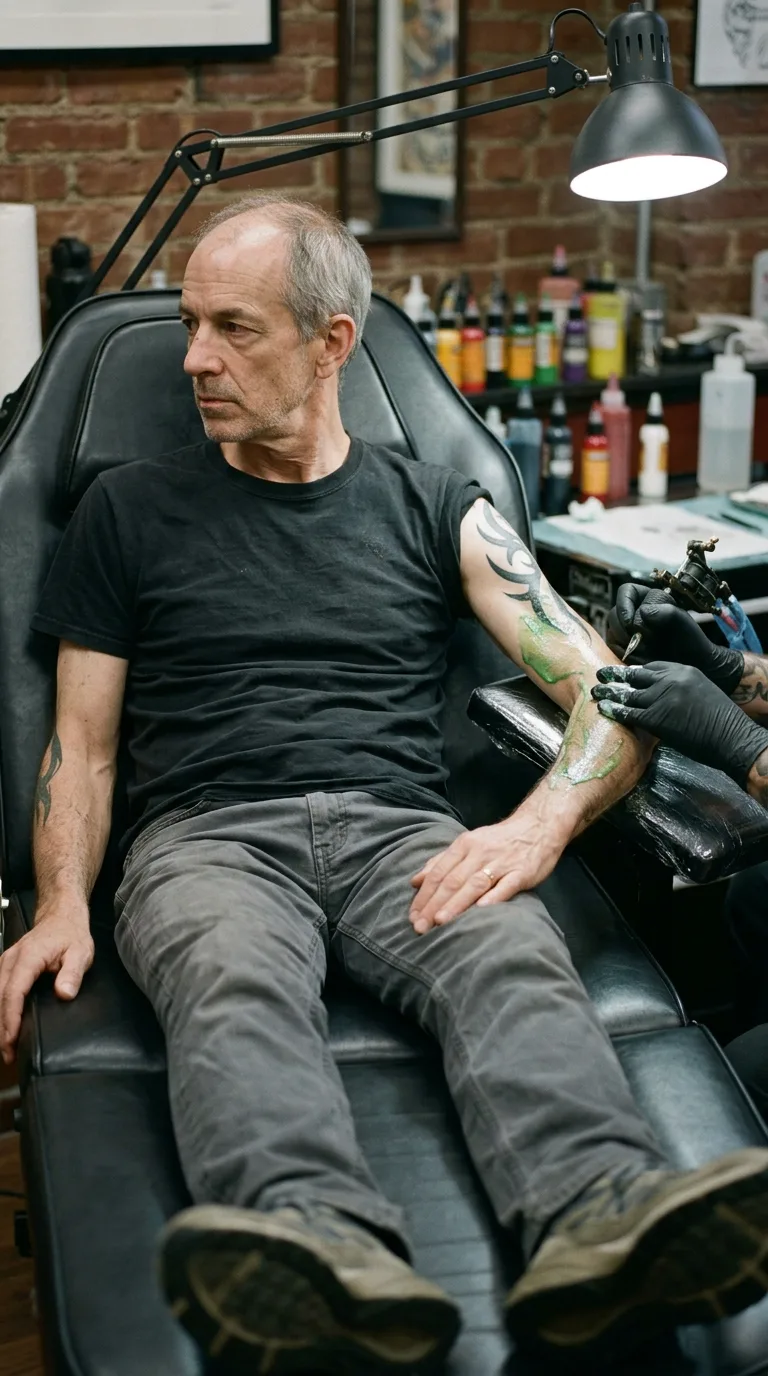
Rarest thing about him: One, upper arm — rare, 1 in 24
Season 0seed 546399613 · engine v10
Character card
lineage PYNCV3
His body-swap story
@colby.marsh (admin), wearing Marco Villanueva, rolled the wheel on and woke up as Russell Ferro, spent 13 hours in him, then spun the wheel and woke up as Ernesto Villalobos
Marco Villanueva's camera bag is still on his shoulder when you make him do this again.
You have been him for three minutes — heavy, twenty-eight, freckled hands, a green-eyed stranger's face reflected dim in a phone screen — and already the wanting is back, already looking for the door out of him. It isn't that Marco is bad. It's that he's *known*, now, used up in the same breath he arrived in, the way a hotel room stops being new the second the bag hits the floor. Comfortable is a floor, not a ceiling. Twenty spins in you've stopped pretending this is about seeing the world through other men. It's about the half-second before the weight settles — before you know what he drinks, who he loved, what his knees sound like on stairs — and that half-second is the only part of any of them that's still yours. Marco's thumb finds the vessel.cards tab out of habit that isn't his habit yet, it's yours, worn into twenty men now. You pay. You spin. Somewhere in Brooklyn, on a Wednesday evening thinning into late, the wheel finds a man already lying down for something else entirely.
The power drops for two seconds.
When it comes back you are not standing, you are reclined, and the light overhead is a work lamp, not sky, and there is a burning line being drawn into your forearm through a pool of green soap that has gone cool and slick. Your jaw — his jaw — comes loose where it had been clenched. Your head, which had been turned hard away from the needle, drifts back toward it instead, curious now, watching the machine walk its line like it's happening to a piece of furniture in the room and not to you at all.
The green soap is the first door. Under it: forty years of skin that has been sunburned on the Rockaway boardwalk, scraped on a chain-link fence in 1974, and once, only once before today, opened deliberately for ink — the tribal band that's already there above where the needle works now, gotten on a dare at twenty-two, regretted mildly and permanently ever since. This second piece was his idea, not a dare, nobody's idea but his own, a private thing he told exactly one person he was doing, and that person was not his wife.
The leather chair under his legs gives up the shop itself — the brick wall, the smell of green soap and rubbing alcohol, the artist's gloved hand steady as a held breath. He picked this place off a recommendation from a man at the diner where he gets coffee most mornings, one of maybe four conversations he has with anyone most weeks now that the job is gone. Retired eleven months. Insurance, forty years of it, a desk he used to be able to see the whole floor from. He does not miss it every day. He misses it enough days.
The wedding band on the left hand is the deep one. Cold gold, worn thin at the bottom from forty-two years of turning it while thinking. Deirdre. The porch this morning — his porch, his coffee, mid-morning sun on a street that used to be someone else's Brooklyn before the money came through and made it his — and Deirdre inside doing the crossword, not knowing where he was headed today, because he told her he had a doctor's thing. Two kids grown and gone, calling on Sundays, a daughter in Portland who still, once a year, without meaning cruelty, asks why he never got the first tattoo covered up. He never tells her the truth of it, which is that the tribal band on his arm is the last visible thing left of Renata — not her name, never her name inked anywhere, just the shape she liked, chosen the year after they ended, twenty-six years old and stupid with heartbreak, needing something permanent to prove the impermanent thing had mattered. Deirdre knows about Renata the way you know weather from a decade back. Doesn't sting anymore. Mostly.
The shirt is where the morning comes in whole. He put this on hours ago not knowing it would still be on him for this — greenish, plain, over an undershirt because his skin these days chills at nothing, the jacket zipped afterward more out of habit than cold. He'd stood at the closet a long moment, which is not nothing, a sixty-year-old man deciding what to wear to go make a decision his wife doesn't know about. He'd thought, distinctly, *this is a stupid reason to get a second tattoo,* and gone anyway, because stupid reasons are sometimes the only ones that get a man out the door before he talks himself out of it.
The pen he isn't holding is missing from his fingers, and they twitch faintly for it anyway, an old tic with nothing to click.
You look at the hand on the armrest — spotted, thin-skinned, the ring loose enough now to spin — and you turn it over once, slowly, the way a man checks a tool he's been handed to see what it's rated for.
Then you lift your eyes to the artist's face, not the needle, and you say, "Keep going."