Marco Villanueva
Fictional. Generated by AI — not a real person, and no likeness of one is intended.
28, photographer in New York · rolled by @colby.marsh · card — no film
History
who has worn him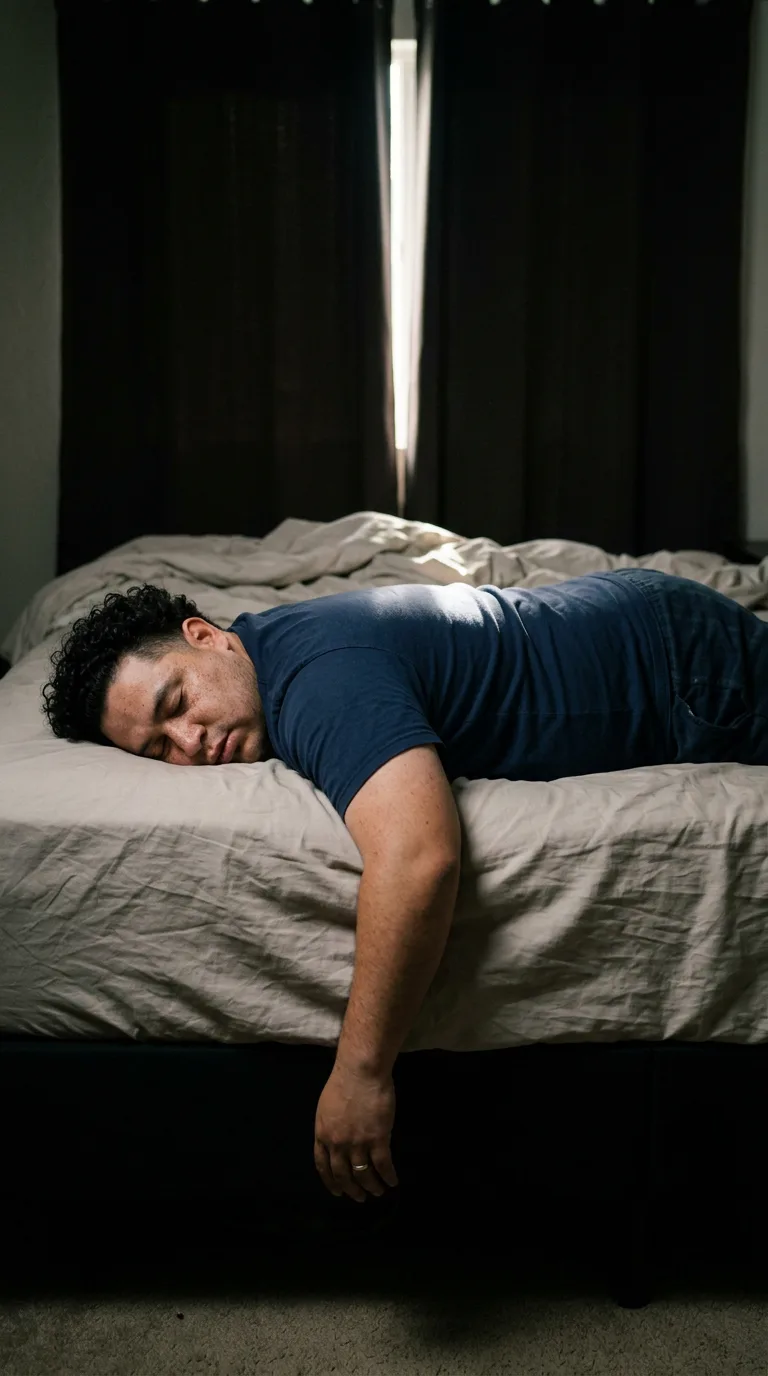
Rarest thing about him: Can't stand still — rare, 1 in 50
Season 0seed 1464841787 · engine v10
Character card
lineage PYNCV3
His body-swap story
@colby.marsh (admin), wearing Devonte Marchand, rolled the wheel on and woke up as Marco Villanueva, spent 3 minutes in him, then spun the wheel and woke up as Russell Ferro
---
Six hours and fifteen minutes is enough time to learn what a body can't do.
You are Devonte Marchand, twenty, a fortune sitting in a glass tower in El Paso like it's embarrassed to be looked at, and you have spent those six hours and fifteen minutes discovering that none of it — not the number in the account, not the view, not the beauty mark he's had people compliment him on since he was a teenager — none of it fixes the thing wrong with sitting still inside your own skin. You tried the balcony. You tried calling someone you used to know before all this, before the wheel, and hanging up before it rang. You tried standing in front of the window with the desert going orange behind the parking structures, and that's when it hits you, plain as a light switch: you're bored. Rich and twenty and bored, in a body that never asks for anything and never had to fight for anything, and there's a particular flavor of hollow in that which nineteen other men never gave you, because nineteen other men were all, in their own ways, still fighting something when you left them. This one isn't fighting anything. This one is just rich. You open the laptop. The wheel is already loaded from last time, like it knew.
You spin sitting down, which is new — usually you're standing, usually there's a little ceremony to it — but this time you just want to be somebody who wants something again, and you don't even watch it land.
---
The breath goes first — ragged, catching, the particular clotted snore of a big man face-down in his own pillow — and then in the space of one exhale it smooths out, and the arm that was hanging off the mattress into the dark draws itself up like it's remembered something, and the whole heavy weight of him rolls onto its back, hands coming to rest folded on his chest, funeral-neat, a way he has never once arranged himself in sleep. Streetlight comes through the gap in the curtain in one flat blade across the ceiling. Somewhere below, wet tires on a Brooklyn street. You are inside a chest that does not feel like your last one — wider, softer at the middle, tired in the shoulders in a way twenty years old never was — and it is late here, later than El Paso, and something in that gap between the two clocks feels like falling.
---
The first thing that comes is the pillow itself against your cheek, and with it — nothing dramatic, just a small tired warmth — a woman's voice down a hallway saying his name the way you say a name when you're not annoyed yet but you will be in about four more minutes, Marco, and a kid's laugh underneath it, high and delighted about something that has nothing to do with either of them. That's the marriage. That's most of it, actually — not one scene but a whole low hum of a life, breakfast dishes and a stroller folded against a stoop rail and her laughing once, helplessly, at something he said with his mouth full, years ago, in an apartment that smelled like paint because they'd just moved in.
Under that, fainter, like a photograph left in a drawer too long: a woman who is not his wife, laughing a different laugh, in a kitchen that isn't this one, years before any of this — Priya, though the name comes without a surname attached, just her, just the particular ache of a door he closed himself and still checks sometimes, in low moments, to see if it's really shut. It is. He made sure of that a long time ago. But the wheel doesn't sand the corners off a man's memories before it hands them to you, and this one's got an edge.
The wedding band on the left hand is warm from his own skin and it opens something plainer and better than either of those — a beach, cheap flip-flops, her dress blowing sideways, his mother crying in the second row in a hat she'd bought special.
You are lying on your back in a body that is thirty pounds heavier than any you've worn this month, and it announces itself honestly: the give at the middle, the particular ache low in the back that comes from carrying a camera bag on one shoulder for a decade, the throat that already, even in these first seconds, is starting to catch on itself the way it will all night if nobody rolls him over — the apnea, an old unglamorous fact of him, waiting under the folded hands like a held breath. His hands themselves are already restless even asleep, the fingers twitching faintly against his own sternum, wanting something to do, the way they always want something to do — a strap to check, a dial to nudge, a pouch of nicotine to tuck behind the lip where the drink used to go before he decided, quietly and for good, that he didn't need it.
The morning comes in through the vest, if you can call it that — not present, but close enough to touch, a memory the shirt is still holding: him pulling the navy tee over his head in a bathroom mirror three days ago, the reflector shoot this morning, the vest zipped halfway because it never sits right over the gut, the camera strap crossing his chest like a sash he's worn so long he doesn't feel the weight of it anymore, checking the mouthguard case — the one for grinding his teeth on long shoot days, clenched against a stranger's flash going off too close to his face — dropping it in the vest pocket out of habit. He'd stood in front of a gray backdrop for another photographer's test shot that morning, camera on his own chest like a medal, thinking about the invoice he still needed to send, the client who was three weeks late paying, the twenty-five, thirty thousand dollars sitting patient in a savings account his wife doesn't fully know the number of. He is not a rich man. He has never once, in the whole warm hum of memory coming through his skin right now, wanted to be.
He prayed before that shoot, actually — small and habitual, the kind of prayer that's more like checking in than asking for anything, Lord, let the light hold — and that comes through too, threaded into all of it, unshowy, just there, the way faith sits in a person who's had it his whole life and never needed to make a production of it.
---
You look at your hands.
They're broader than the ones you had six hours ago, freckled across the backs, the wedding band catching the streetlight thin and gold, and they won't lie still even now — thumb finding the pad of the ring finger, worrying it, a habit that isn't yours and already is. You bring one up in front of your face in the dark and turn it over once, like you're checking it's real, and somewhere down the hall a small kid's night light hums and a woman who married this exact hand is asleep on the other side of the mattress, close enough to reach.
You say, to no one, to the ceiling, in his voice and not yours, "Okay."
It isn't relief and it isn't grief. It's just the sound a man makes when he's found the door.