Russell Dembinski
Fictional. Generated by AI — not a real person, and no likeness of one is intended.
56, soldier in Detroit · rolled by @colin.hasbrook · card — no film
History
who has worn him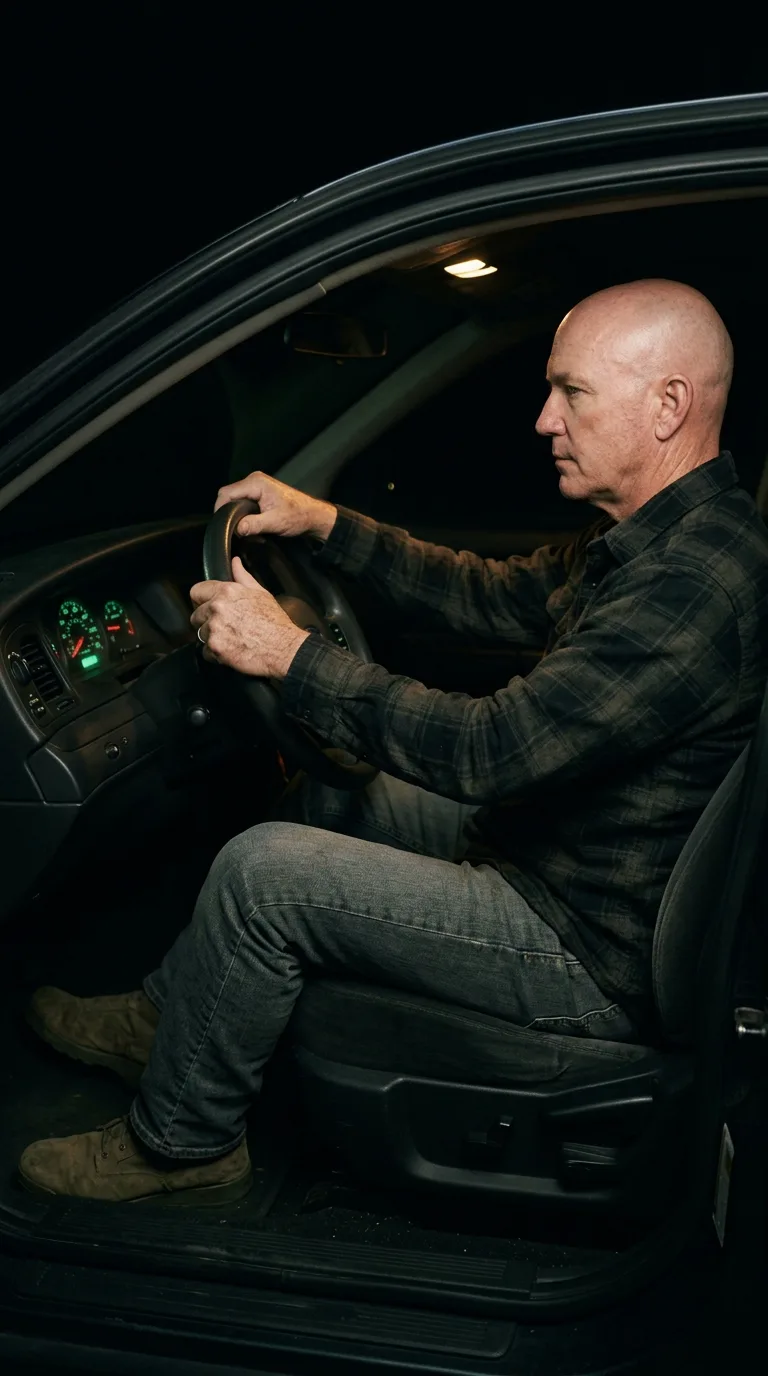
Rarest thing about him: Cigars only — rare, 1 in 24
Season 0seed 1254897490 · engine v10
Character card
lineage 2NZHHJ
His body-swap story
@colin.hasbrook, wearing Brendan Hoyer, rolled the wheel on and woke up as Russell Dembinski, spent under a minute in him, then spun the wheel and woke up as Wendell Argenbright
The dorm room smells like weed and instant noodles, and you have been Brendan Hoyer for exactly one minute — enough time to feel the fat under his arms, the acne on his shoulder, the phone still warm in his hand from the last guy who owned it. You do not want this. Not the body, not the roommate's voice down the hall, not the eighteen unread messages already glowing on the lock screen. A minute is enough to know. You open the site again on his phone, thumb clumsy with a stranger's calluses, because it does not matter whose thumb it is — the wheel does not care who spins it, only that someone does. You pay. You spin. San Francisco afternoon light through a blind that needs washing is the last thing Brendan Hoyer's eyes ever see, and it is not a loss, it is a door.
Green eyes open on a windshield. Dark highway, dashboard light pooling in the folds of two big knuckly hands, and the hands are already wrong for you — thick through the palm, a paler band on one finger where a ring used to sit. Both hands come off the wheel at once, an animal thing the body does before you've told it anything, and resettle lower, wider, the way a man drives who has done sixty years of driving without once thinking about it. The turn signal clicks on, green arrow pulsing, for an exit that means nothing to you and everything to him. Three miles from a home you have never seen.
The shirt is what opens him first — flannel, worn soft at the elbows, and it comes with the memory of buttoning it in a gray bedroom, before the sun, the sound of the barracks lot filling up outside, a young private laughing too loud two doors down. Russell Dembinski. The name arrives with the collar, the way his own mother used to say it, three syllables like a door shutting. Fifty-six years old and every one of them is in the shoulders — a low ache that lives there permanently now, old weight carried and set down and carried again, decades of packs and rifles and other men's gear when somebody forgot theirs. The scalp under your palm — his palm, and the hand goes there on its own, an old habit, checking for hair that left decades ago — is rough with the day's stubble, cold from the window.
The boots come next, through the floor, through the pedals — steel-toe weight, laces double-knotted the same way every morning for thirty years of mornings, a knot his drill sergeant taught him back when Reagan was president and Russell still had eyebrows worth mentioning. The cargo pants against the seat bring back kneeling — hundreds of hours of it, young soldiers around him, his voice going hoarse by 0900 the way it always does now, chest going tight the way it does when the air is bad, an inhaler rattling in a pocket he pats without looking. Asthma, worse in cold months, worse today, the lungs a little raw at the bottom of every breath even now, idling at a stop sign that isn't his.
The dog tags are cold against your collarbone and they bring the wedding that isn't a marriage anymore — a woman's laugh in a church basement in 1994, a daughter's small hand in his at a hospital thirty years back, and then, quieter, the divorce lawyer's office, the ex-wife's voice gone flat as a table, the daughter grown now and living two states off and calling on Sundays, mostly. A few cigars a year on the back steps of a house he doesn't own with anyone anymore, one glass of something dark at Christmas, church on the Sundays he isn't hungover from nothing at all. None of it dramatic. All of it his.
The wheel under your palms is the last thing, and it gives you the years of Michigan winters, the salt-eaten steering column, the particular give of this exact seat worn to the shape of this exact spine — and under it, steady as a metronome, the thought he was having when you arrived, gone now, replaced by nothing, by you.
You look down at the hands on the wheel — thick-veined, sun-spotted at the backs, a soldier's hands, not yours, never yours — and you turn one over in the dashboard light like you're checking it for damage.
"Almost home," you say, to no one, in his voice, and you don't signal back the other way.