Rubén Castellanos
Fictional. Generated by AI — not a real person, and no likeness of one is intended.
48, heavy equipment operator in Small-town Ohio · rolled by @connor.waskiewicz · card — no film
History
who has worn him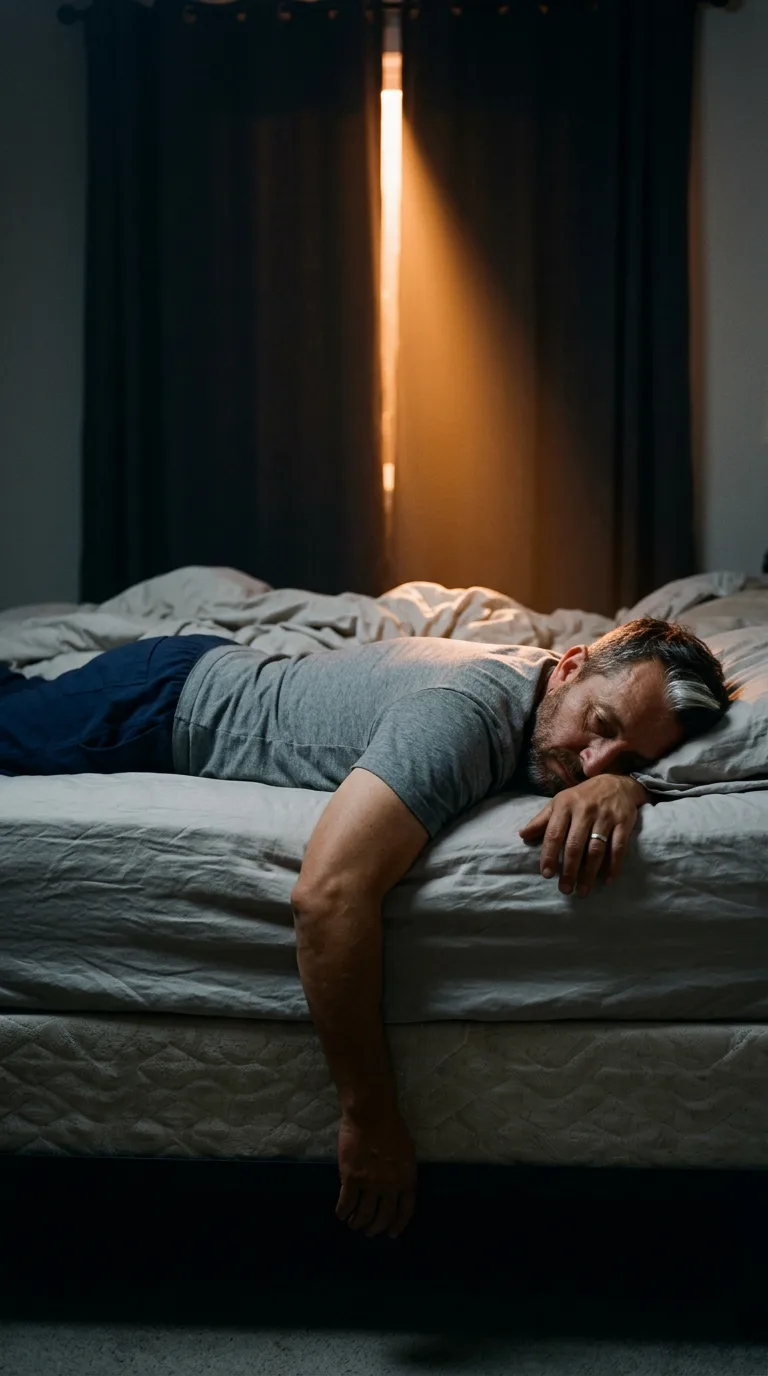
Rarest thing about him: A white streak in the hair — uncommon, 1 in 164
Season 1seed 1107520464 · engine v11
Character card
lineage 2NZHHJ
His body-swap story
@connor.waskiewicz, wearing Colby Renshaw, rolled the wheel on and woke up as Rubén Castellanos, spent under a minute in him, then spun the wheel and woke up as Trent Okonkwo-Baird
---
Colby Renshaw's leg is bouncing under the kitchen table, has been for ten minutes straight, and it isn't Colby doing it. It's just what this leg does, you've learned, the small tell of a body you're only borrowing. Eleven fifty-something on a Thursday, Rural Texas, and you're sitting in his rented house with his phone face-down and his beer going flat, and the boredom has a taste now, ten minutes into a body that hasn't done anything interesting yet and probably won't. Twenty-five years old, athletic, a good jaw, and already you're thinking about the next one instead of this one, which tells you everything about how this goes for you now. Nine hundred and fourteen men behind you and this is what's left of wanting: not hunger, just a flicking finger, a hand already reaching for the phone to open the site again. You don't say goodbye to Colby because there was never anyone home to say it to. You open vessel.cards. You spin.
—
The breath changes first — ragged in, even out — before you have anything like a self to notice it with. Then the arm that was hanging off the mattress into cool bedroom air draws itself up on its own timing, not yours, and the body rolls from its face-down sprawl onto its back, and the hands find each other and fold at the chest like something arranging itself for a viewing. You are in a stranger's bedroom in the middle of the night, in a body that weighs less than the one you left and carries it lower, thicker through the middle, a low center of gravity you didn't ask for. Streetlight comes through a gap in the curtains in one bright seam across the ceiling. Somewhere close a woman breathes in her sleep, evenly, undisturbed. Your — his — chest rises under folded hands. You have his shape now and none of his life yet.
—
It comes in through the sheets first, cheap contact, thin as a whisper: a bed bought on sale nine years ago, a mattress that dips on her side more than his. Then your palm brushes the wedding band on your own left hand, and it opens like a door kicked in — Marisol in a green dress at her cousin's wedding, seventeen years back, the specific terror of asking her to dance when he didn't know how, and how she'd laughed, not unkindly, and taught him right there on the gravel behind the reception hall. Rubén Castellanos, forty-eight years old, and the ring gives you the whole marriage in one pull: patient, ordinary, a little worn at the edges the way rings get worn, no children and a grief about that so old it's stopped being sharp and just sits there, background noise, like a radio left on in another room.
The sheets under your back give you the shift work — nights on the dozer this month, the site foreman's radio voice, blade grading a rise for a warehouse pad going in off Route 9. Your hands, when you're not minding them, know the vibration of that machine down in the bone, know exactly how much throttle turns dirt into a level plane. Forty-eight-year-old hands, good hands, a little arthritis starting in the left thumb that complains on cold mornings. Your body's average build carries a low-grade ache across the lower back that's been there five years and isn't going anywhere; your knees remember eighteen years of ladders and cab steps. Thinning hair against the pillow — you feel where it's combed each morning to hide the scalp showing through, a vanity so small and human it makes something in you almost tender toward this man you've never met and will never properly know.
Another flash, this one off the pillowcase, detergent smell: an old apartment two towns over, a girl named Dana who left when he was twenty-nine and whom he still, God help him, thinks of on certain gray afternoons — not longing exactly, just an old door that never fully latched. Marisol doesn't know how much space that girl still takes up in a Tuesday. Rubén doesn't examine it either. It's just there, the way the white streak at his hairline is just there, the thing people notice about him before they notice anything else, a flag of white running back from his part since he was thirty-one and stress or genetics or God's private joke put it there overnight, more or less.
The morning he dressed for this — no, last evening, going out into a night shift while the town slept — comes back through nothing you're touching now, but arrives anyway, trailing off the vest hung by the door, the boots by the mat: the gray hoodie pulled over his head, the orange vest snapped at the front, the routine so old his hands did it without him, the little pause at the mirror where he touched the streak like checking it was still there, still exactly him. Mass on Sundays with Marisol, a beer or two most evenings on the back step watching the light go, no cigarettes ever, never saw the point. A comfortable life, nothing showy — a paid-off truck, a house that's theirs, enough saved that neither of them worries much. A small-town Main Street with one stoplight and a diner that closed two years ago and that he still slows for out of habit, like it might reopen.
You are standing in the middle of all of it and none of it is memory in the way memory is supposed to work — it's borrowed, secondhand, felt through his nerves and not yours, already fading at the corners the way dreams do on waking.
—
Your hands are folded on your chest and you make them move, slow, deliberate, and hold them up in the streetlight seam — thicker fingers, a plain gold band, the thumb that will ache tomorrow whether you're still behind it or not. You turn the left hand over like you're checking it's real, which it is, more real than you are.
"Marisol," you say, quiet, not quite steady, into the dark and the sleeping shape beside you — his name coming out of your mouth for the first time, and hers, because some reflex in the hands or the throat reached for her before you had decided to reach for anything at all.
You don't know yet if you'll still be behind this face by morning shift, by Sunday Mass, by the next time that leg starts bouncing under some table you haven't sat at yet.