Colby Renshaw
Fictional. Generated by AI — not a real person, and no likeness of one is intended.
25, machine operator in Rural Texas · rolled by @connor.waskiewicz · card — no film
History
who has worn him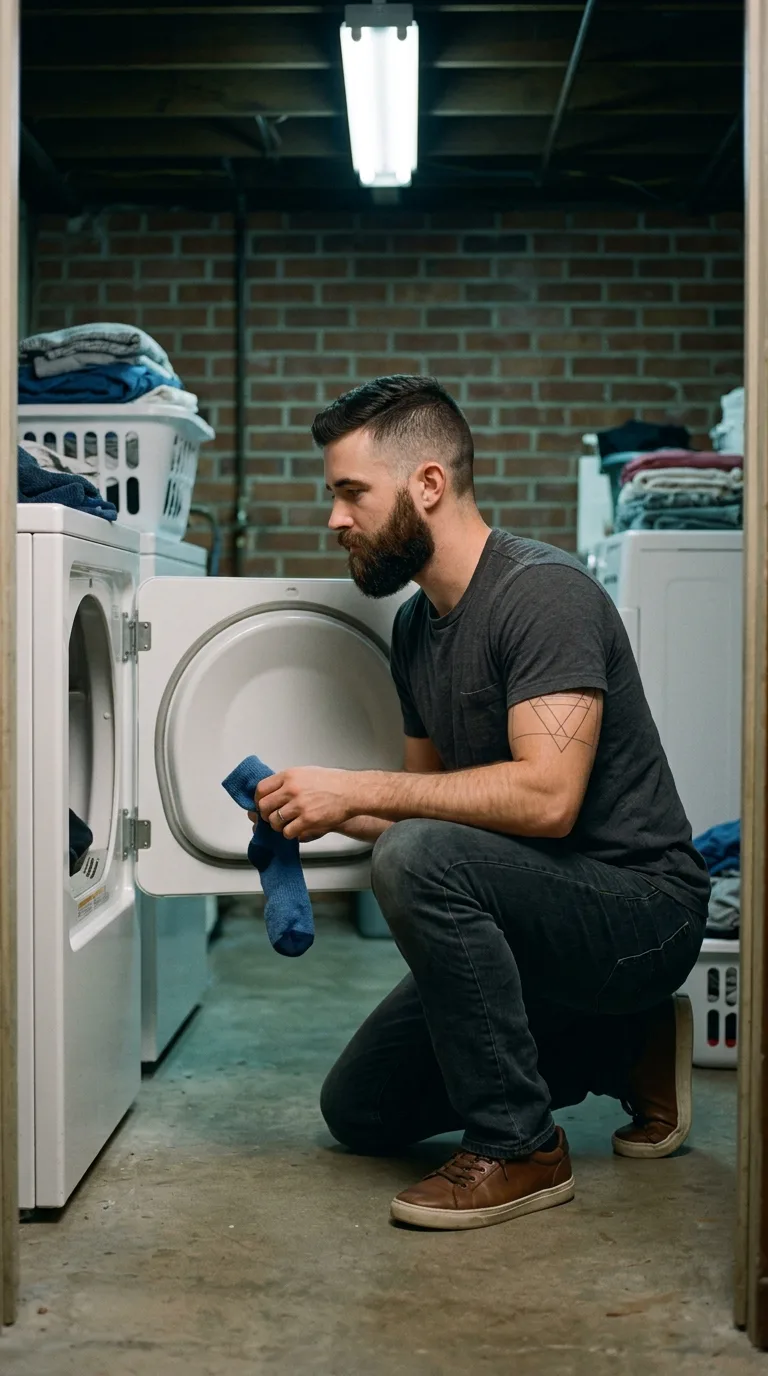
Rarest thing about him: Nicotine pouches — common, 1 in 31
Season 1seed 700784126 · engine v11
Character card
lineage 2NZHHJ
His body-swap story
@connor.waskiewicz, wearing Raymond Kettering, rolled the wheel on and woke up as Colby Renshaw, spent 11 minutes in him, then spun the wheel and woke up as Rubén Castellanos
Raymond Kettering's hands don't shake anymore, and that's the trouble with them. Forty-two, five-seven, a plant manager's gut starting under a plant manager's polo, and tonight he stood in the break room at two in the morning running a shift nobody needed him running, because the line was down and the second-shift super could've handled it and Raymond had come in anyway. Middle of the night, everyone else asleep in Philadelphia, and he'd caught himself doing the math he always does now — nine hundred and thirteen men, and every single one of them had felt, for a while, like something. Somebody's arms are stronger than mine. Somebody's marriage isn't the polite ceasefire mine turned into. He isn't unhappy, exactly. He's just been Raymond Kettering for less than a minute, and a minute is long enough to know he doesn't want to spend the next forty years finding out what that's like. He goes to the terminal in the office nobody's using, opens vessel.cards on his phone with the gray beard and the tired eyes reflected in the screen, and spins.
You are crouched. That's the first thing — knees bent, weight low, a fluorescent tube somewhere above buzzing at a pitch you feel in your teeth before you register it as sound. Warm air rolling out at your face, smelling of dryer sheets and hot cotton. A sock in your right hand, still damp-warm, blue. Your left hand is braced on the open dryer door. You are not thinking, you are just here, mid-motion, a body that was already moving before you arrived in it, and it keeps moving — pulls the rest of the load into the basket in your arms in one practiced heave, warm and heavy and smelling like your own house, though you don't know yet that it's yours.
The socket wrench-callus at the base of your right thumb tells you before anything else does: you've held tools every day for years, this hand knows weight the way a mouth knows a word it says all the time. Then the shirt — you're not wearing the navy one from the picture on the wall upstairs, you're in an old gray tee gone soft at the collar, and the moment it registers against your back you get him: Colby, twenty-five, six-foot, dressing at four-forty this morning in the dark so he wouldn't wake her, sleeve by sleeve, the tee first then the flannel over it because November mornings on the gravel road come in cold under the door. Night shift. Has been for six months since he switched off days for the differential pay, and it's put a strange hour in his marriage that neither of them talks about — she's asleep by nine, he's gone by four-thirty, they pass each other like two people on opposite escalators. The dryer's still running when he should be twenty minutes into REM, but he came home wired the way he always does after a bad run on the extrusion line — a die plate that kept clogging, forty minutes of scrap plastic curling out wrong before he found it, adrenaline with nowhere left to go — so instead of lying next to her awake he came down here.
The basket handle in your grip brings the rest of him up in a rush: eight years on that line, the particular ache that lives permanently in his lower back from bending to the same height a thousand times a shift, the tattoo on his upper arm — geometric, fine-lined, gotten the week he turned twenty-one with a buddy who's since moved to Odessa and he hasn't spoken to since — itching faintly under the tee's sleeve the way old ink does in dry air. The wedding band on your left hand is warm from your own skin already, and touching it gives you her, gives you Danielle, gives you a wedding in her parents' backyard with string lights and her father crying more than either of them did. Gives you, too, underneath that, a name you weren't looking for — Paige — a few months gone now, an ex he still thinks about on nights exactly like this one, alone with his hands busy and his head not, and he hates that he thinks about her and does it anyway, the same way his leg is bouncing right now though nobody's watching it, a tell he's had since he was a kid and never lost.
You fold. The shirts square themselves under your hands without you deciding it — corners matched, sleeves in, a fast neat stack that would look nothing like the eight balled-up shirts waiting in a drawer upstairs that are, technically, also his. The floor under your boots is unfinished concrete, cold through the soles even now; the brick wall at your back holds the day's heat and gives it up slow. A nicotine pouch, tucked and forgotten, works itself against your gum, faint mint gone to nothing. Small room, small life, entirely his, entirely someone else's ten seconds ago.
You look down at your hands — his hands, thick-knuckled, one scarred pale across a knuckle from a line jam two summers back, the ring catching fluorescent light — and you turn them over once, like you're checking them for a serial number.
"Didn't think I'd be up this late," you say, to nobody, in his voice, and you don't know yet if that's true tonight or every night from here, or whether it's even you saying it a week from now.