Ruben Castellanos
Fictional. Generated by AI — not a real person, and no likeness of one is intended.
41, stagehand in Small-town Ohio · rolled by @tyler.iverson · card — no film
History
who has worn him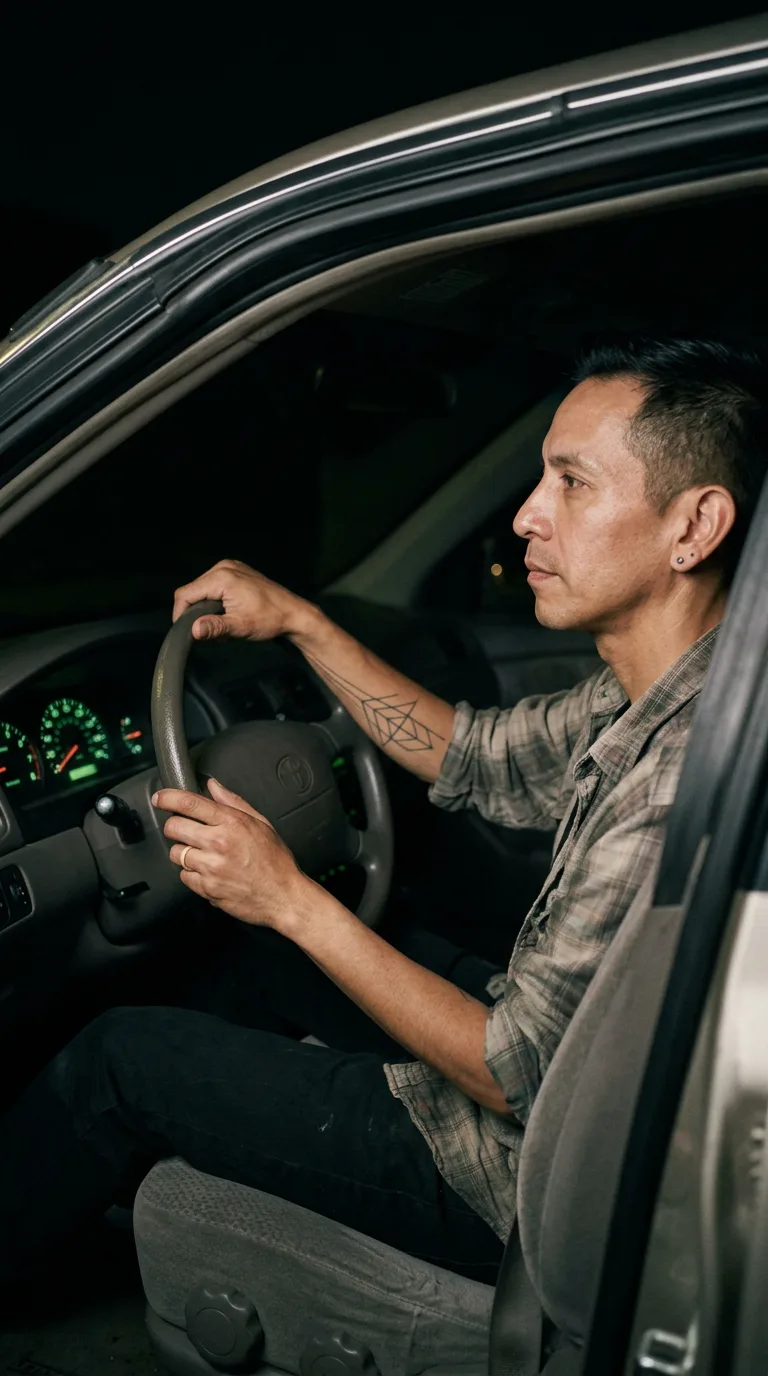
Rarest thing about him: Both earlobes — epic, 1 in 33
Season 0seed 553324745 · engine v10
Character card
lineage 9IC4OB
His body-swap story
@tyler.iverson, wearing Harold Nishikawa, rolled the wheel on and woke up as Ruben Castellanos, spent 3 minutes in him, then spun the wheel and woke up as Cody Michalak
You are Harold Nishikawa, and you have been him for two minutes, and already the cauliflower ear is a nuisance, a warm ache where the pillow of scar tissue never sleeps right against anything. Standing in his kitchen, in his slippers, over a sink he doesn't remember filling. Fifty-three years in the knees. The Sunday quiet of his apartment presses in — no radio, no one else's breath in the next room. You spun this one nineteen spins ago from a diner counter and thought, briefly, line cook, old hands that know a flattop, that'll be something. It was something for ninety seconds. Now his shoulder pops when you reach for the light switch and you are already bored of the sound it makes. That's the whole reason, if you're honest, which you are not required to be, not even to yourself: it is Sunday evening in Chicago, you are alone with a body that already told you everything it has to tell, and the site is one tab over, patient, the wheel just sitting there catching the light from his gray window. You go back to it the way you'd go back to a fridge you already checked twice. You pay. You spin.
The car pulls a foot toward the line and comes back clean, both your hands sliding off the wheel and settling lower, wider, a different grip for a different man, and the blinker starts ticking for an exit that means nothing to you yet. Dash light green on your knuckles. A flannel sleeve, rolled, warm from a day's wear. Something around your neck swings once against your chest, metal-heavy. Three miles of dark road ahead that you have never driven and that your hands, you will learn, could drive with the headlights off.
The wheel first — worn smooth at ten and two, a little tacky at four o'clock where his palm sweats when he's tired, and he's tired now, this is the last stretch of a Sunday that started at four in the morning with a load-in nobody wanted to do on a Sunday, and that flash is enough to pull the rest of the day up through your arms like something drawn out of a well. Fly rail, blue running light, the smell of rope and hemp dust and a stage manager's coffee gone cold on the console. Ruben's hands know a cleat hitch without his eyes checking it, know the weight of a batten coming in, know how to stand very still in the dark while forty feet above him something moves that could take a head off if he flinched. His back knows too — the low ache that lives there permanently now, a decade of hauling and hanging and never once being the guy they build the harness for, always the guy who catches the rope. Chronic, unglamorous, a thing he stretches for in the wings during blackout and never mentions.
The wrench against your sternum swings again and gives you more: a gift, or half a gift, bought for himself the year the shop closed, the year he stopped being able to call himself a mechanic and started being able to call himself "available Tuesdays." He wears it like some men wear a cross. He is, in fact, the kind of Catholic who wears both, on the same cord, though the cross is tucked under the shirt where nobody has to ask him about it.
The plaid shirt on your back — sleeves rolled exactly twice, cuffs never buttoned — comes with the memory of this morning's version of every morning: standing in front of a mirror that isn't proud of him and isn't ashamed of him either, just tired the way the man in it is tired, pulling this shirt off a hook because it was closest, not because he loves it. Ring finger pale where gold used to sit. That flash comes in hot and whole — not the wedding, not the fights, just her laugh in a kitchen that smelled like cumin, and a daughter's hand small in his on a school morning years gone, and the particular silence of a house after both of them stopped being in it. The woman who got away is not a phrase he'd use. He'd say she got out, and got smart, and he doesn't blame her, and some nights that's true and some nights it isn't.
Earlobes: small studs, cheap, bought at a mall kiosk half a life ago with a friend who's dead now, a flash of laughing so hard he couldn't get the second one in straight.
Forearm: the tattoo under your own gaze in the dash light, fine black lines like a fold of paper, like a wing — he got it the year he decided a man could still choose one new thing about himself even when everything else had already been chosen for him.
The skinny frame settles into you last, quietest of all — five-nine, no weight on him he doesn't need, hands rope-calloused, back that will complain tomorrow whether or not tomorrow is his, forty-one years old and carrying every one of them in the base of his spine. No drink in him, hasn't been in years, gave it up so quiet nobody threw him a party for it. No smoke ever. Just the road, the shirt, the wrench swinging, the turn signal ticking for an exit he has never once taken on a Sunday, because Sunday nights he goes straight home to the empty house with the porch light he leaves on for no one.
You lift both hands off the bottom of the wheel and look at them in the green dash glow — thin fingers, a tan ghost-band on the ring finger, ink catching the light along the forearm — and you turn them over once like you're checking they're real, which they are, more real than anything you brought with you.
"Okay," you say, to the empty car, to the blinking exit sign, to no one. "Okay."
The wheel is still out there. It always is. You just don't know yet how long you get to be tired in his particular way before you go looking for someone else's.