Harold Nishikawa
Fictional. Generated by AI — not a real person, and no likeness of one is intended.
53, line cook in Chicago · rolled by @tyler.iverson · card — no film
History
who has worn him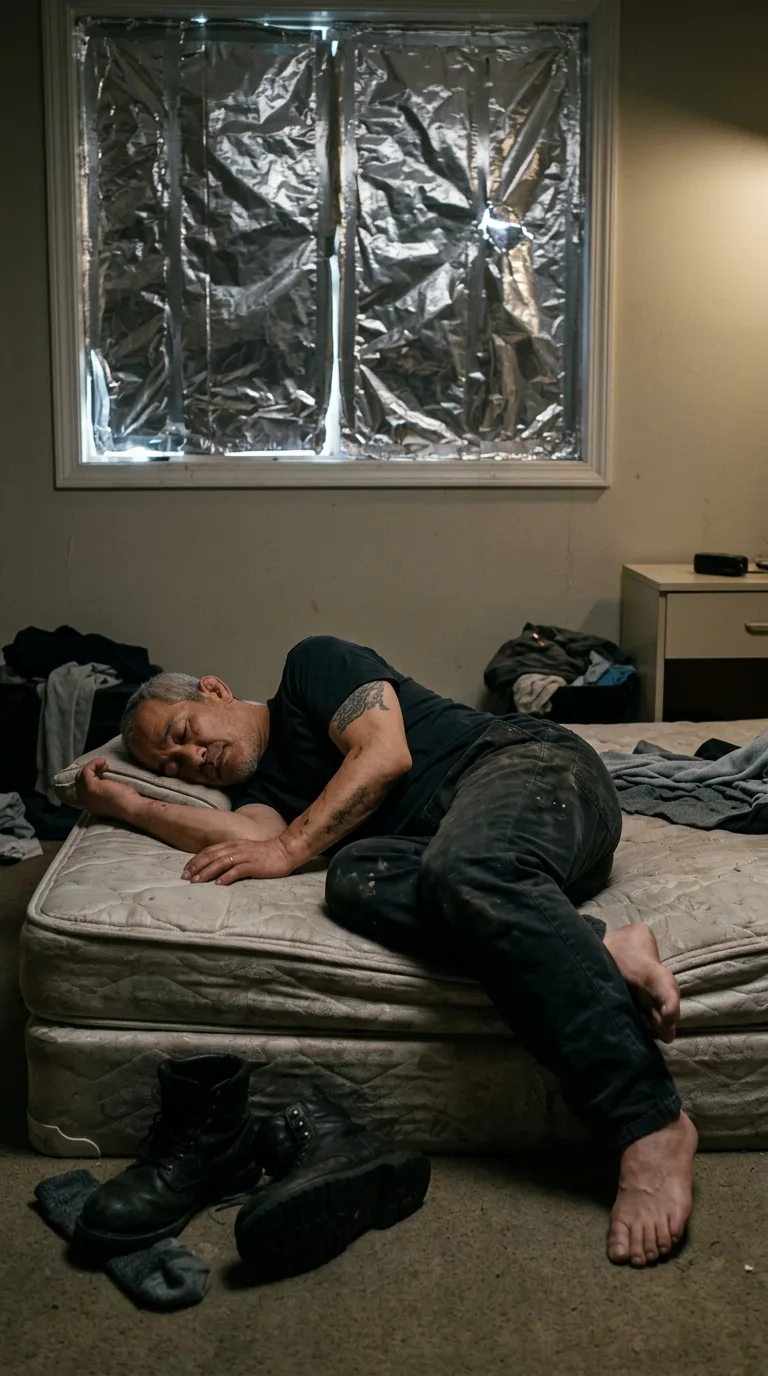
Rarest thing about him: Cauliflower ear — epic, 1 in 165
Season 0seed 1790074018 · engine v10
Character card
lineage 9IC4OB
His body-swap story
@tyler.iverson, wearing an unnamed body, rolled the wheel on and woke up as Harold Nishikawa, spent 3 minutes in him, then spun the wheel and woke up as Ruben Castellanos
The longshoreman's shoulder is wrecked and you are done pretending it isn't. Eighteen bodies in and this is the first one that hurt to wake up in — the rotator cuff grinding every time you reach for a crate, the eyebrow scar itching in the desert dry air, thirty-one years old and complaining like a man twice that. It's Sunday evening in Vegas, the day off wasted on a couch with a bag of frozen peas on your shoulder, and the boredom of him is worse than the pain. One day, ten hours, and you already know every rerun this life has to offer. You open the laptop. The wheel is still there, spinning its slow gold light. You pay before you can talk yourself out of it, and somewhere a body stops being a decision and becomes a fact.
The foil peels at the corner and light lays itself across his face like a blade, and you are the one who turns from it, and then — helplessly, an old animal habit that isn't yours yet but already is — turns back into it. Eyes open into glare. Boots on the floor. A T-shirt damp with old sweat and something else, grease maybe, blood maybe. The room smells like a mattress that has absorbed too many bad sleeps. Your shoulder — his shoulder — doesn't hurt at all, which is its own kind of shock. Both ears feel normal except one, which feels thick, feels wrong, feels like it belongs to somebody who got hit a long time ago and never stopped noticing.
The mattress under you gives up the first thing: a hundred Sunday mornings just like this, sun coming through the same foil, the ritual of taping it up fresh every few months because tenement light does not respect a night cook's need for dark. Harold Nishikawa. The name arrives with the smell of the pillow, the way a smell can hand you a whole man before you've moved a muscle.
The T-shirt against your back gives the rest, slower, the way sweat-soaked cotton gives up a day. Twenty-nine years on various lines, eleven at Kojima's, a Korean-Japanese fusion spot under the Belmont tracks where the trains shake dust down onto the pass every four minutes and nobody flinches anymore. Your hands — his hands — already know a knife the way a tongue knows a missing tooth: where the edge is, how much wrist a julienne wants, the particular economy of a man who has cut ten thousand onions and stopped crying at them decades ago. There's a burn scar map up both forearms that the photograph didn't lie about, dozens of small silver commas from spitting oil and hot pan handles, each one so old it doesn't sting anymore, just registers as terrain.
The cauliflower ear comes with its own memory, separate from the rest, arriving almost shy: high school wrestling, a state semifinal lost by a point, his father in the stands not clapping because losing wasn't something Nishikawas applauded. The ear thickened over one bad season and stayed that way, and for thirty-some years it has been the first thing anyone new says something about, and he has a joke ready every time, worn smooth with use.
The wedding band is on the hand curled under the pillow, and touching it opens the widest door of all — Aiko, twenty-six years married, her voice through the pass window during service saying table nine sent back the salmon, not angry, just tired in the specific married way that means I love you and also hurry up. There's a daughter, grown now, gone to Milwaukee, texts more than she calls. And under all of it, filed somewhere he doesn't visit often, a woman from before Aiko — Grace, a waitress at a diner in Rogers Park in 1991, the one he sometimes still measures things against without meaning to, gone thirty years and never quite gone.
The asthma lives in the chest itself, a tightness that flares on the line when the fryer smoke sits low and the exhaust fan's been broken since March and nobody's fixed it. There's an inhaler somewhere in a jacket pocket, remembered before it's found. He hasn't had a drink since Aiko's father's funeral, eleven years back, decided that night it wasn't doing anything for him anymore and just — stopped, no ceremony to it. Church on Sundays when he isn't working nights, which is not this Sunday, which is why he's here, in daylight, boots off, foil up, sleeping the sleep of a man who was on his feet from six p.m. to four a.m. flipping tickets under fluorescent light while the L rattled the windows every few minutes like weather.
You lie there a second longer in his sleep-heavy weight, feeling how the body sits differently than the longshoreman's did — shorter, softer through the middle, the shoulder blades set with an old man's slight forward curl from decades bent over a cutting board. Nothing hurts. Everything is fifty-three and tired in a way that isn't pain, just cost, paid daily, on schedule.
You bring your hand up out from under the pillow and look at it in the stripe of light — spotted a little, the wedding band dull with pan grease worked into the groove of it, a thin white scar across two knuckles from a mandoline in maybe 2003. You turn it over once, like checking it's really attached.
"Okay," you say, out loud, to the empty room, in a voice that isn't the one you had this morning. "Okay."