Ruben Castañeda
Fictional. Generated by AI — not a real person, and no likeness of one is intended.
44, plumber in High-desert Nevada · rolled by @marco.villagrana · card — no film
History
who has worn him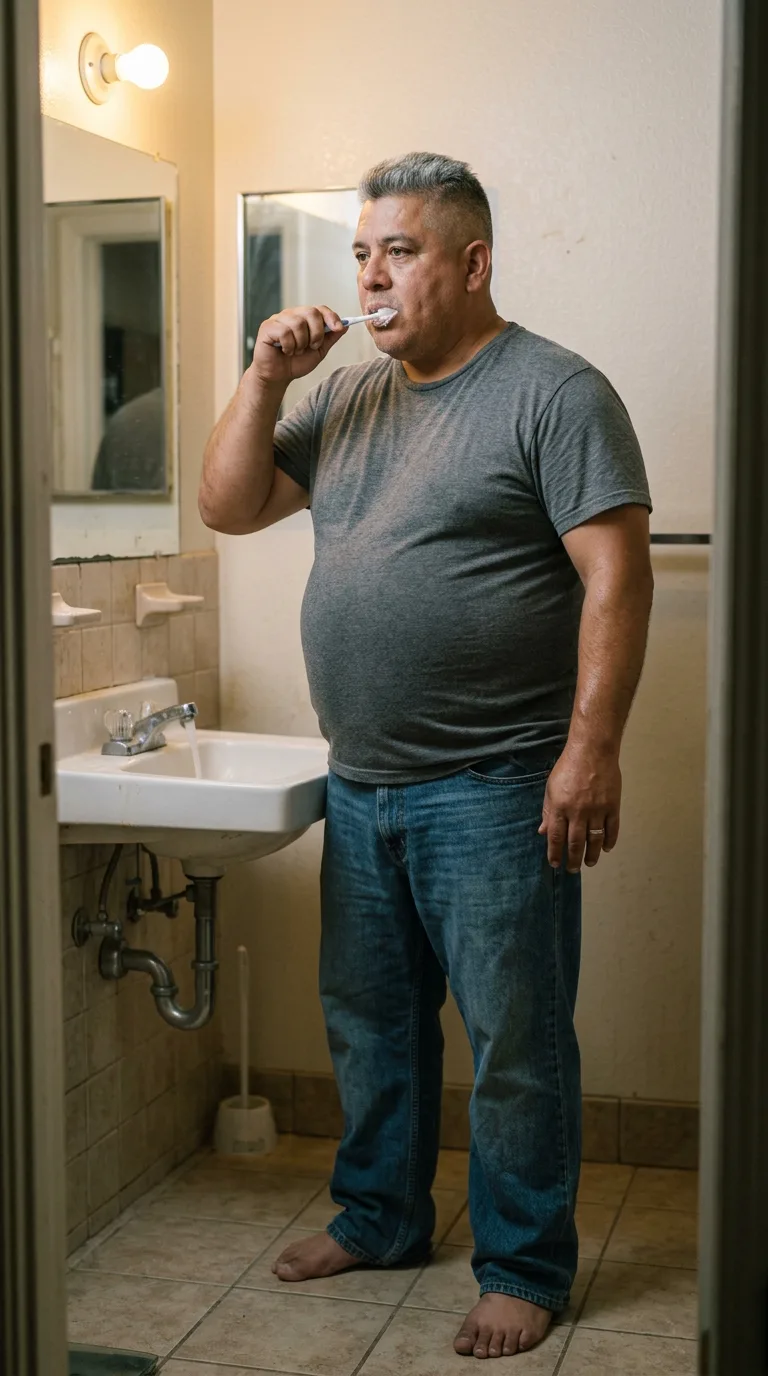
Rarest thing about him: It's a problem and it shows — rare, 1 in 33
Season 0seed 1896658985 · engine v10
Character card
lineage LJL8SV
His body-swap story
@marco.villagrana, wearing Kaimana Souza-Fetu, rolled the wheel on and woke up as Ruben Castañeda, spent 3 minutes in him, then spun the wheel and woke up as Gordon Aiona
The guitar is still against the wall where Kaimana left it, and you have not touched it once. Three fingers on his left hand have gone stiff from something you did with them last night, or he did, before you woke up wearing him fully awake for once — 1 day and 3 hours, long enough to learn the shape of a stranger's calluses and not long enough to want to keep them. There is salt on the window from the bay. There is a rehearsal in four hours you are never going to make. You didn't spin again because he was bad. He was good, actually, better than most, a body that could still find a chord without looking. But you have been him for a day and three hours and the itch is already back under the skin that isn't yours, the low simple hunger that has nothing to do with Kaimana Souza-Fetu at all and everything to do with the fifty-two men before him. You open the site on his phone with his own thumbprint, which still works, small joke nobody's laughing at. The wheel spins. You are already gone before it stops.
You are at a sink. Your mouth is full of foam and the taste of spearmint gone bitter at the edges, the way it does on a second pass. The water is running loud in a small room. Your hand — thick fingers, a plain gold band worn soft at the edges — keeps moving on the left side of your mouth, unbroken, because the body does not know yet that anyone new is driving it. You feel the weight of a gut you didn't have an hour ago, gravity pulling different, your knees already faintly aching in a way Kaimana's never did. You finish the stroke you're mid-way through like a man walking off a curb before he knows the curb is there.
Then you start again, other side, slower, working the back molars, and that's when it comes — not a picture first, just heat: the water against your wrist as familiar as a held hand. You rinse twice, the way you always have, twice, never once, some rule laid down before language. You stand the brush up bristles-first out of a grey puddle that's been sitting in that dish for eleven years because neither of you has ever thought to change it, and the dish gives you a flash of the woman who bought it, Marisol, at a Walmart outside Pahrump the year Danny was born, and Danny's name arrives with the dish, and then Danny at nine holding a plastic dinosaur under this same running tap, and you are standing in a bathroom that is not big enough for one man let alone a marriage but has held one anyway.
The overalls are not on you right now — they're hanging on the door hook, and even from here they reach for you: the wrench-shaped ache low in your right shoulder, the particular male vanity of a man who has been strong his whole life and is starting, at forty-four, to feel where the strength ends. This morning — his morning, hours behind you and yet here it is, the elastic sense of two clocks folding into one room — he'd pulled these overalls on over that same gray shirt, sat on the edge of the bed to do it because bending all the way to his boots was starting to cost him something in the lower back, Marisol still asleep, one strap up, other strap, snap the buckle, and thought, the way he thinks most mornings, that he should probably see somebody about the pressure headaches, and didn't, because Ruben Castañeda has never once in his life stopped anything on account of feeling bad.
The jeans against your legs now carry a different day entire: an afternoon eleven years back, before the gray came into his hair honest instead of premature, Marisol's sister's wedding, a rented tie, and outside on the gravel, alone with a cigarette he didn't smoke because he never smoked, an old girlfriend — Teresa, and her name comes with a whole shape, a slow ache, nothing finished, nothing said, just her hand on his arm for one second too long and both of them married to other people by then and neither of them doing a single thing about it, ten years gone in the time it takes a memory to surface and sink. He thinks of her sometimes still. Not often. Enough.
The tile under your bare feet is cool and cracked at one seam, and it gives you the sound of the kids — Danny, and a girl's name arriving softer, Alicia — running this hallway when they were small enough to run everywhere. It gives you six a.m. call-outs, a busted water heater in a stranger's laundry room, forty years of houses that were never his own, his knees on other people's tile, his hands — broad, scarred at two knuckles, a burn scar faded pale on the right thumb — going under a sink like they're reaching into a mouth. It gives you a six-pack in the fridge that used to be a case, and the particular shame of Marisol not saying anything about it anymore, which is worse than if she did. It gives you church on Sundays when he makes it, the choir, his mother's voice under all the others even now that she's gone. It gives you the wedding band, plain, cheap even when it was new, and thirty-one years of not once taking it off, not for a wrench, not for anything.
You look down. Your stomach strains the gray shirt. Your hand — his hand, the ring catching the bathroom light — turns over slow in front of your face like you've never seen the back of it, which you haven't, not from in here.
You look up into the mirror, into brown eyes that are not deciding anything yet, and the dimples show even now, even doing nothing, like the face doesn't know how to fully close.
"There you are," you say to it, and you don't know yet if you mean tonight or tomorrow or the next time the itch comes, because that's never yours to know going in.