Gordon Aiona
Fictional. Generated by AI — not a real person, and no likeness of one is intended.
57, welder in Honolulu · rolled by @marco.villagrana · card — no film
History
who has worn him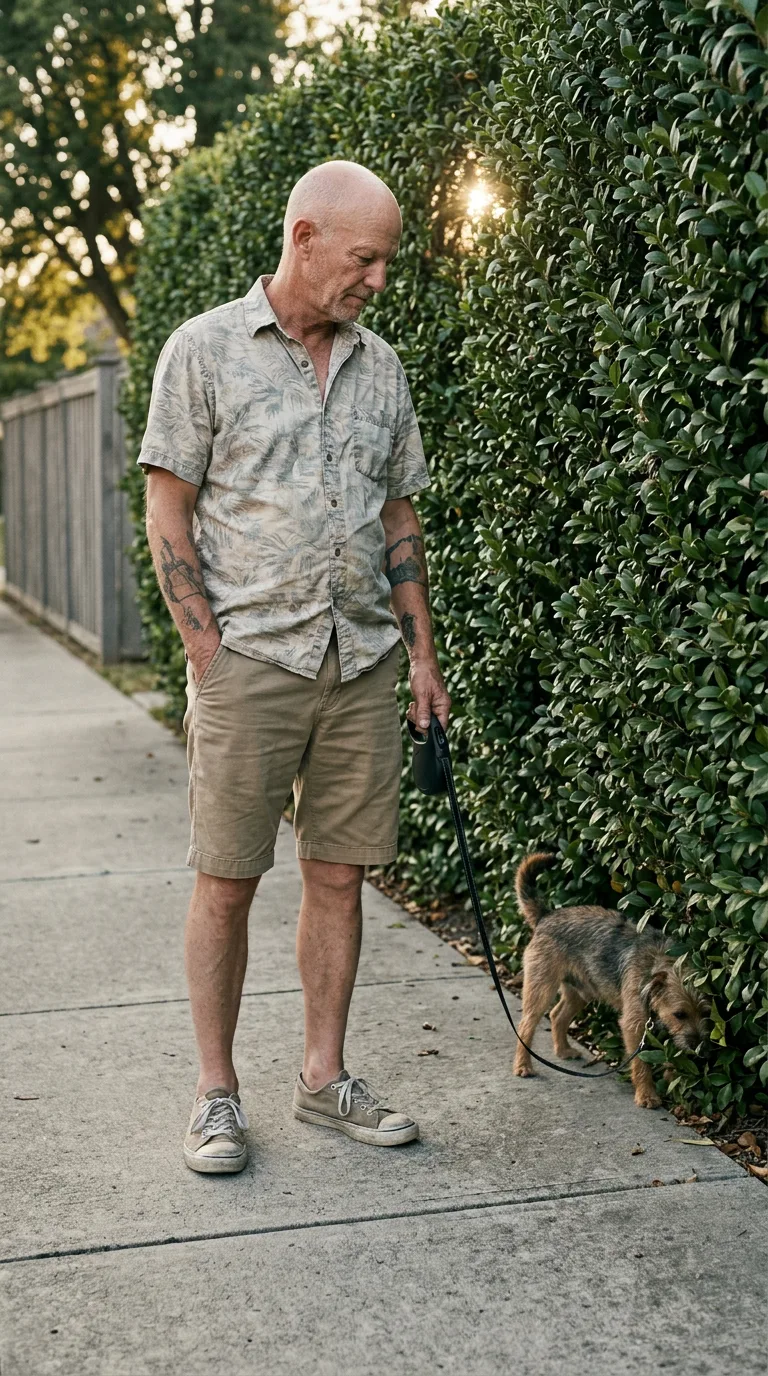
Rarest thing about him: Dating — rare, 1 in 20
Season 0seed 1957977020 · engine v10
Character card
lineage LJL8SV
His body-swap story
@marco.villagrana, wearing Ruben Castañeda, rolled the wheel on and woke up as Gordon Aiona, spent 3 minutes in him, then spun the wheel and woke up as Dean Kovacevich
You are Ruben Castañeda for exactly three minutes, and in that time you learn everything you need to know about him: the truck in the driveway that isn't paid off yet, the ache low in the back that never once takes a day off, the smell of pipe dope that's gotten into the creases of his hands so deep no soap touches it anymore. Three minutes standing in his kitchen, still in his boots, still holding his phone with the site open on it, thumb over the wheel. Long enough to know he is tired in the exact way that makes a man open an app like this instead of closing it. Long enough to spin it once and land here, gray-haired, dimpled, decent enough — and to feel, immediately, underneath the relief of a working back and a paid-off condo, that decent is not what you drove three thousand miles of somebody else's memories tonight to feel. You do not stay to argue with yourself about it. You open vessel.cards again with his thumb, on his phone, in his kitchen, and you spin.
The leash goes slack in your hand.
For one half-second there is nothing — no weight, no light, no floor — and then there is all of it at once: heat coming up off red dirt, a smell of cut grass and diesel from somewhere down the block, a small dog nosing a hedge at the end of a cord, and a body that is not the one you had, shorter, softer through the middle, the low back announcing itself the way it always does on a still afternoon, a dull coal behind the belt line that has been burning there so long it reads as furniture. Your hand — his hand — is already moving before you've caught up to it, winding the leash twice around itself out of some habit that isn't yours yet, and the dog looks up at you with its ears back like it already knows.
The shirt is what gives you the first of it — thin cotton, short sleeves, a print of ferns gone soft with washing, and it comes back to you the way heat comes off asphalt: this morning, buttoning it one-handed in a bedroom with the blinds already hot, humming along to something on the radio because Lani was coming by after her shift and he liked to look like a man who'd tried. Lani. The name arrives whole, warmer than it has any right to be for someone you've never met — three years now, her laugh loud enough to embarrass him in restaurants, the way she puts her cold feet on him in bed and he lets her because some things you just let a person do. There was a wife once. Cheryl. That name comes in colder, through the ring finger that has no ring on it anymore, a phantom weight where one used to sit, and with it a whole marriage folding down into a single afternoon on a lanai, both of them too tired to keep fighting about the thing they'd been fighting about for a decade, which was never really about the thing.
The apron isn't on him now, but the leather of it lives in his palms anyway, called up by the leash's plastic grip — thirty years of it, the shop out by the harbor with its fans that never moved enough air, sparks landing in his boot tops and burning small constellations into the rubber, the particular satisfaction of a bead laid clean and hot and even, no ripple in it, the helmet coming up and the light of the world looking flat and gray after the arc. His hands know weld pools the way another man's hands know piano keys. They also know, without being told, exactly where on his own spine to press when it locks up on a Sunday, exactly which pack of cigarettes is in which pocket of which shirt, exactly how many beers is one more than he should have on a Friday with the guys before somebody has to drive.
The sidewalk under his — under your — feet is the good kind of hot, the kind that comes up through thin canvas shoes. Down at the end of the leash the dog, Kimo, noses deeper into the hedge, unbothered, and some tenderness that belongs entirely to Gordon Aiona rises in your chest for this animal that does not know anything has changed, that only knows the walk has resumed at a stride it has to hurry to learn.
You feel his age in the knees, in the private, permanent complaint of his lower back, in a body that is neither fat nor lean but something tireder than either, carrying itself the way skinny men carry themselves after the muscle starts thinking about leaving. Fifty-seven years of a shoulder that throws overhead easy and a spine that punishes him for it after. A pack a day living somewhere behind the ribs. Two big nights a month that he already, dimly, is looking forward to.
You lift the hand holding nothing — the leash has gone around your knuckles twice, sweat-warm plastic — and you turn it over in the light coming through the hedge, red dirt yard somewhere behind you, tin roof waiting at the end of this street with a wife who is not his wife anymore and a woman who is not here yet and a dog straining at the end of a cord like nothing in the whole hot afternoon has moved.
"Come on then," you say, out loud, to the dog, in his voice, because it is the first thing his mouth wants to say and you let it.
Somewhere back in a Nevada kitchen a phone sits on a counter with a wheel still turning on its screen, and nobody there is answering it anymore.