Ruben Casillas
Fictional. Generated by AI — not a real person, and no likeness of one is intended.
36, welder in Rural Texas · rolled by @colin.hasbrook · card — no film
History
who has worn him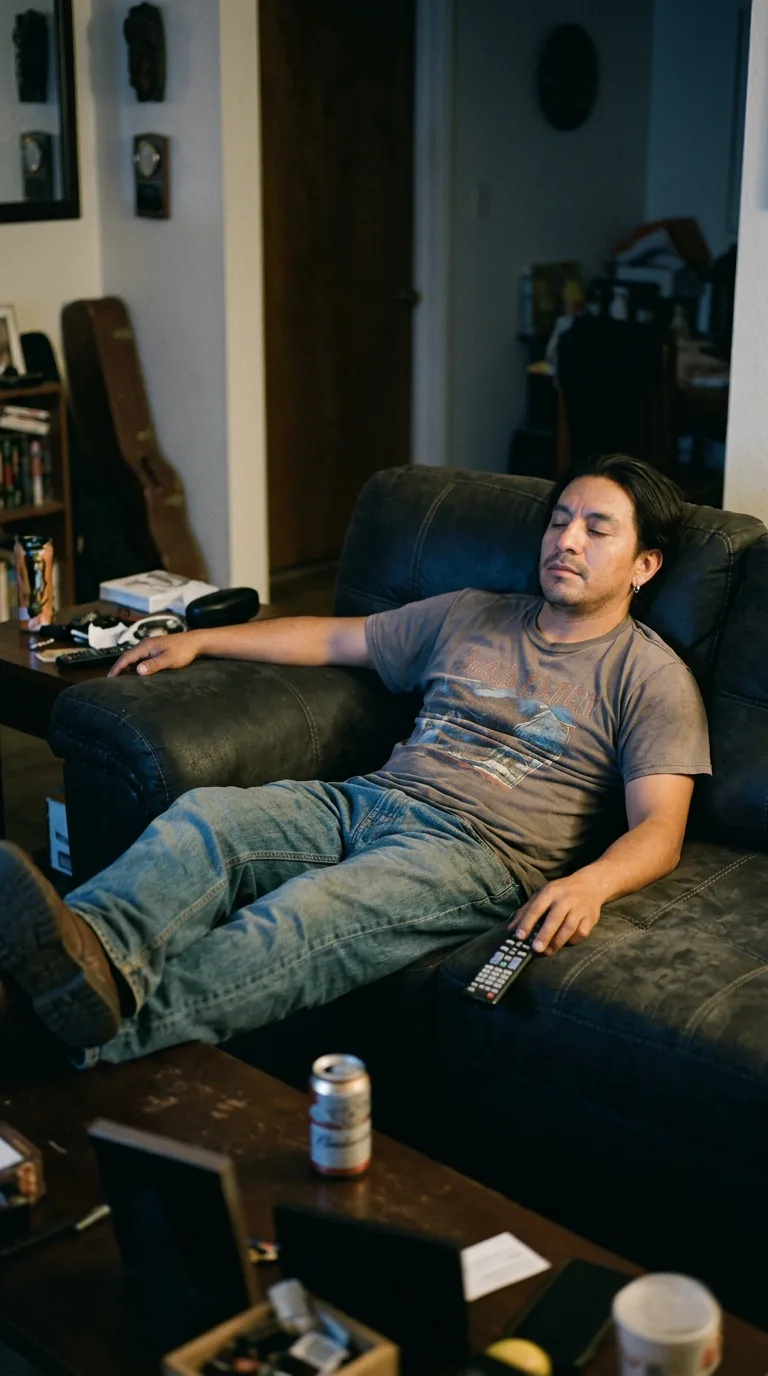
Rarest thing about him: One earlobe — epic, 1 in 28
Season 0seed 2103624012 · engine v10
Character card
lineage 2NZHHJ
His body-swap story
@colin.hasbrook, wearing Sipho Ndlovu, rolled the wheel on and woke up as Ruben Casillas, spent under a minute in him, then spun the wheel and woke up as Kevin Otani
You are three months old in this body and already sick of it — Sipho Ndlovu, thirty-one, standing in the wet grass of a Johannesburg sports field at dusk with a rake in your hand you never asked for and a back that aches in a way you didn't choose either. The groundskeeper job came with the body, unrefundable, and you have spent this whole spin pushing a mower and watching a sprinkler head that won't seat right and thinking about the wheel the way a smoker thinks about the next one before the last is out. It isn't that Sipho's life is bad. It's that it is somebody else's, the way they all are, and you have had two hundred and eighty-three of them and none has ever once felt like enough to keep. You set the rake against the fence. You are not deciding anything. Your hand is already moving to the phone in your borrowed pocket, already open to the page with the wheel on it, already tapping pay, spin, before the part of you that used to hesitate gets a vote.
The field goes. There is no falling, no dark — there is a room instead, cooler, and blue light crawling on skin that is not gray-brown and towering but brown and short and sitting down, and a couch underneath you that exhales when you land in it. The television cuts from one loud frame to a brighter one and your spine straightens on its own half a second before you've caught up to owning it. A remote is loose in your right hand. You set it down on the arm of the couch, deliberate, though you didn't decide to.
The room smells like someone else's dinner, garlic gone cold, and the couch leather is worn soft under your forearm, and both of those things open doors you didn't know were doors. The leather: three years of Friday nights on this exact cushion, boots up, a woman named Vanessa laughing at something on this same screen with her feet in your lap, and then the winter she wasn't laughing anymore, and then no woman's feet at all, just the shape of where they used to go, the couch keeping the memory better than you did. That ended four months ago. It still sits in the chest like a low current, not sharp, just always on, the way a fridge is always running somewhere in a house.
The shirt against your back — thin, worn to softness at the collar — gives you the morning you put it on, and it wasn't this morning, it was some other one, but the hands remember dressing anyway, the specific practiced economy of a man five foot four who has pulled a shirt over his head a few thousand times without a mirror: left arm, head, right arm, tug the hem down over the gut that isn't much of a gut, average build holding steady since thirty. There's an earring, a small hoop, and your fingers know without being told that it goes in the left ear only, has since he was twenty-two and it seemed like it meant something, and now it's just a hole that would look strange empty.
The remote in your hand a second ago gave you Sunday leagues on this same screen, beer in a can sweating a ring into the coffee table, one or two nights a month when the going out actually happens and never past a certain point because there's a six a.m. clock-in waiting and a shop foreman who doesn't care whose head hurts. Your knee is bouncing. It has been bouncing since before you arrived, a small tireless engine under the couch cushion, and now you know it never really stops, in trucks, in church pews, under desks, a body that cannot sit still even when it is doing nothing at all.
The apron isn't on you now but the memory of it is close enough to touch anyway, hanging by the door of a shop with your name written in Sharpie on the strap: hours of arc light and the smell of burnt flux, gloves stiff with old spatter, the particular ache between your shoulder blades that comes from holding a bead steady for forty minutes at a stretch, and underneath the ache, something that is almost pride, the clean straight seam nobody else in the shop lays as well as you do. Rosary beads somewhere in a truck's cupholder that you touch without praying most days and touch anyway. Sunday mass every third Sunday, guilt in between. A gravel road home, barbed wire catching the last light, a water tower holding up nothing but sky.
None of it is dramatic. That's what's strange, holding it — a whole plain life, unbothered, unremarkable, worth something comfortable in a bank three counties over and nothing anyone would put in a story. Which is exactly why it's good to be inside for a minute. It doesn't want anything from you.
You look down. The hand on your knee is smaller than the one you had an hour ago, olive-brown, a thin white scar across one knuckle you didn't earn and don't remember getting because you didn't get it — he did, welding something, years back, and it's yours to look at now and not yours to explain. You turn it over once in the dying blue light of the television.
"Huh," you say, out loud, to no one, in a voice pitched lower than the one you had this morning, and you don't laugh at the show the way he would have, because you're not watching it, you're just sitting in a stranger's ordinary Tuesday, wondering, without deciding anything yet, how long you'll let yourself keep it.