Rubén Anaya
Fictional. Generated by AI — not a real person, and no likeness of one is intended.
65, plumber in High-desert Nevada · rolled by @colby.marchetti · card — no film
History
who has worn him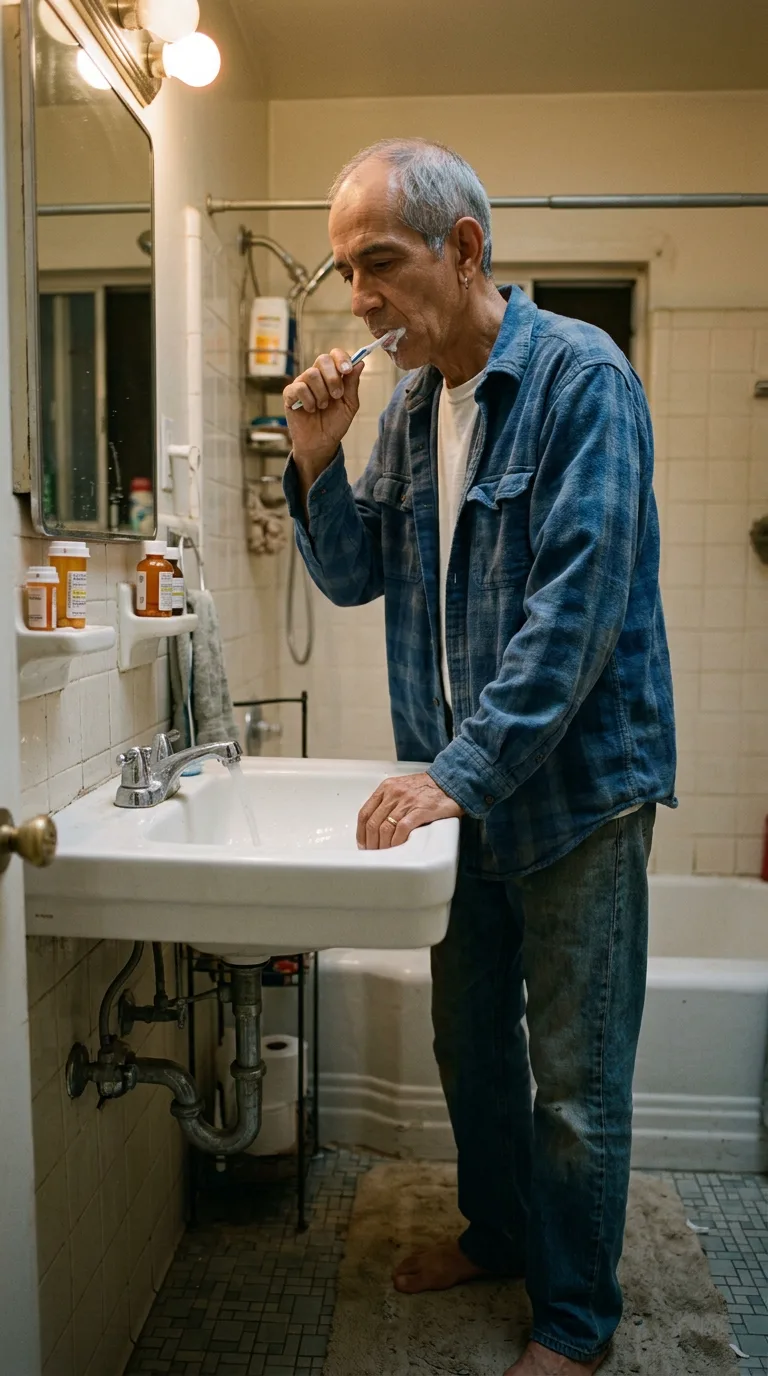
Rarest thing about him: One earlobe — epic, 1 in 67
Season 0seed 1036265610 · engine v10
Character card
lineage OZ80W3
His body-swap story
@colby.marchetti, wearing Terry Ledbetter, rolled the wheel on and woke up as Rubén Anaya, spent under a minute in him, then spun the wheel and woke up as Gerald Pruitt
Terry Ledbetter's kitchen smells like microwaved rice and the candle his ex-wife left behind. You are standing in his skin, in his good work slacks, three minutes into being him, and already you know this was a mistake — the freckled forearms, the soft gut straining a belt notch too tight, the phone in his hand still open to a spreadsheet nobody at the office will remember by Monday. He decided things in this body for a living and never had to lift them. You flex the fingers. Manicured, useless, blue-collar-envious fingers that have never held a wrench with intent. Boredom moves through you like a draft under a door. You open the laptop on the counter, thumb to vessel.cards out of habit more than hope, and the wheel is already spinning before you've fully decided, the way it always is by the fifteenth time.
It stops.
The water is running before you understand it is water, before you understand you are bent at a sink that is not the granite island of a Houston kitchen but chipped porcelain with a rust tear under the tap. There's a toothbrush in your mouth, foam gone gritty with mint, and your arm — thin, brown, ropy with a plumber's forearm muscle — is already lifting to the other side of your mouth, slow, working the back molars like there's a rhythm laid down in the wrist that doesn't need you at all. You rinse. Rinse again. Stand the brush up bristles-first out of habit, out of grey water that has apparently sat in that glass for years, and only then do you feel how the whole right side of your lower back has gone to a low permanent burn, old news to the body, news to you.
The earring is the first thing that talks. A small drag of weight at the left lobe, and it comes up through you like a held note — a flea-market table in Pahrump, a woman's laugh, *not for you, viejo, for your ear* — Marisol's voice, twenty years younger, teasing him into it, and him letting her because saying no to her had never once worked and he'd stopped wanting it to.
Then the ring. Plain gold, dulled at the edges, and it opens wider than the earring did — a church basement in Sparks, folding chairs, a pastor half his age, Marisol's mother crying not from joy exactly but relief, because Rubén had been the responsible kind of scared-of-God since he was nineteen and pouring concrete for his uncle's outfit, the kind who tithed even in years the truck needed brakes. Thirty-one years of that ring. A boy — a man now, thirty-two, an electrician in Reno who calls on Sundays whether he means to or not, which Rubén loves more than he has ever said out loud, because saying it out loud is not a thing his father did and he never learned the trick of it either.
The shirt on your back gives you the morning — the actual morning, hours behind this one now — pulling the flannel off the hook by feel, not looking, because looking at your own face lately costs something. The joints in your shoulders complaining the specific complaint they complain every day, a low grinding at both, worse on the left, that you — no, that *he* — has stopped mentioning to Marisol because mentioning it means the doctor, and the doctor means money they don't spend on him. Under the sink today: a stranger's house in Pahrump, a corroded P-trap, a woman standing in the doorway apologizing for the smell, him saying *no charge for the smell, ma'am* in the dry voice that always got a laugh out of people who'd braced for a grump. Forty years of kneeling on other people's tile. The knees know it before you do — a fine, familiar grind when you shift your weight at the sink, old friend, not new.
The gum. There's a piece gone soft and flat against your back teeth, has been there since before the sink, and your jaw works it without asking permission, the way it has for eleven years since the doctor told him the beer had to go and something had to go in its place, and gum was cheaper than sobriety chips and didn't require telling anyone at church he'd had a problem at all. No taste to it now. Just motion. Just the small mercy of a mouth with something to do.
The water is still running. You reach and shut it off with a hand that knows exactly how far to turn the old stiff handle before it squeals, and the squeal itself brings back a hundred nights like this one, alone in the little bathroom of the single-wide while Marisol falls asleep to the television down the short hall, sagebrush going navy blue outside the window, the high desert giving up its heat the second the sun quits.
You look down. Thin wrist, brown, a white ring of untanned skin where a watch usually sits, the wedding band catching the bare bulb over the mirror. You turn the hand over once, like checking it for something you already know isn't there, and lift your eyes into the mirror instead of away from it, and hold.
"Almost forgot the back ones," you say, to no one, in his voice, and it comes out easy, like it's been yours for years — which, for exactly as long as it takes to decide otherwise, it is.