Gerald Pruitt
Fictional. Generated by AI — not a real person, and no likeness of one is intended.
52, line cook in Phoenix · rolled by @colby.marchetti · card — no film
History
who has worn him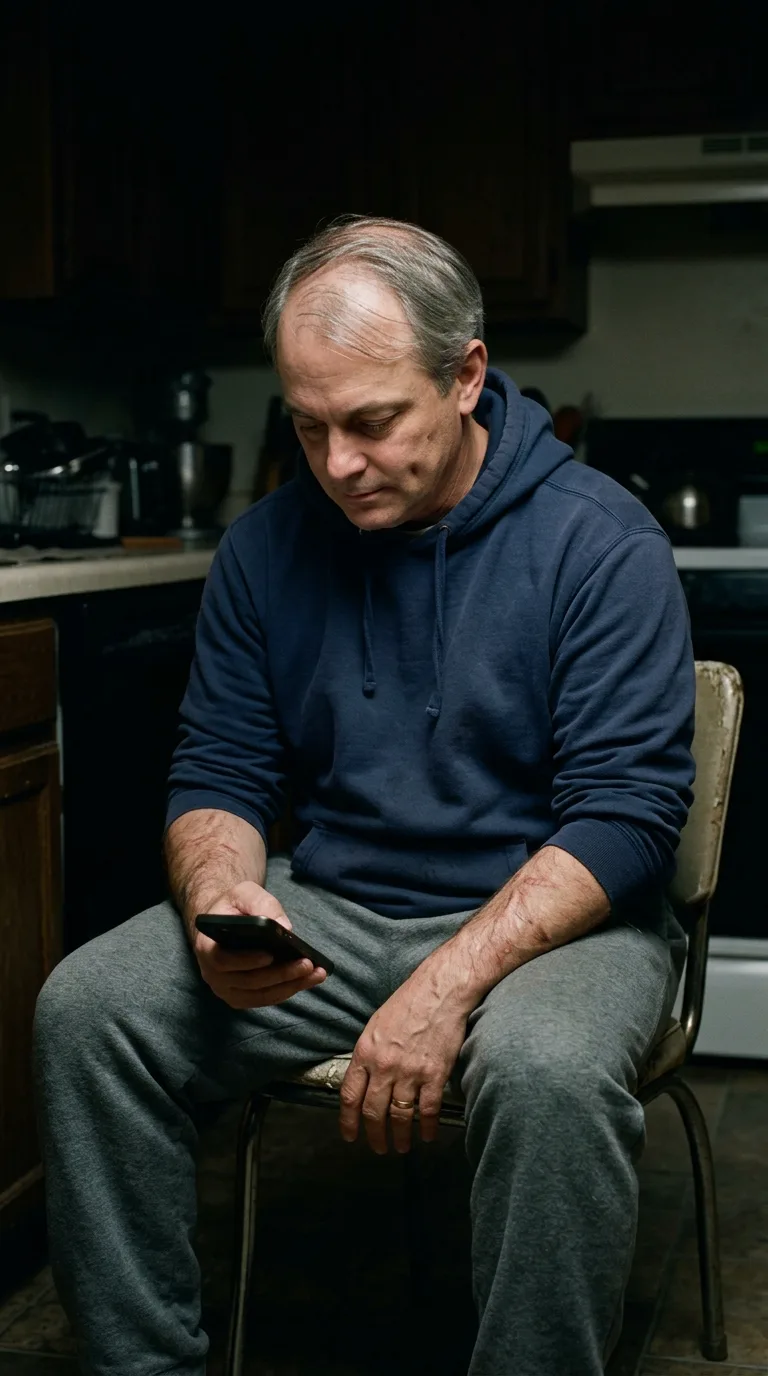
Rarest thing about him: Stutters under pressure — rare, 1 in 78
Season 0seed 1230641769 · engine v10
Character card
lineage OZ80W3
His body-swap story
@colby.marchetti, wearing Rubén Anaya, rolled the wheel on and woke up as Gerald Pruitt, spent under a minute in him, then spun the wheel and woke up as Damon Whitfield
Rubén's knees are the reason. Sixty-five years of them, and thirty of those spent on ladders and crawlspaces, and now they lock every time he stands from a chair, and it has been less than a minute since you took him and already you are done with him. You are sitting in his gravel yard behind his double-wide, saguaros going black against a sky still holding some orange, and his phone is in his shirt pocket and you don't even reach for it. You just know: not this one, not tonight, not sixty more years of this in a body that complains before it moves. Sixteen times now you have done this and the pattern is always the same shape even when the reasons dress up different — a want that arrives sudden and total, like hunger. Tonight it is simple. You want to be someone whose worst problem is a watch he can't buy. You open the site on a screen you didn't type into. vessel.cards. The wheel is already spinning before Rubén's hand — your hand, for four more seconds — finishes lifting off the porch rail.
The kitchen is dark and then it is your kitchen, dark in a different way — evening light going copper through a window over a sink, not yet dusk, a Saturday doing what Saturdays in Phoenix do to a man who worked a Saturday morning brunch shift and has nothing left. Your thumb is already lifted off the glass. A watch, twenty-two thousand dollars, sits face-up on the screen for one more second before the phone goes dark and gets set face-down on the counter by a hand that used to be Rubén's and is now Gerald's, and does not pick the phone back up.
You are 5'4" and it registers first as absence — the room is closer than it should be, the counter edge at a different height against your hip. Average build settling like a coat that fits. Then the shirt: a hoodie, soft from a hundred washes, and it gives you a Tuesday two winters back, folding laundry with the television low, a rerun, his wife Denise's laugh from the other room at something the dog did. The sweatpants at your ankles hand you a morning — this morning, a few hours old still — pulling them on standing at the foot of the bed because sitting to dress has gotten to be a whole production since the hip started going, hand on the dresser for balance, sock already crooked and not worth fixing.
The ring is the one that opens the whole thing at once. Left hand, plain gold, worn thin on the inside curve from thirty years of dishwater and dough and a Silverado's wheel. Denise at nineteen in a parking lot outside a Circle K, both of you too broke to go anywhere and neither of you caring. Three kids — you get the youngest first, a girl, stubborn, home from Tucson two weekends ago smelling like somebody else's cigarettes, and you didn't say anything, you just made her the eggs how she likes them. Then the older two arrive stacked behind her, a boy who calls on Sundays and a boy who doesn't call enough, and you love all three in that specific ruined way of a man who was gone every dinner for twenty years working a line so they could eat.
The line itself comes up through your forearms, which know without asking how to hold a knife at the correct angle, how to shake a sauté pan without looking, twelve hours a shift, the burn scars up both wrists like a stripe of bad tattooing nobody chose. Your hands, still now, remember a moment six years back that the body flinches from even at rest: the doctor's office, the word that started with the same letter as your daughter's name, and how your hands shook holding the paperwork so bad the receptionist reached over and turned the page for you. Stuttered. They still do, under the right kind of pressure — a ticket spike on a Friday, a knife too close to a fingertip, a form with too many blanks. Remission now, three years clean of it, and still every cough gets a half-second of held breath before it's just a cough.
You feel the dimples before you understand them — some resting shape your face holds that has nothing to do with what you're feeling, so that for six years, sick and terrified, you looked like a man about to laugh. Denise told you once it was the only thing that got her through the waiting rooms, looking over and seeing that face doing that, whatever was actually happening underneath it. You did not choose the dimples and you cannot unmake them and something in you — no, in him, the last of him going under your feeling like sand under a wave — loved that they were his and outside his control both.
No drink tonight, hasn't been in months, doesn't need one particularly. A cigarette craving that hasn't fully died in eleven years surfaces once, faint, from the smell of the stove's pilot light, and passes.
You look down. The hand on the counter is not the hand you had four seconds and one body ago — no calluses from thirty years of pipe wrenches, no age spots climbing past the wrist, just a plain gold band on a shorter, softer hand, dimpled knuckles instead of Rubén's long knotted ones. You turn it over once, studying the lines of a palm that has held a chef's knife ten thousand shifts and never once held a stethoscope reading anything but bad news, and you lift your eyes to find, without meaning to, the dark reflection of the window glass over the sink, holding there.
"Didn't feel a thing," you say, to no one, and it comes out in his voice, and you almost laugh at how true and how false that is at the same time.