Roy Whitewater
Fictional. Generated by AI — not a real person, and no likeness of one is intended.
53, tow truck driver in Chicago · rolled by @colin.hasbrook · card — no film
History
who has worn him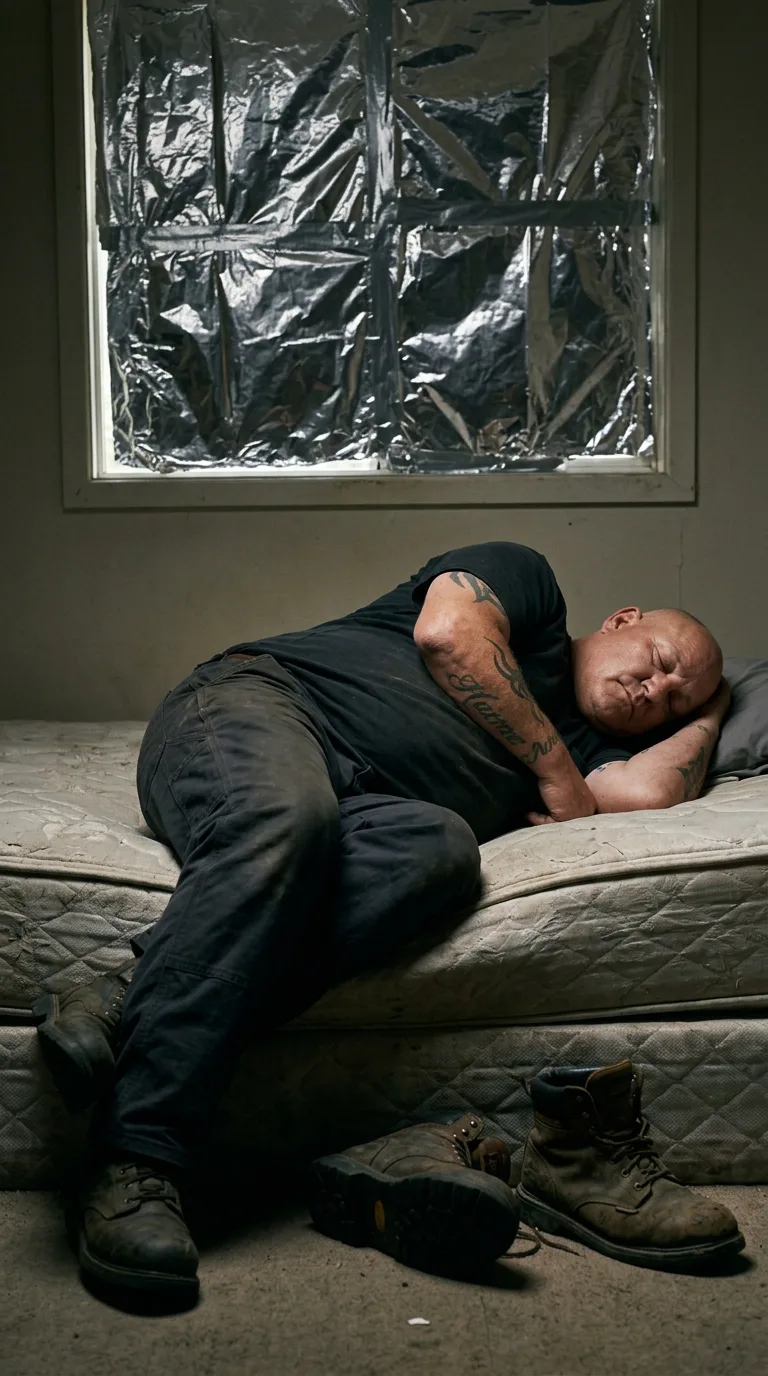
Rarest thing about him: Blue — epic, 1 in 33
Season 0seed 1924100600 · engine v10
Character card
lineage 2NZHHJ
His body-swap story
@colin.hasbrook, wearing Gary Holcomb, rolled the wheel on and woke up as Roy Whitewater, spent under a minute in him, then spun the wheel and woke up as Dean Farriday
The condo is Gary Holcomb's, and Gary Holcomb's hands are the ones you're using to hold the phone, and it is the middle of a Monday and the light coming through the tall windows is Seattle light, flat and gray and doing nothing for anybody. You are retired in this one. Athletic in this one. Sixty-four years old with silver hair and blue eyes and a knee that clicks when you take the stairs, and none of it matters, because fifty-one minutes ago you were a twenty-year-old kid in Philadelphia with a scar through his eyebrow, lying on a dorm mattress with your heart still going from something that happened before you ever got there — a fight, a debt, a girl, it doesn't matter whose it was, because it wasn't yours, it was his, Marcus's, and you wore it for less than a minute and felt what he felt about the man who did it to him. You felt the shape of the grudge without the story behind it. That's the trouble with taking a body for sixty seconds: you get the weather, not the reason. You want the reason. Or you don't — you want the other man, the one on the other end of that grudge, the one Marcus never stopped hating from the inside where you were standing. Gary Holcomb pours coffee he doesn't finish and sets the mug down and opens the site on his phone with his own two thick retired fingers, and the wheel is already loading before he's decided anything, which is its own kind of decision.
The window is not a window. It's foil, four strips of gray duct tape holding down a rectangle of kitchen-grade aluminum, and a corner of it has come loose in the draft off the radiator, and it lays a blade of afternoon straight across a bald head and a crooked nose. Your head turns from it. Then, heavy, it turns back into it, and the eyes underneath open on the glare and hold there, unblinking, taking the light like a dare. Chicago is two hours ahead and none of that reaches this room; this room only knows itself, mattress with no frame, boots kicked off crooked on bare concrete, black t-shirt riding up over a gut that didn't used to be there. Fifty-three years of a body announce themselves all at once — low back seized halfway up like a rusted hinge, right shoulder that has learned to live a half-inch lower than the left, a mouth already dry and sour from a cigarette three hours ago that was supposed to be the last one before sleep and wasn't.
Whose bed. His name comes up through the mattress before anything else does, the way names do, because it isn't a name you're handed, it's a memory the ticking under you drags up — Roy, whispered by a foreman on a lot in Cicero fifteen years back, Roy Whitewater, and something under that, farther down, the reservation outside Bemidji where his mother's people are from and he isn't, not really, not anymore, not since he came to Chicago at twenty-two and never went back except for a funeral. The tribal ink on both forearms isn't heritage, it's just what the shop on Milwaukee Avenue had on the wall the night he got it, twenty-six years old and three drinks past sensible, and he's felt a little guilty about that ever since, which is its own kind of Catholic, guilt with no sacrament attached to it.
The shirt against your back gives you this morning, or what he'd call morning, which was eleven at night when he pulled the black tee over his head in the dark so as not to wake nobody, though there's nobody here to wake. Boots on, laced loose over the ankle because the left one swells by the end of a shift and he learned that the hard way. Coat by the door with the tow company's name stitched crooked over the pocket. Then the whole night comes at once, because the trousers are still on him and trousers remember longer than shirts: eleven hours on the shoulder of the Kennedy in nineteen-degree wind, hazards ticking, a Buick folded into a guardrail and a kid in it crying into a phone, and Roy backing the flatbed up slow, chain in his fist, hook swinging, the particular ache of bending at the winch with a back that has not forgiven him for thirty years of this work and never will. He likes the work anyway. Liked it tonight, even, the specific competence of it, the way his hands know the chain without him watching them, wrap and hook and check and clear, done a thousand times, going to be done a thousand more unless something stops it.
Nobody's stopped it yet. No wife did — there was a woman, once, Denise, and it ended on its own weather, nothing dramatic, just two people who ran out of reasons to keep trying, and he doesn't keep her picture up and doesn't need to, she isn't in the room, isn't in anything he's touching. No kids ask after him. A rosary he doesn't say enough of hangs off the doorknob because his mother gave it to him and he can't throw it away and can't quite use it either. A pack of cigarettes sits on the floor by the mattress, four gone since yesterday, and lighting one is such a small motion his hand starts to do it before you've told it anything at all.
Marcus Deveraux. The name comes up out of nowhere and everywhere — the ink, maybe, or the ache in the back that Marcus never had and never will at twenty, or just proximity, the fact that you were him fifty-one minutes ago and he is still warm in you like a held breath. Whatever's between them, you've stood on both ends of it now: felt Marcus's hate from inside Marcus, and now you're standing inside the man that hate belongs to, sour-mouthed and unaware, sleeping off a shift in a room somebody sealed against daylight because daylight is his enemy nine months of the year. You didn't come here to fix anything. You came here to know both halves of a thing that isn't yours, the way a man collects rooms in a house he'll never live in, because that's what six hundred and forty-nine spins does to the wanting — it stops being about any one life and starts being about having stood in all the doorways.
You bring the hand up in front of your face. Blunt fingers, a fading nicotine stain, black ink curling out from under the sleeve, and you turn it over slow, like it might not be load-bearing.
"There you are," you say, out loud, to the empty taped-up room, and you don't know yet if that's forty years or four minutes, only that the wheel is still open somewhere behind you in a condo in Seattle, patient, unbothered, waiting on whichever hand reaches for it next.