Marcus Deveraux
Fictional. Generated by AI — not a real person, and no likeness of one is intended.
20, student in Philadelphia · rolled by @colin.hasbrook · card — no film
History
who has worn him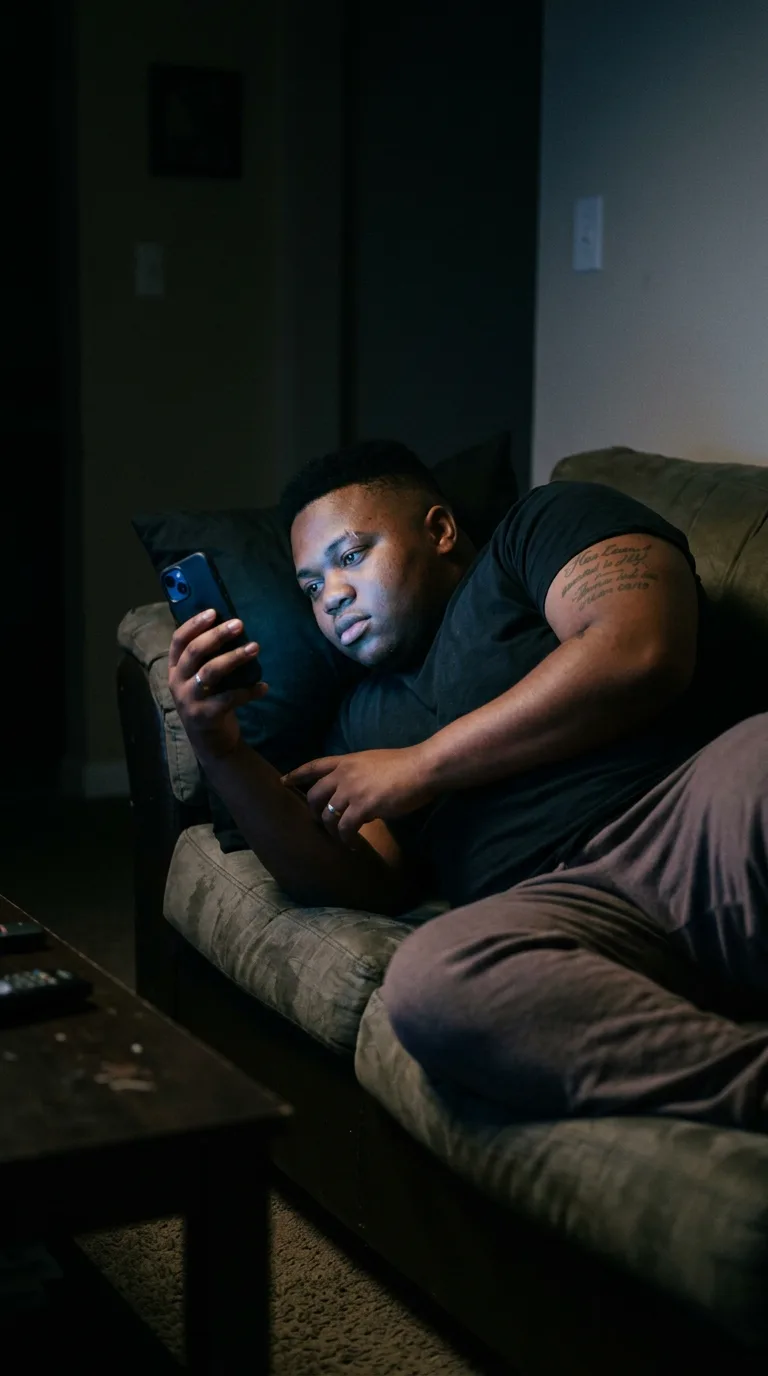
Rarest thing about him: Married — epic, 1 in 64
Season 0seed 208562035 · engine v10
Character card
lineage 2NZHHJ
His body-swap story
@colin.hasbrook, wearing Marshall Auduboin, rolled the wheel on and woke up as Marcus Deveraux, spent under a minute in him, then spun the wheel and woke up as Raymond Cusick
The shop smells like carnations going brown in the bucket, and Marshall Auduboin's knees ache the way they always ache by noon, and that is the whole reason, really — not some big thing, just the knowing that this is Tuesday and it will be Wednesday next and the knees will still ache and the register will still be short and the man who left flowers on the counter for his ex-wife this morning will still not be missed. Forty-eight years old in these bones, six years wearing them, and you are tired of gray in the mirror over the sink in back, tired of hazel eyes that have seen six years of the same delivery van. You wipe your hands on the apron, tell the girl at the counter you're taking five, go into the office, pull up vessel.cards on the computer you are not supposed to use for personal business, and you spin because it is noon and because you can.
The wheel stops and there is no five minutes, no van, no flowers. There is a phone six inches from your face, blue-lit, and a thumb — not yours, not yet yours — going still on the glass mid-scroll. The room is dark around the light. You are lying on your side on a couch, weight low and warm and solid under a black T-shirt, and the thumb starts moving again, faster than it was, flicking through what he'd stopped on without looking at any of it, and you feel your own eyes forget how to blink like a stranger's for three, four beats before you find the rhythm of him again.
The couch is worn soft under his hip, the exact give of leather gone slack from years of one body's weight settling always in the same spot, and that alone brings something — an evening, another one, curled up here after work with his phone, waiting on nothing in particular. The tattoo on his upper arm is pressed under the sleeve against the cushion and it opens like a door: a wedding, June, hot enough that his husband's collar wilted by the vows, and the script under the sleeve is a name and the date they don't say out loud so much as just know, worn into the skin the way the couch is worn into his hip. The band on his left hand is warm from his own grip on the phone and it brings the morning he put it on for the first time, hands shaking, his mother two pews back not smiling yet, then smiling.
The shirt against his back — soft, thin at the collar from washing — gives you the exact minute he pulled it over his head this morning, standing in the bedroom with the shade still down, an ex's name sitting somewhere behind his sternum the way it does most mornings now, a boy he isn't supposed to think about anymore and does, briefly, buttoning nothing because there's nothing to button, just the shirt, then the sweats, then back down onto this couch because the day had emptied out from under him — no class till later, husband at work, and nothing in his hands but the phone and nothing in his chest but the small ordinary ache of missing somebody he isn't allowed to miss out loud. His leg is already going under him, bouncing against the cushion the way it does without him ever deciding to let it, a motor that runs whether or not anyone's watching. Twenty years old in this body and it carries different than Marshall's — thicker through the middle, dense, tired in a younger way, no ache in the knees but a low hum of always-been-heavy in the hips from sitting through long lectures on a lawn with a laptop balanced on a thigh that's gone numb an hour in. The scar through his eyebrow doesn't hurt but it's there under your own fingers when you finally lift a hand to touch it, a thin pale seam from something a decade gone that nobody in this life brings up anymore.
You feel the whole shape of him settle in at once, uninvited — Sunday mornings at a church three blocks from the rowhouse with the marble steps, his husband's hand finding his in the pew without looking, the vape in the kitchen drawer he tells himself is the last one every single day, a laptop screen on green grass and professors' voices going soft under sun. None of it yours. All of it sitting in you now like furniture in a room you've just walked into.
You bring the phone down from your face, slow, and look at your own hand instead — his hand, brown-knuckled, the band catching the blue light, the leg under it still bouncing on its own.
"Hey," you say, to no one, into the dark living room, testing the weight of his voice in your mouth like it might not hold.
It holds.