Roy Pemberton
Fictional. Generated by AI — not a real person, and no likeness of one is intended.
55, delivery driver in Rural Texas · rolled by @malik.overton · card — no film
History
who has worn him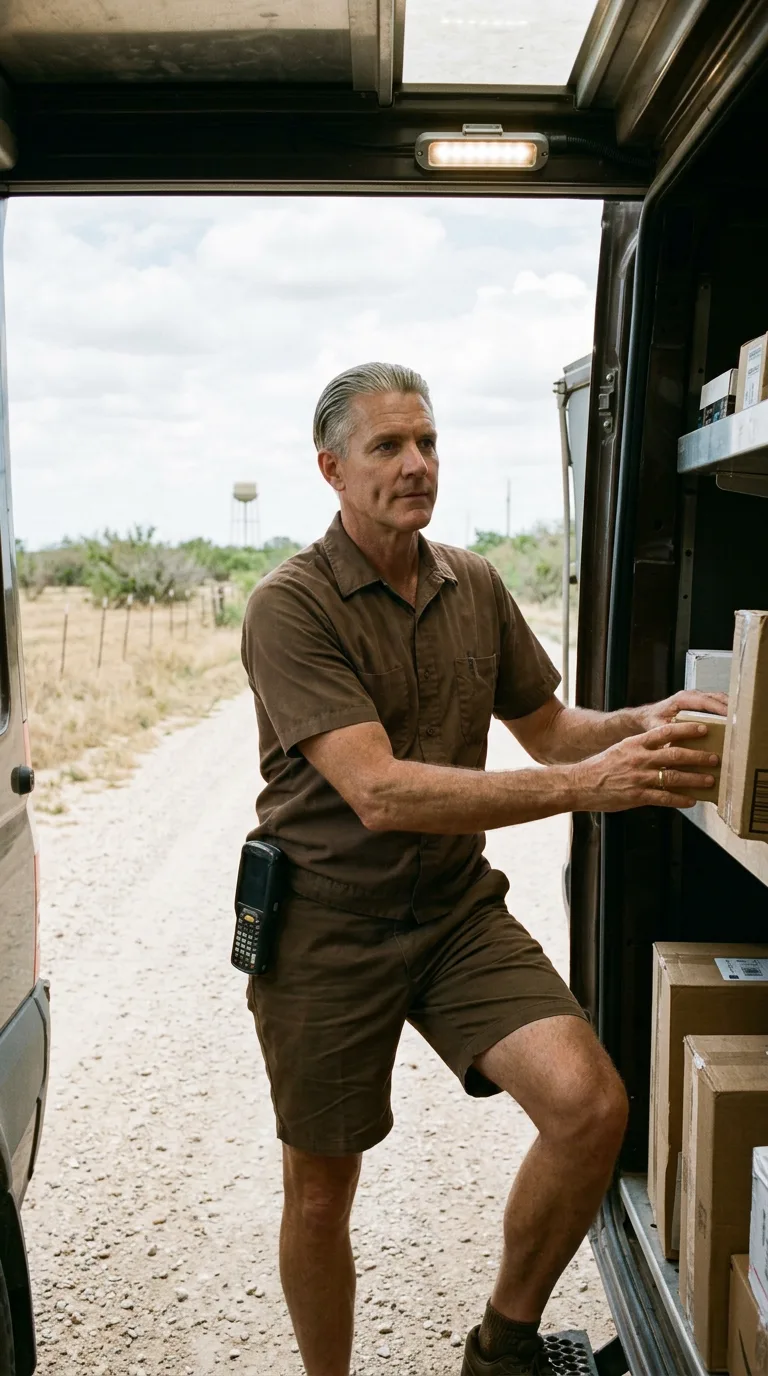
Rarest thing about him: Slicked back — uncommon, 1 in 45
Season 0seed 1525966522 · engine v10
Character card
lineage WV6PBZ
His body-swap story
@malik.overton, wearing Max Tillery, rolled the wheel on and woke up as Roy Pemberton, spent under a minute in him, then spun the wheel and woke up as Ernesto Salcido
Four minutes is nothing. You know that, sitting in Max Tillery's kitchen with the shop rag still smelling of brake fluid on the counter, his phone face-down, his dog asleep against the cabinet. Four minutes was long enough to notice the ache low in his shoulder from work he hasn't done yet in this life, to notice the freckles on knuckles that aren't the ones you're used to noticing, to feel, for one honest second, nothing wrong with any of it. That's the part that gets you. Not boredom, not a flaw. Just the absence of any reason to stay, which is somehow worse. Twenty-one men behind you and every one of them ended the same way — you liked something about it and then the liking wasn't enough, and the site was still open in another tab like it had been waiting. You wipe your hand — his hand — on your jeans, though there's nothing on it, and you open the laptop instead of putting it away, and you spin, because stopping requires a reason and starting again doesn't.
The wheel doesn't blur so much as it forgets you were watching. Then it's the smell of cardboard and diesel and dry grass, and your hand is already closing around a box that isn't yours to be holding, and it goes wrong for half a second — fingers not curling right, the box tipping a degree off true — and then it corrects, slow and deliberate, like a man double-checking a math problem he's solved ten thousand times in his sleep. You set that box on the shelf. You check the next one. And the one after that. Ten boxes, each one placed like it might bite.
The van smells like it always does — hot vinyl, cardboard dust, the ghost of gas station coffee — and that smell alone drops you into a Tuesday two winters back, sleet turning to nothing on the windshield, the radio playing something with steel guitar, and the ache in his knees that means the weather's about to break. The scanner on his belt is warm from the sun. Your thumb — his thumb — knows its buttons without looking, punches a code before you've consciously decided to, and behind that comes a flood: the loading dock in Uvalde at five a.m., a supervisor named Dale who called everybody "chief," sixty-one years of practice with barcodes and belts and other men's driveways.
The shirt is what opens the widest door. Brown twill, damp already at the collar, and putting it on this morning comes back whole — standing in the bedroom while Carol slept in another ten minutes she'd earned, buttoning it one-handed because the other hand was holding his coffee, the dresser mirror throwing back a face he doesn't examine anymore, dimples set into it even when he isn't smiling, hasn't been since he was young enough to think they were a joke God was playing on him. He buttoned it the way he's buttoned four thousand identical shirts, thinking about nothing, which is its own kind of luxury after thirty years of thinking about everything. Three kids raised on this route's paycheck, a fourth flown mostly out of memory now, though the ring on his hand still remembers a woman named Denise before Carol, a whole life he closed the door on gently, the kind of ex you don't talk about because there's nothing left to say against her. Carol he married for good reasons and has never once regretted, not on the bad days, not even the day the doctor said asthma like it was a life sentence and it turned out to be a inhaler in the glovebox and nothing more.
His body under your hands is lean muscle laid over fifty-five years, a back that clicks when he twists wrong, calves gone hard as fence posts from ten years of curbs and gravel and other people's steps. Nothing hurts exactly. Everything is used. The scanner's weight on his hip is as familiar as his own pulse, and somewhere behind your ribs his lungs pull a little tighter than lungs should, an old habit of caution that isn't yours yet but will be for as long as you're in here.
You look down. His hand — tanned, ringed, a pen clicking in the shirt pocket though nobody's holding it — turns over once in the light coming off the water tower, like you're checking it's real.
"There you are," you say, to no one, in his voice, and you don't yet know if you mean the hand or the man.