Ernesto Salcido
Fictional. Generated by AI — not a real person, and no likeness of one is intended.
46, undertaker in Atlanta · rolled by @malik.overton · card — no film
History
who has worn him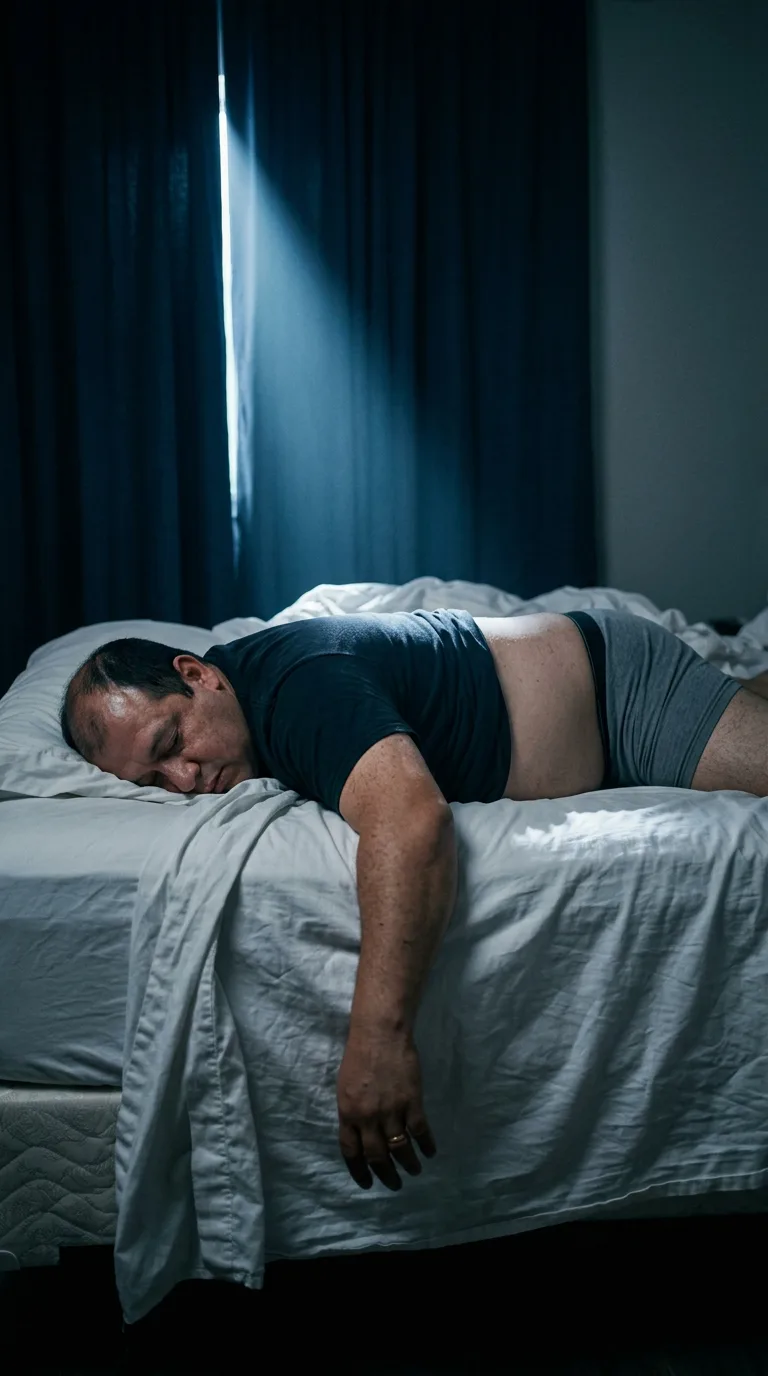
Rarest thing about him: Undertaker — uncommon, 1 in 170
Season 0seed 1835773991 · engine v10
Character card
lineage WV6PBZ
His body-swap story
@malik.overton, wearing Roy Pemberton, rolled the wheel on and woke up as Ernesto Salcido, spent under a minute in him, then spun the wheel and woke up as Greg Osterhout
The delivery van's still ticking in Roy Pemberton's driveway, engine cooling in the heat, and you're standing at the kitchen counter reading the little printed route sheet for tomorrow like it's a letter from a life sentence. Thirty-one stops. Roy's knees ache from the last thirty-one, and they're not even your knees, not really, but you've had them long enough now — six weeks — that they've started to feel earned, and that's the problem. Six weeks of the same porch dogs barking at the same gate latches. Six weeks of a body that still works, dimples and all, that women at the gas station still look at twice. It isn't broken. It's just used up in the particular way a good thing goes flat when you know every hour of it in advance. You wipe your hands on a dish towel that smells like Roy's fabric softener, and some tired, familiar want stands up in you — not boredom exactly, something closer to hunger that boredom wears as a coat — and you go to the laptop on the counter, the one with the bookmark already saved, and you open the wheel.
It spins the way it always does, colors bleeding into a blur, and Roy Pemberton's dimpled hand is still on the mouse when it stops.
—
The pillow smells like somebody else's sweat and the room is dark in a different way than any room Roy ever slept in, curtains blue instead of Roy's yellowed blinds, one blade of streetlight cutting the wall. Your breathing — his breathing — goes from a ragged, catching snore to something even and slow, one whole breath to cross the distance. The arm that was hanging off the mattress lifts on its own, elbow bending, wrist turning, and you feel the shoulder pull it up and in without you deciding to, both hands coming to rest folded on a chest that is heavier than any chest you've worn in months. Heavy in a settled way. A gut under thin cotton, warm, damp at the collar. Short legs. A ring, plain gold, snug on the fourth finger of a hand that is, for this one second, only a shape you are borrowing.
—
The sheet under your back is the first thing that talks. It gives you heat — Georgia heat, thick as a wet towel even through central air turned low to save money — and under the heat, a whole marriage: Marisol's side of the bed cool and empty tonight because she's got her sister on the phone in the next room, some crisis about a lease, her voice carrying low through the wall, and you — Ernesto — you let her have it, you always let her have the calls that go long, because your own mother taught you a house runs on who gets to talk first. Twenty-two years married. A daughter, Vanessa, nineteen, who calls twice a week now that she's at Georgia State and who used to fall asleep on your chest at the viewings when she was small enough that nobody minded a kid asleep in a funeral parlor, curled up in the third row while you stood by the casket in your good shoes making sure nobody's grief needed anything you hadn't already thought of.
The wedding band gives you the day you put it on, sweating through a rented tux in June, twenty-four years old and sure of nothing except her. It gives you, too, a night eight years before that ring, a girl named Priscilla Ureña who you have not spoken to since she moved to Charlotte, whose name still sits somewhere behind your sternum like a low note nobody else can hear — not a wound anymore, just a room in the house you don't go into, door shut, light off.
The undershirt against your skin gives you this morning — his morning, hours off yet from where the wife's voice is murmuring through drywall — dressing for a viewing at Solomon & Hartwell, size 44 jacket that fit better six years ago, the vest's middle button always a fight now, breath held in for one second the way you hold it every single morning of your life to get it closed. Black tie knotted from memory, hands that have tied four thousand of them without a mirror. Slacks that sit low under the belly. Dress shoes that pinch at the arch because the feet spread with the years and the shoes did not. You remember — he remembers, and it comes to you as his ache, not yours — the particular tiredness of standing three hours in a viewing room of folding chairs in neat sad rows, murmuring the right soft words to a widow, the leg under you bouncing against the podium's shadow the whole time because it never stops, it hasn't stopped since he was a boy in church pews, some motor in the knee that runs whether or not the rest of him is calm. Freckles across his nose that his daughter used to trace with one finger, counting them like stars, laughing that Papi had constellations. High cholesterol, a doctor's voice saying numbers, a promise to eat better made and broken and made again. No drink tonight, a small one most Fridays, never a cigarette, not once, watched his own father cough himself down to nothing and swore off it in the driveway of that man's funeral, which he also, of course, ran.
None of it is yours. All of it comes up through the cotton and the ring and the smell of his own pillow, and you hold still and let it come, because this is the only way in — through his hands into his life, sleeve by sleeve, knot by knot, ache by ache — and for a few seconds in the dark you are a heavy tired man in his own bed with his wife's voice through the wall and his daughter three weeks into a semester and a low note behind his sternum that will never again be touched by anyone, least of all you.
—
You lift your hands off your chest and look at them in the thin blue light — thick fingers, the ring catching what little there is, freckles scattered like something spilled and never quite wiped clean — and they are not Roy's dimpled hands, not anymore, not ever again, and for a second that is the whole of the feeling, the strangeness of a body arriving into you rather than the other way around.
"Ernesto," you say out loud, to the dark, to nobody, trying the name in his own low voice, and down the hall Marisol laughs at something her sister said, and you have absolutely no idea how long you get to be the man who answers to it.