Roy Kettering
Fictional. Generated by AI — not a real person, and no likeness of one is intended.
49, manager (mid-level) in Houston · rolled by @marco.villagrana · card — no film
History
who has worn him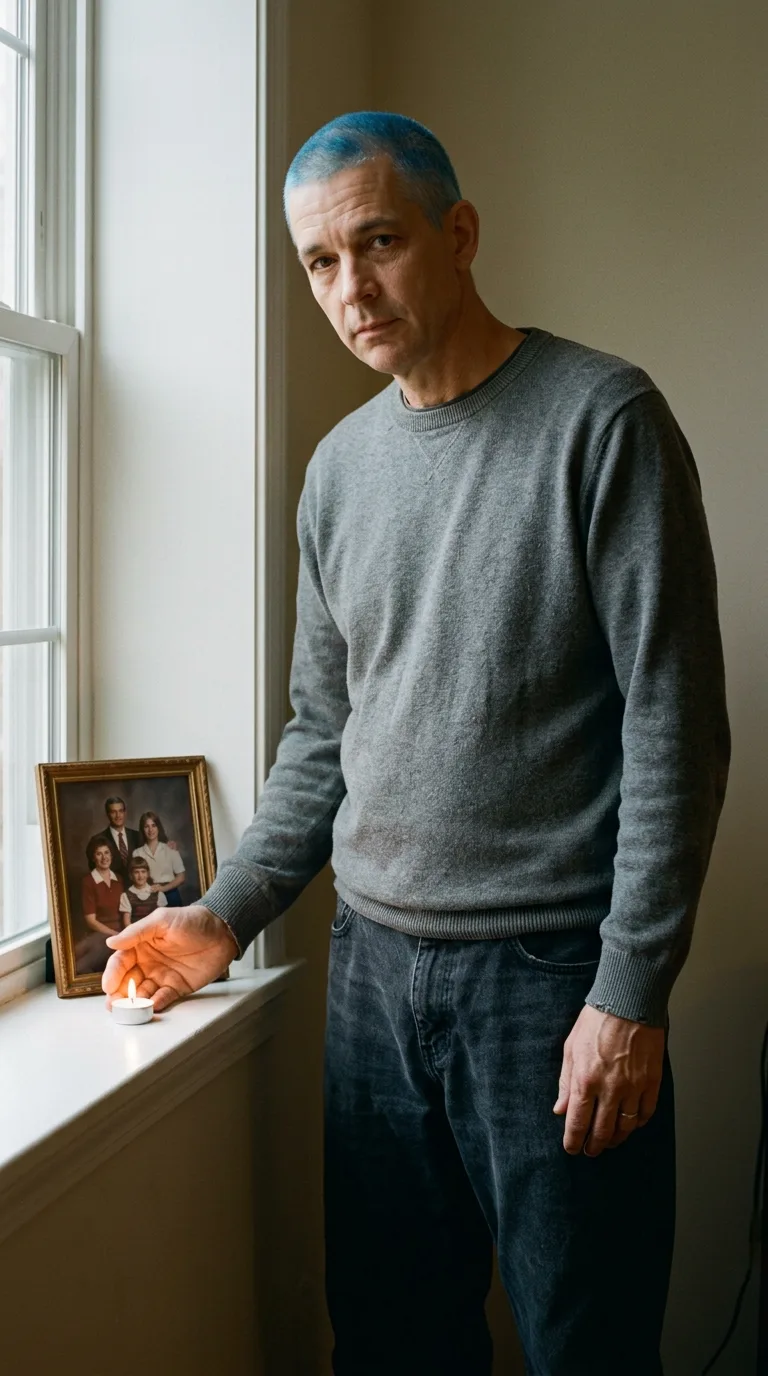
Rarest thing about him: Fashion color — legendary, 1 in 238
Season 0seed 60333055 · engine v10
Character card
lineage LJL8SV
His body-swap story
@marco.villagrana, wearing Ernesto Galarza, rolled the wheel on and woke up as Roy Kettering
---
Three minutes is nothing. Three minutes is a bus stop, a red light, the time it takes coffee to cool enough to drink. But you have spent three minutes being Ernesto Galarza, forty years old, standing at a bus yard gate in Denver with your — his — hand still warm from the wheel of a Route 15, and already the itch is back under his skin like it was never anyone else's skin at all. Heavy in the shoulders. Feet aching in shoes a size too narrow, because he buys them a size too narrow, some stubbornness you inherited along with the rest of him and didn't ask for. Radio traffic in his ear. Somebody named Louis asking if he's coming back for the four-thirty. You feel the answer forming in his throat — sure, in a minute — and that's the exact second you understand you're not going to be here for the four-thirty, or for Louis, or for whatever the rest of Ernesto's Friday was going to be. You don't dislike him. You've simply already left. You always leave like this, mid-sentence, the body still finishing something the person driving it no longer means. Eighty-four times now. This will be the eighty-fifth and no different, except that it is a Friday afternoon and you are bored in a way that has started to frighten you a little, the boredom of a man who has been everywhere and felt, in all of it, only the thin high of arrival and then nothing, then wheel-hunger again. You take out the phone — his phone, cracked case, a photo of a woman named Carla as the lock screen — and you open vessel.cards without a single thought for Ernesto, who is still, somewhere underneath, asking about the four-thirty bus.
You spin.
—
The candle leans.
It leans toward the open window though there is no wind that would explain it, a small orange leaning thing, and your hand — his hand, thick-fingered, a plain gold band cutting into the base of the ring finger — is cupped around it like it's a bird he's trying to keep. You say a name in a voice that is not the voice that started the sentence. Warmer. Surprised at its own warmth. Then you put the flame out with a breath that keeps going long after any lungs should have emptied, and the room comes up around you all at once: cream walls, late light through old glass, the smell of wax and go furniture polish, a framed photograph propped against the sill — a family, formal, decades gone, a man and a woman and two girls in clothes that were once someone's Sunday best.
His weight settles into you the way water finds a level. Skinny through the chest, soft through the middle, forty-nine years sitting exactly where forty-nine years sits. Your scalp itches — his scalp, buzzed close, dyed some fading electric blue he can feel at the roots gone gray-silver already, an old vanity or a young one's leftover, you can't tell which yet. Your tongue finds a toothpick that isn't there and worries at the empty place anyway.
The sweater is what opens first. Gray, worn soft, and putting it on this morning comes back sleeve by sleeve — Denise's voice from the bathroom, You've had that thing since the Reagan administration, and his own voice, easy, You leave Ronnie out of this, and the small marital comfort of an argument that isn't one, that's just Friday. The memory of buttoning nothing, because it's a pullover, and the small dumb satisfaction that is is anyway. His two kids texted the group thread this morning, both of them, both grown, both fine, and he'd read it standing in his boxers with his coffee going cold and felt — not much. That's the truth of him arriving in you: felt not much, most days, lately. A low steady hum instead of feeling.
The photograph pulls harder. His mother's face in it, and his father's, and a girl who is his mother's sister, dead now nine years, the one the candle is for, the one whose name he just said in that warmer voice that wasn't warm because you arrived, it was warm because grief, real grief, sat down in him at exactly the wrong moment and he'd let it, alone in the house on a Friday afternoon when he'd told the office he had a doctor's appointment. A séance, he'd have called it a joke if anyone asked. Some woman online, a video call, three other strangers and their own dead. He hadn't believed a word of it walking in. He believes something now, though he'll never know what, because there's less of him behind that belief than there used to be by the second.
Under your palm, the windowsill is old wood, tacky with dried wax. Under your feet, socks, no shoes — he'd taken his shoes off at the door out of some habit Denise trained into him twenty years ago and never un-trained. The wedding band bites when you flex the hand. There's a whole marriage in that bite: patient, a little worn thin, not unhappy, a woman named Denise who does the crossword in ink and doesn't ask what he's doing home early. There's a girlfriend before her, Shauna, more recent than a man his age should still be carrying, six months gone and still sitting in him like a stone he swallowed and can't pass — not touched yet, nothing here to bring her up, but she's there in the walls the way smoke is there after the fire's out.
The glass office comes up unbidden too — fluorescent hum, a door he leaves open on purpose so nobody thinks he's hiding anything, though he mostly is, mostly just tired, mostly just counting years to something he hasn't named to Denise or the kids or himself. A mid-level title. A modest something put away that he doesn't talk about, that he's a little proud of and mostly forgets. A drink most nights, more some nights, enough that Denise has started leaving the light on in the kitchen like a small quiet flag. None of it dramatic. All of it him.
Your — his — chest still holds the long exhale from putting out the candle. The smoke goes nowhere in the still room. Outside the window, dusk hasn't come yet where he is, though somewhere behind you, in a life you already half-forget, it was afternoon too, a bus yard, a man named Louis waiting on an answer that will now never come the way he expects it to.
You look down at the hand cupped around a dead flame. Thick fingers, a ring worn shiny at the band, a faint burn-warmth still on the pad of the thumb. You turn it over once, like checking it for a manufacturer's mark.
Then you lift your eyes to the window glass, where the light's gone flat enough to hold a reflection, and you say, in his voice, warmer than it has any right to be:
"Well. That wasn't supposed to work."