Gregory Palladino
Fictional. Generated by AI — not a real person, and no likeness of one is intended.
59, nurse in Miami · rolled by @marco.villagrana · card — no film
History
who has worn him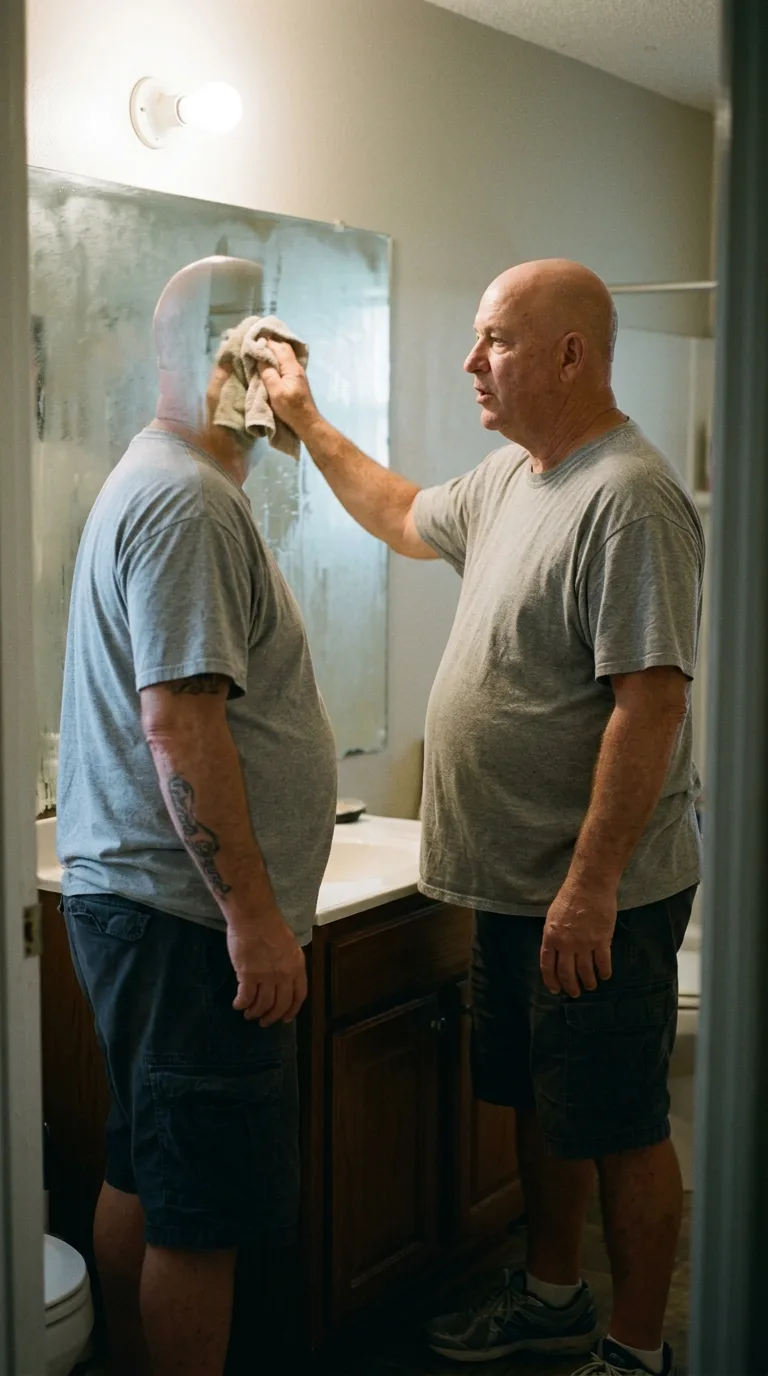
Rarest thing about him: An ancestral tradition — epic, 1 in 142
Season 0seed 82814986 · engine v10
Character card
lineage LJL8SV
His body-swap story
@marco.villagrana, wearing Roy Kettering, rolled the wheel on and woke up as Gregory Palladino, spent 3 minutes in him, then spun the wheel and woke up as Rubén Salcedo
---
Roy Kettering has been sitting on the edge of his own bed for two hours now, and the apartment still smells like the delivery bag from lunch, and none of it is interesting anymore. That's the whole reason, if you want the plain version of it. Not the ache in the knees that came with this one, not the gray creeping into hair that isn't yours, not even the loneliness of the place, which is real — it's that Friday evening in Houston has the particular flatness of a day already spent. You spun for a manager once before, months and bodies ago, and you remember thinking mid-level was a kind of joke management played on itself. Roy proved it. Roy has a promotion he's not sure he wants and a girlfriend he texts twice a day out of habit and a lease that runs another eight months, and none of it belongs to you, and an hour and fifty-five minutes was enough to know it never will. You open the laptop. The wheel is already loaded from last time, spinning lazily in place like it's been waiting. You don't hesitate over the price. You never do anymore.
You pay. You spin.
—
The mirror is fogged and there's a clean stripe wiped through it at eye level, and behind that stripe is a face you don't own — bald, broad, sun-color at the neck and pale everywhere the collar covers — and the mouth on that face is still moving, saying the last sound of a word that isn't yours to finish. You feel your own jaw close on it a half-beat late, like catching a door someone else let go of. The fog creeps back over the clear stripe almost immediately, erasing the man in the mirror, and a heavy hand — yours now — comes up with a washcloth and wipes it clear again, slower this time, and the eyes in the glass are green and they are looking your new body over, collar down, the way a man checks a coat he's about to leave the house in.
The bathroom light is warm and too bright, one bulb doing the work of three. Your feet are planted wide on tile that's cool even through the wear-softened bottoms of your feet, and your lower back has already announced itself, a low dull line of complaint across both kidneys that you understand, in the first second, is simply how this body speaks. The gray t-shirt against your back is thin from washing. The cargo shorts are held by a drawstring gone soft with age. None of it is what you expected a nurse to be wearing at the end of a shift, and that's the first real thing you learn: this is before the shift, not after — his clock says evening the way yours did, but his evening is still young, and somewhere in a few hours he'll be standing at fluorescent light doing this same job a version of tired you haven't met yet.
The washcloth is what opens him first. Terrycloth, frayed along one edge, worn to almost no nap at all — and through it comes a whole morning: him buying six of these at a Publix because the good towels kept vanishing into some drawer he never found, laughing about it to no one, an old habit of talking to an empty apartment that used to have someone else's noise in it. Then further back, hands on a different cloth, cooler water, a hospital sink, scrubbing in before something urgent, twenty years of it compressed into the feel of terry against knuckles.
The t-shirt gives you more, sleeve by sleeve, because that's how he put it on an hour ago — right arm first, always right arm first, an old superstition he doesn't examine — and with it comes his ring, plain gold, sitting loose these days on a finger that's thinned even as the rest of him hasn't. He turns it without thinking, a motion so old it isn't even a thought, just a tic that lives in the tendons. The ring came from a wedding that ended the way most quiet ones do, in a kitchen in Kendall with the good plates put away first because she said she didn't want to be dramatic about it. Her name arrives like weather — Denise — and with it a decade-old Sunday, her laughing at something on the balcony with the ocean haze turning everything the color of a bruise healing, and you understand without being told that she is the one who got away, that some nights he still turns the ring like he's asking it a question it won't answer. Two kids came out of that marriage, grown now, one of them calls on Sundays and one doesn't, and both facts sit in his chest at the same weight, which is its own kind of ache, worse than the back.
The floor under your feet gives you the apartment itself — pastel walls he never got around to changing from the last tenant, a balcony door he leaves cracked for the smell of salt even in the wet months, neon bleeding faintly up through humidity from the strip below. The knees remember thirty years of double shifts, the specific exhaustion of night rotations traded for day ones traded back again, hands that know how to find a vein in bad light without looking, how to hold someone's arm steady while they cry, how to chart one-handed while eating standing up. None of that pain is new to him. It's just Friday's version of old.
And under all of it, the wish — the actual words are gone already, chased off by the fog closing back over the mirror, but the shape of it stays: something small, something for the kids, something he says most nights out of a family habit older than his own memory of learning it, an ancestral thing, a blessing said to no one in particular because saying it to no one still counts.
You look at your hands. Blunt fingers, weather at the knuckles, a plain ring catching the bathroom light. You turn it once, out of a habit that is now also yours, and you feel his back complain again, low and familiar, already yours to carry.
You lift your eyes to the mirror, to the stripe you just wiped clear, and you say, to nobody, the way he always did — "Okay. Let's see what tonight wants."