Ronald Iwasaki
Fictional. Generated by AI — not a real person, and no likeness of one is intended.
35, janitor in Dallas · rolled by @julian.reyes · card — no film
History
who has worn him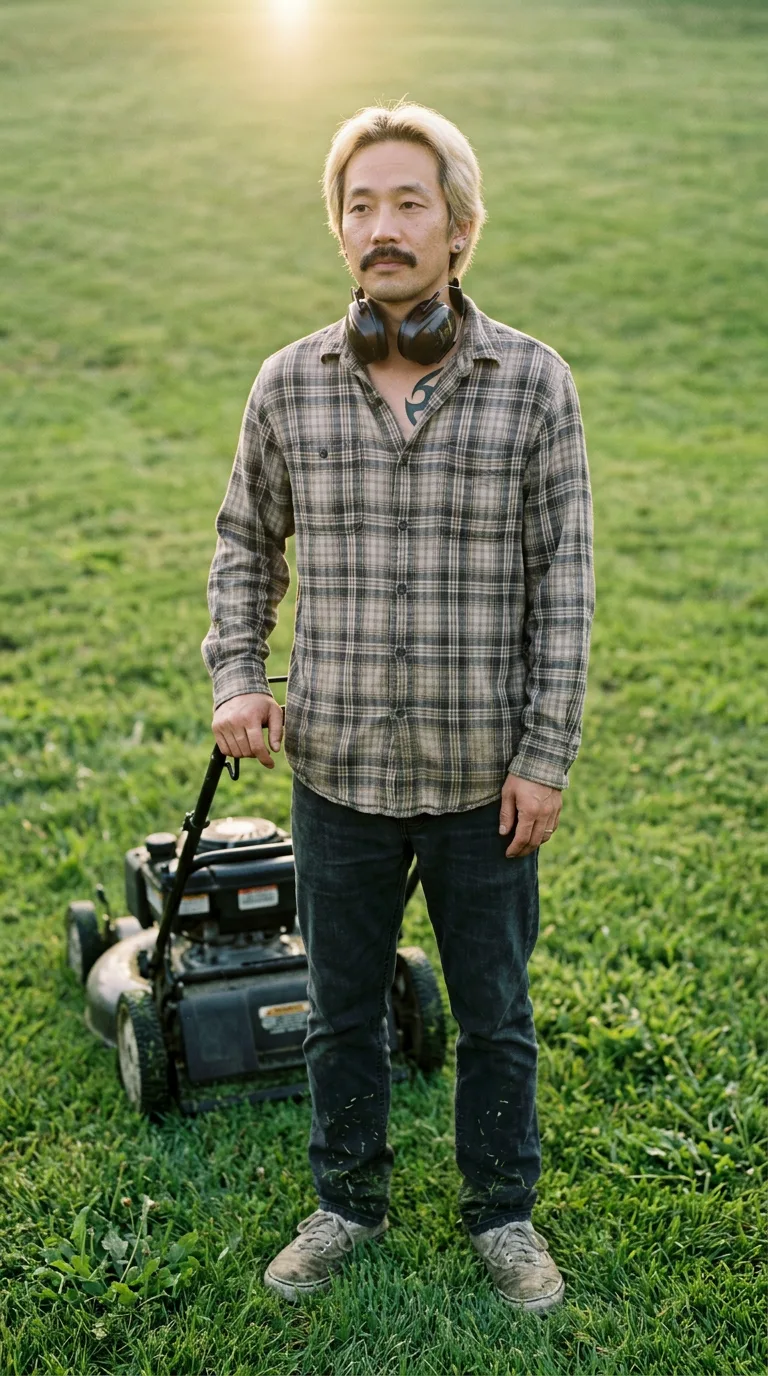
Rarest thing about him: Bleached blond — common, 1 in 54
Season 1seed 115417009 · engine v11
Character card
lineage PYNCV3
His body-swap story
@julian.reyes (admin), wearing Ethan Voss, rolled the wheel on and woke up as Ronald Iwasaki, spent 1 minute in him, then spun the wheel and woke up as Wendell Kovac
Anchorage is dark and will stay dark for hours yet, and Ethan Voss's apartment is dark too, except for the laptop screen, which is the only thing in the room that admits anything is wrong with you. You have his freckled hands on the keyboard. You have his good tailored shirt half off one shoulder because four days in you already stopped bothering to hang it up right. The deposition binder is still open on the counter where he — where you — left it last night, full of somebody else's custody dispute, and it is unbearably, structurally boring, the way his whole life is boring: competent, over-billed, a little sad around the edges where his marriage isn't yet even though it already ended two years before you got here. He is a good body. He is fine. That is the problem with him. You have been rich men and reckless men and once, memorably, a rodeo clown, and Ethan Voss is none of those; he is a man who alphabetizes his spice rack and calls his mother on Sundays, and by day three the wanting had already come back, low and constant, a hand you cannot stop checking your pocket for. So at four in the morning, still wearing his good tired face, you open vessel.cards again, because boredom is a real thing to spin over even if nobody puts that on a card, and you pay, and you spin.
The mower's engine drops a note under you, coughs, and catches again, and your hands — his hands, small and dry and already a little sunburned across the backs — do not let go of the bar. That is the first thing you know: the grip. Then the weight of the earmuff sliding, and some old reflex that isn't yours yet nudges it back up over the ear without being asked. Grass clippings needle the shins. The light is going long and gold across a new-build lawn, and behind you a pickup truck sits nose-out in a driveway that smells, even from here, of tar still cooling from installation. It is morning where you left, evening here, and for one weightless second you are nobody at all, just a machine deciding to keep walking forward in a straight line.
Then the shirt gives you the first flash — plaid flannel, soft from washing, and a memory of standing in front of a mirror in a rented room buttoning it one-handed because his other hand was holding a phone, his ex-wife's voice on it, business-flat, talking about pickup times for Sunday. That's the whole memory, gone as fast as it came, but it opens the door, and after that they come the way water comes through a cracked window, a little at a time and then all at once.
His name arrives with his own hands on the mower bar: Ronald. Ronnie to nobody now, not since the divorce; Sadie used to call him that, in the kitchen of a house that isn't this one, a rental with a broken disposal and good light in the mornings. He remembers being twenty-six and laughing so hard at something she said that beer came out his nose, and he remembers being thirty-one and standing very still in the same kitchen while she told him, gently, like it was a mercy, that she'd met someone at work and that she still loved him, just not like that, not enough for this. He remembers the tan line on his ring finger before it was a tan line, when it was still a ring, and the specific weightless click of setting it down on the bathroom counter for the last time, thinking he'd put it back on later. He never did. His daughter's face comes through next — seven years old, missing a tooth, entirely unbothered by any of it, because kids that age forgive the whole world by breakfast — and the ache that comes with her is not yours, it belongs to him completely, a whole life folded into it: the school corridor he waxes at midnight, fluorescent and empty and smelling of pine cleaner, keys heavy on his belt, the tribal tattoo he got at twenty-two that he doesn't love anymore but has stopped hating too, the studs in his ears from a phase he doesn't discuss, evenings he spends alone with a beer he doesn't finish because he never really took to drinking, men and women both moving through the years he's had since Sadie, none of them staying, none of them wrong exactly, just not it.
The push mower vibrates up through his forearms — thin arms gone soft at the belly, a body that used to run track and now mostly stands, a body he does not resent, just wears — and you feel the whole day in it: the shift that started at some ungodly hour last night in that corridor, the drive home in grey pre-dawn light, and then, instead of sleep, this — mowing before the heat comes up, because it is the only free hour and the lawn cannot wait for a man whose ex-wife will be dropping their kid off Saturday and who wants the yard to look like someone is trying. The earmuffs came off one ear an hour ago when a neighbor called out a good morning. He never got around to fixing it. That is the last thing that was really him: an earmuff half-on, a crooked row he was annoyed at himself for, sweat under a flannel he put on without thinking this morning, sleeve by sleeve, still half asleep, in a bedroom that used to have two people's clothes in the closet and now only has his.
You look down. Small hands, sun-brown, a white ghost-band on the ring finger catching the low light. You turn one over, like you're checking it's real, and the mower idles rough under your other palm.
"There you are," you say, to no one, in a voice that isn't yours yet and already is.