Rohan Kaleka
Fictional. Generated by AI — not a real person, and no likeness of one is intended.
37, sales rep in Eastern Kentucky · rolled by @colin.hasbrook · card — no film
History
who has worn him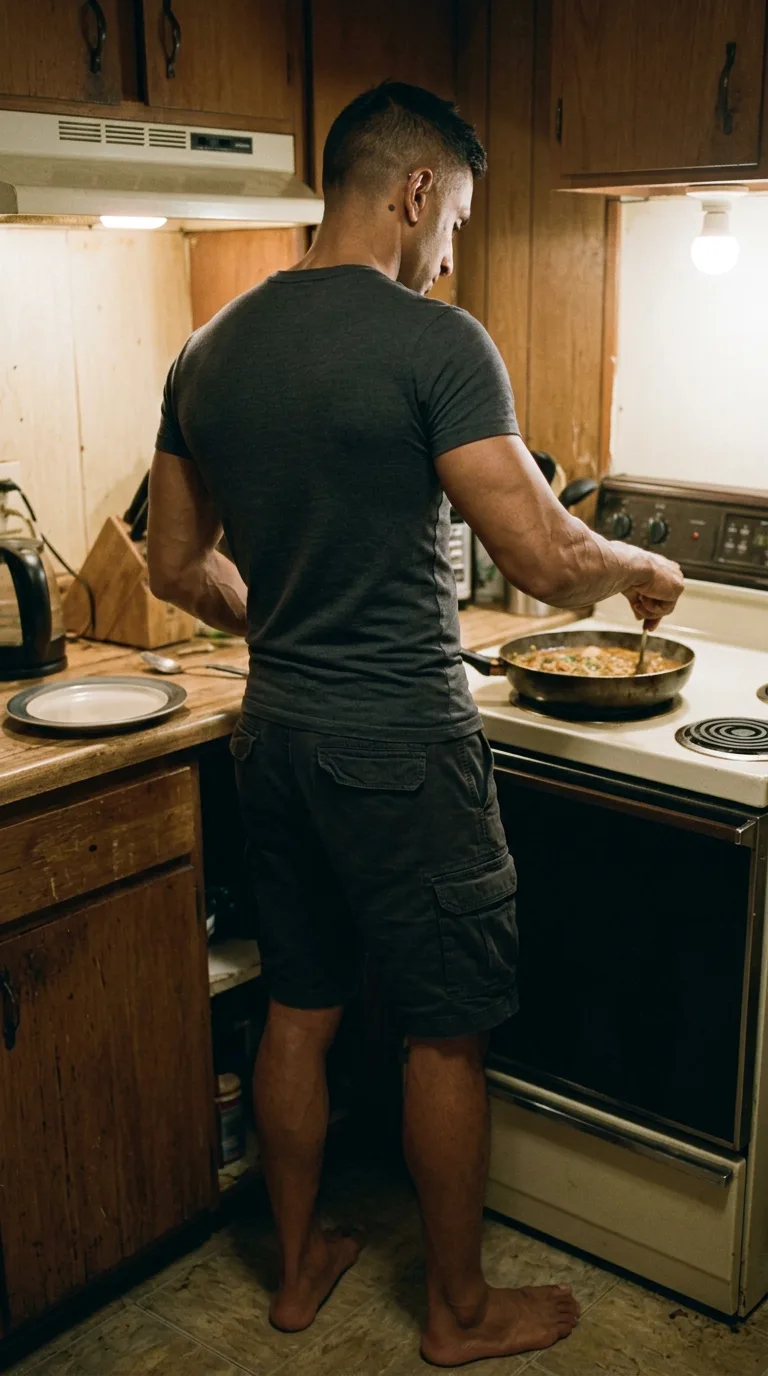
Rarest thing about him: Ear cartilage — epic, 1 in 69
Season 0seed 1350040229 · engine v10
Character card
lineage 2NZHHJ
His body-swap story
@colin.hasbrook, wearing Manuel Cardenas, rolled the wheel on and woke up as Rohan Kaleka, spent under a minute in him, then spun the wheel and woke up as Colin Wharton
You are three minutes into being Manuel Cardenas, and already you know this was a mistake of a body to keep. His espresso machine still hisses behind the counter, his apron still smells like scalded milk, and his knees — his actual knees, forty years of standing on tile — ache in a way that has nothing to do with you and everything to do with him, and it isn't yours to fix, only to feel. You watched him wipe down the same four square feet of counter twice out of habit while you were deciding. Dad bod, tired feet, a barista's Monday closing shift stretching in front of you like a hallway with no doors. You did this to yourself less than a minute ago and you are already bored of him, bored the specific way that only comes from putting on a life and finding it fits exactly as advertised, no surprises left in the fabric. You wipe your hands on his apron, feel the little hitch in his lower back when you straighten, and you think: not this. Not tonight. You go to the back room where he keeps his phone charging, and vessel.cards is already open in the browser, the way it always is, the way it will be again after this one too.
You spin.
The stirring stops mid-circle in a spoon that is not yours, in a kitchen with wood-paneled cabinets and a bulb too yellow for the hour, and then it starts again the other way, because your hand does not yet know which direction his was going. You are barefoot on cracked linoleum. There is a pan in front of you, something with peppers and rice going soft at the edges, and behind you a room you have not turned to look at yet, and a back that is not soft at all — shoulders set hard under a gray T-shirt, forearm cording every time the spoon turns. You salt the pan without tasting it because tasting is a decision and you have not caught up to decisions yet. Then your hand — his hand, going yours — reaches into the cabinet and takes down a second plate, sets it beside the first, and you don't know why until the shirt against your back tells you.
It comes in through the cotton first, worn soft at the collar from washing, and it brings a Tuesday: him pulling this exact shirt over his head in a bedroom with a window unit rattling, a woman's voice down the hall saying something about her sister's wedding, easy, unhurried, the two of them already past the part where every morning needs discussing. Priya. Nine months now. The shirt remembers her perfume more than it remembers her face — something like the inside of a cedar drawer — and it remembers that he'd meant to ask her to move in and hadn't, not out of doubt but because some part of him was still standing on a footbridge with somebody else, a cable bridge over brown water, green shade so thick in summer it turned the light underwater-colored, and a girl named Asha who used to meet him there when they were twenty-four and certain of nothing except each other, until she wasn't. That ended eleven years ago. It is still in his hands somehow, the way the second plate came down before he'd caught up to why.
The floor gives you his feet — flat, calloused, a body that has run and lifted and stood on trade-show carpet in dress shoes for eight hours and then come home and needed the floor bare and cool and real. You feel thirty-seven in the knees the honest way, which is to say barely at all, everything still working, everything still strong, a body that has never once had to apologize for itself. The cartilage piercing catches cold air when you turn your head, a small bright point of feeling that carries its own memory — a tattoo parlor in Lexington, twenty-six years old, a dare from a coworker, his mother's face when she saw it, forgiving him for it slower than she forgave him for most things because she is Orthodox and particular about small defacements of a good creation. The mole on his cheek she has touched a thousand times, the way mothers do, like checking it's still there.
The stove's heat on your forearm brings back every dinner he has made exactly like this, alone, four nights a week when Priya works late — not lonely, just Monday-shaped, a rhythm he built after the divorce that never happened and the marriage he almost had at thirty and didn't, a near-miss so total it left barely a scar, just a habit of cooking for one and setting two plates anyway on the nights he lets himself imagine otherwise. A rep's life: airports, rental cars, a lanyard he puts on and takes off like a collar, hotel lobbies that all have the same gray light. He is good at the job and hates roughly a third of it, the third that requires him to be delighted by strangers. He drinks more than he tells the doctor, takes the pills the doctor did prescribe, keeps both facts in separate rooms of himself. There is a man three states over named Dennis Okada, sixty-four, gray-haired, a firefighter, who has been his best friend since a summer job twenty years ago — you know Dennis's hands, his house, his particular silence, because you wore him six spins back and stood exactly here in this friendship from the other end of it, watched this same face across a poker table, called him "Ro" in a voice that isn't yours anymore. You know what Dennis would say if he saw two plates on this counter and only one chair pulled out. He'd say nothing. He'd just start washing the second plate before dinner's over, the way he always does.
You look down at your hands — his hands, dark-knuckled, a rice grain stuck to the side of one thumb, strong in the specific unthinking way of a man who has never had to notice his own strength. You turn the right one over, study the piercing's glint at the edge of your vision, the mole in the mirror-shine of the oven door.
"Didn't used to set two," you say to the empty kitchen, and you don't yet know if that's him talking or you, and neither will he.