Manuel Cardenas
Fictional. Generated by AI — not a real person, and no likeness of one is intended.
37, barista in Chicago · rolled by @colin.hasbrook · card — no film
History
who has worn him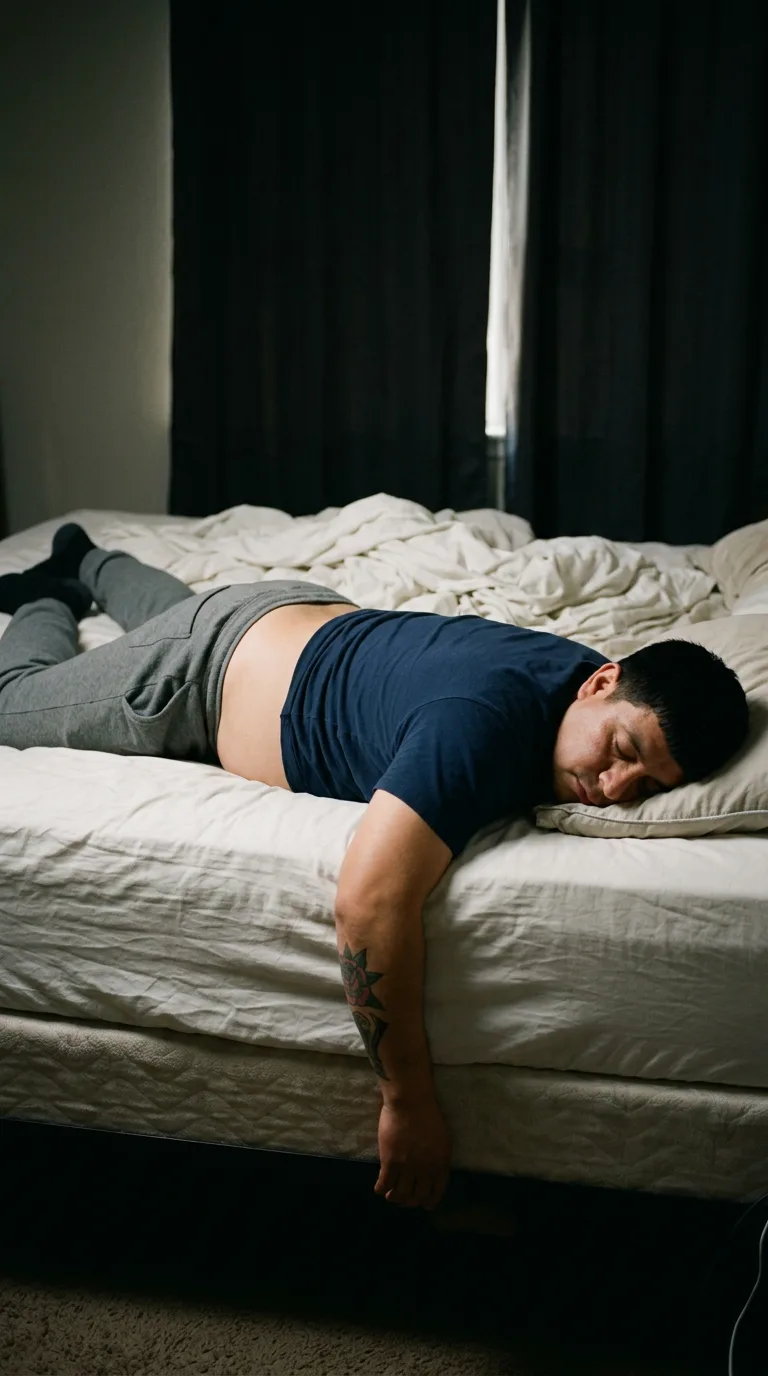
Rarest thing about him: Can't stand still — rare, 1 in 51
Season 0seed 2062383975 · engine v10
Character card
lineage 2NZHHJ
His body-swap story
@colin.hasbrook, wearing Colton Ash, rolled the wheel on and woke up as Manuel Cardenas, spent under a minute in him, then spun the wheel and woke up as Rohan Kaleka
You are Colton Ash, twenty-three, standing in a Texas kitchen at the end of a Monday, and you have been him for three minutes and you already know you're done. The nose he broke in some fight you didn't cause aches faintly when you touch it. His phone is on the counter, screen lit with a message from a woman you'll never meet, something about dinner Sunday. You feel the ghost of his boredom, his discipline, his twenty-three years of being told what to do and doing it — and it sits on you like a uniform two sizes too correct. Three minutes was long enough to know this body is not going to surprise you. So you go back to the site with his own thumb, on his own phone, vessel.cards still open in the browser like a wound that never closes, and you spin because the wanting came back fast this time, faster than usual, and you don't examine that. The wheel spins. It always lands on someone.
It lands on a man face-down in unmade sheets, half a city and a full hour away in the clock that matters, though to you there is no lag, no travel — only the same instant, folding.
His breathing changes first. Ragged, then even, like a held note resolving. The arm hanging off the mattress draws itself up without being asked, and the whole body rolls onto its back, heavy and warm, and the hands come together at the chest, fingers laced, in a posture this man has apparently never once slept in, because something in the muscle resists it even as you make it happen. Streetlight comes through the gap in the curtain in one flat blade across the ceiling. You are inside a stranger and the ceiling is not yours and the ache low in the back is not yours yet, but it will be.
The sheets are the first thing. Cotton gone soft with washing, and through them comes a flash — not yours, his — of the last time he changed them, alone, a Tuesday, humming something from the radio because the apartment gets too quiet when she's not there. Her name arrives sideways, through the pillow that still smells faintly of her shampoo even though she went home hours ago: Jess. Not a wife. Girlfriend, two years in, and there's a kid, five years old, not hers, his, from before, and the flash of the kid's face laughing at something on a phone screen hits so hard and so warm you have to sit inside it a second before it passes.
The back tells you next. A dull, permanent complaint low at the base of the spine, radiating into one hip, and you understand without being told that it comes from a decade of leaning over a espresso machine at the wrong angle, reaching for milk on a low shelf a thousand times, the particular violence of standing still all day disguised as gentle work. His hands, resting on his own chest, twitch faintly even in sleep — they don't stop, never have, drum on counters, worry at the hem of his shirt, tap out rhythms nobody asked for, and now they do it here too, small motions in the dark, unwilled.
The tattoo on the inner forearm warms under its own skin like it remembers being made — American traditional, bold black lines, faded reds and greens, a rose he got at twenty-two with a friend who doesn't call anymore, in a shop that's a nail salon now. The memory of the needle, the buzz of it, the friend laughing too loud, comes through clean and then is gone.
There's the café — steam wand hissing, milk climbing the pitcher in a slow spiral he's watched ten thousand times, regulars whose orders he knows before they say them, the particular ache in his forearm from steaming, the particular satisfaction of a good pour. He is doing fine. Two hundred, three hundred thousand put away carefully, invested carefully, a man who counts things. He tried church for a while after his son was born and it didn't take, but he still talks to something, some mornings, walking to open the shop in the cold under the tracks, breath fogging, not quite prayer. He drank in his twenties, stopped without a story attached to it, just stopped, the way water finds a lower place to sit. Never smoked. His mother would have killed him.
The shirt against your back — this shirt, the navy one — comes last and gives the most: him pulling it on this morning after a double, sleeve by sleeve, wincing at the hip, checking the clock, texting Jess a heart emoji before he lay down, the blackout curtain he bought specifically because he sleeps when the rest of the city is having lunch, because someone has to open at four for the construction crews. Nights and mornings running backward from everyone else's. That's why it's evening here and he's already this deep asleep — his day ended when the sun was climbing.
You look at your hands. Short fingers, a callus along the side of one from the portafilter, the tattoo catching the streetlight when you turn the wrist. They will not stop moving, drumming once against your own sternum before you notice and still them, and even stilled they want to move again.
You say, to the dark, to no one, in a voice that still surprises you with its unfamiliar low register: "Okay. Okay, who are you."
Somewhere under that, already, is the next wheel, spinning in a place you haven't decided to go yet.