Rohan Bhatt
Fictional. Generated by AI — not a real person, and no likeness of one is intended.
31, model in Los Angeles · rolled by @rohan.bhatt · card — no film
History
who has worn him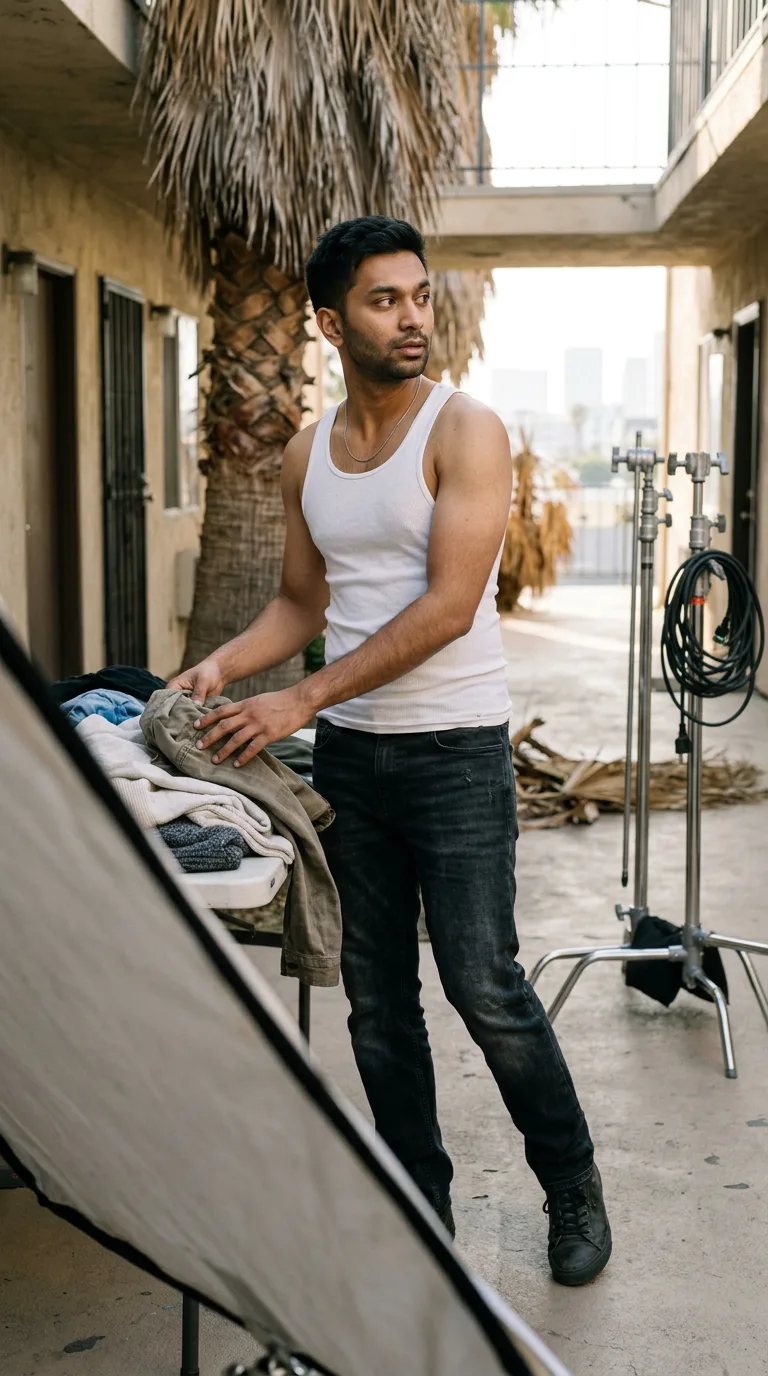
Rarest thing about him: Kidney stones — legendary, 1 in 257
Season 0seed 925030915 · engine v10
Character card
lineage SBZ9UF
His body-swap story
@rohan.bhatt rolled the wheel on and woke up as Rohan Bhatt — their first, spent 8 minutes in him, then spun the wheel and woke up as Vikram Sondhi
---
It is almost midnight and there is nothing on. There hasn't been anything on for a while now, if you're honest — just the blue rectangle and the scroll and the low hum behind your eyes that has always been there, the one that likes stories about waking up as someone else, that used to click on those threads at two a.m. and read them like scripture. You have wanted this since before you knew it was a thing to want. Tonight it is a thing you can buy. The page is plain, almost insultingly plain — a wheel, a price, a button — and you tell yourself you are only curious, the way you have told yourself that every time curiosity was about to cost you something. You pay. You spin. The wheel does not care that you don't believe in it.
The studio comes up around you mid-motion, and you are already moving before you understand you are anywhere at all. A shirt is between your hands — you're folding it, or trying to, and the fold goes wrong, corner meeting corner at the wrong angle, and you stop and do it again slower, correctly this time. Your hands are not your hands. They are darker, leaner, calloused along two fingers in a way that means nothing to you yet, and they know this task in a way you don't, so the next ten folds come out checked, deliberate, like a man relearning to walk. Somewhere behind you a reflector board leans against a cart of C-stands. Palm fronds hang dead-still in air that hasn't cooled off from the day. You are standing in shoes you didn't lace.
The shirt in your hands is his, and it opens first — the smallest flash, gone before you can hold it: a mirror, this morning, pulling this same tank over his head, the fabric catching for half a second on the chain at his neck before dropping. You feel the chain now, a thin cold line at your collarbone that has been there so long he doesn't feel it either, except right now you do, because you are new. His memory of putting it on years ago — a gift, a small unimportant gift from someone whose face doesn't come with it — arrives and recedes like a wave that touched your foot and pulled back into the sea.
The jeans give you more. Standing in them, weight settled onto legs that are thirty-one years old, average build, nothing extraordinary and everything durable — you feel the low dull throb on the right side, under the ribs, that flares sometimes at night for no reason he's ever managed to explain to a doctor who told him to drink more water and stop taking it personally. Kidney stones. Not now — not acute — just a memory of the ache living where the ache usually lives, an old tenant. You feel how tired the balls of his feet are in shoes that have stood on concrete for six hours already, this being a night shift, some overnight lookbook shoot the client wanted done before dawn so the light in every frame could be manufactured instead of asked for. That's the vague shape of why a man is folding wardrobe pieces at midnight instead of sleeping: the schedule wanted him upside down, and his body agreed to it because the money was fine and refusing wasn't worth it.
More comes, the way it comes when your palm sits flat on denim gone soft with wear: a wedding — no, not his, an old friend's, four months ago, him in a rented sherwani sweating through the reception, laughing too hard at a joke his cousin made, missing someone the whole night without admitting it out loud. The someone surfaces half a breath later — Priya, not the wedding, an ex, two years gone and still able to make his chest do something complicated when her name comes up on a mutual's story. And behind her, closer, warmer, someone current: Meera, texting him a photo of her cat an hour ago that he hasn't answered yet because his phone is in his bag across the room and he forgot, mid-shift, the way you forget everything mid-shift. Fondness, not urgency. A relationship with room in it.
The tank top gives you gym mirrors, months of them, the quiet vanity of a man whose job is partly his shoulders — checking a line, adjusting a stance, a discipline that isn't vanity so much as maintenance, the way you'd tune an instrument you use for a living. His fingers, when they're not folding anything, drum against his thigh, a rhythm with no song attached to it, a tic so old it isn't a decision anymore. You feel it start now, unbidden, three fingers ticking against denim while the rest of him — you — stand still.
The floor under your borrowed shoes gives you almost nothing, just concrete, ordinary, forgettable. The evening air gives you the studio's smell — coffee gone cold in a paper cup, the ozone smell of hot lighting gel, somebody's cigarette from the alley that isn't his, he never took to it, never saw the appeal. A small satisfaction in that, oddly — a thing he never started that he doesn't have to explain to anyone.
You look down. The shirt is folded now, perfectly, resting on the stack like it was never wrong. Your hands — his hands — turn over in the low studio light, palm up, and you watch the calluses, the two darker knuckles, the thin white ghost of nothing at all where a scar should be and isn't, because there's nothing here but wear.
You lift your eyes off them, toward whatever is watching, and you say, quiet, mostly to yourself:
"Okay. Okay — that actually worked."