Rogelio Nava
Fictional. Generated by AI — not a real person, and no likeness of one is intended.
54, janitor in San Francisco · rolled by @colin.hasbrook · card — no film
History
who has worn him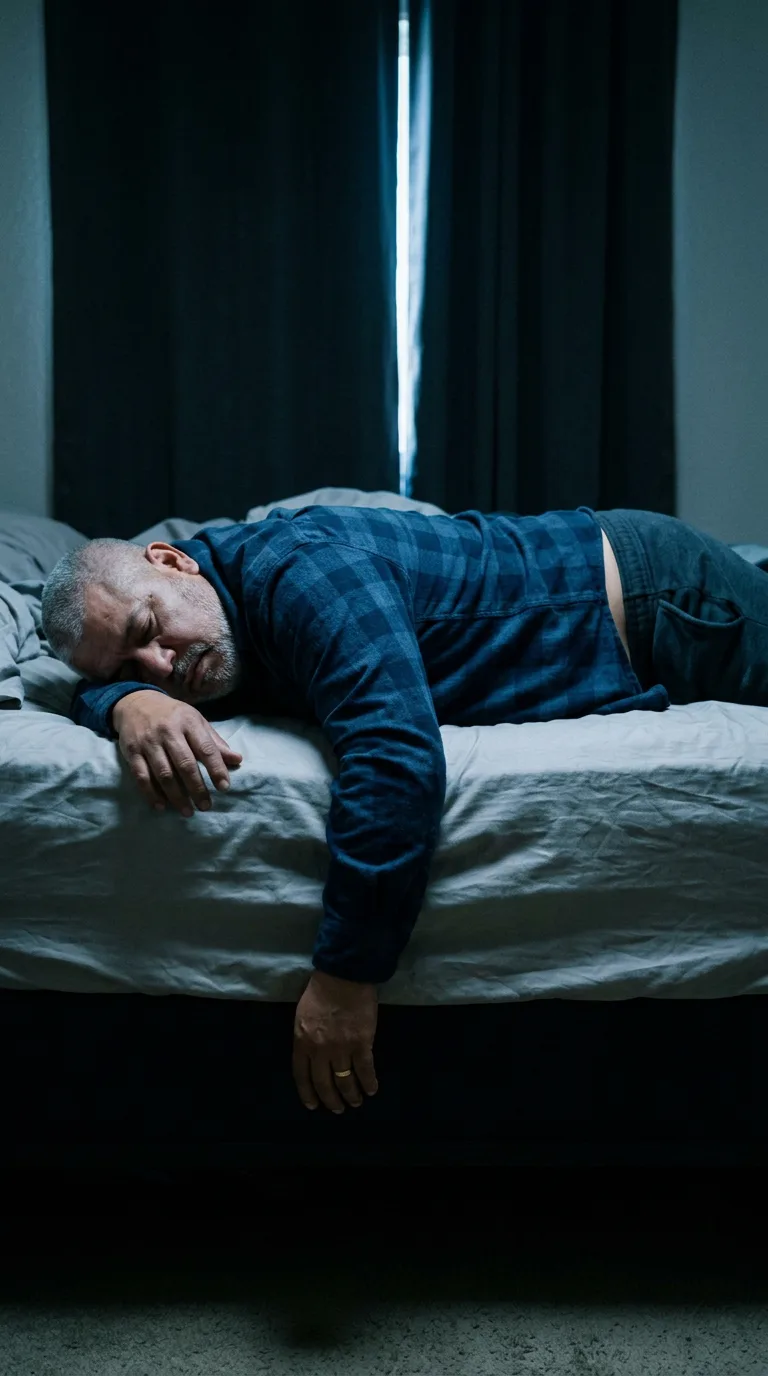
Rarest thing about him: Bisexual — common, 1 in 30
Season 1seed 209007086 · engine v11
Character card
lineage 2NZHHJ
His body-swap story
@colin.hasbrook, wearing Sunil Bhagat, rolled the wheel on and woke up as Rogelio Nava, spent under a minute in him, then spun the wheel and woke up as Preston Argyle
You are Sunil Bhagat for less than a minute, and already the deciding is done. It is early, before the day has started, and the apartment smells like a help desk technician's apartment always smells — reheated coffee, printer toner ghosted into the carpet from a home office that used to be a nursery. You stand at the kitchen counter in his gray-flecked beard and his freckled forearms, laptop open to a ticket queue nobody else in New York is awake to answer, and you feel how badly this body wants to sit down again, how the knees already ache at六 in the morning like an apology it keeps making. You spun him three days ago. Three days was enough. It isn't disgust, exactly — you have worn worse — it's that nothing in Sunil surprised you, and you have learned by now, seven hundred thirty-four times over, that the wanting comes back quieter than boredom and louder than reason, and there is no name for it you'd say out loud. You open the site instead of the ticket. Wheel already spinning under your thumb before you've decided anything, which is its own kind of answer.
It lands, and there is no in-between: no falling, no darkness, no travel. One breath is ragged, animal, open-mouthed into a pillow — and the next is even, and it is yours. Weight comes first, more of it than Sunil ever had, settled low and solid through hips and gut. An arm that was hanging off a mattress lifts on its own, unhurried, and you feel it happen a half-second before you'd call it a choice — shoulder drawing back, forearm rising, the whole body rolling onto its back like something remembering a shape it hasn't worn in years. Hands come to rest folded on the chest. Streetlight cuts a blade through a gap in heavy curtains and lies across a stubbled jaw, a beard trimmed close, a mole riding high on one cheek that isn't yours to have chosen. Somewhere below, through a floor, the sound of San Francisco doing nothing at this hour — a foundation settling, a car two streets over. It is the middle of the night here. Wherever you left Sunil, it was almost morning. Both things are true and neither one asked your permission.
The memories don't arrive as a life. They arrive as a hand.
The wedding band on the left one is warm from his own skin, not yours yet, and it opens first — a courthouse, decades back, a woman named Dolores laughing because the ring didn't fit and they'd had to buy it two sizes big off a folding table, and how he'd worn it loose ever since, turning it with his thumb whenever a shift ran long. That's this hand's oldest habit, older than the mole, older than the beard: thumb finding the band, turning it once, twice, a rosary with no prayer attached. Faith never came into it. He never needed one. The turning was enough.
The sheets under you — cheap cotton gone soft with washing — carry the apartment itself, this under-house garage below somebody else's bay window, driveway cut so steep the car groans in first gear every single morning. Cold light through that same gap in the curtains, always cold, San Francisco fog doing what the sun in his old country never had to. He has lived here eleven years and still calls the street by its Spanish half-name in his head, the one the old-timers use, the one that isn't on any sign.
The flannel shirt bunched at your shoulder — blue-on-blue plaid, worn soft as a glove — gives you a whole morning at once, the last time he put it on: sleeve first, right arm, the fabric catching a little on the mole-side cheek as he pulled the collar past his ear, Dolores's voice from the kitchen already telling him to eat something before he left, and him saying he would, and not doing it, the way he never does. His hands know this shirt without thinking — three buttons, never all the way to the throat, top one always left open because his neck's gone thick with age and it chokes him otherwise.
The body under all of it is fifty-four and heavy and honest about both. Lower back that announces itself the second he's been sitting more than an hour. Knees that took the stairs at the school for eleven years and are starting, quietly, to bill him for it. Forearms still strong — mop-strong, cart-strong — the kind of strength that isn't for show and never was. His hands know a mop bucket's weight without looking, know the particular give of a master key in a lock that's been sticking since before he was hired, know how to run a buffer down a hallway in long straight passes so it doesn't leave a swirl under the fluorescents. Three kids, maybe a fourth some years the story goes different depending who's telling it, all older now, all gone from the house, and an old girlfriend from before Dolores who calls maybe twice a year, not because anything's still there, but because thirty years leaves a door that never quite latches. He likes men too, has since he was young, has told exactly two people that in his whole life and one of them was Dolores, on their porch, the year before the wedding, and she'd said okay and meant it. He hasn't had a drink since the second kid was born. Never smoked — his own father did, and it took him slow and ugly, and Rogelio decided at nineteen he'd rather not know what he was missing.
None of it is much money. It was never going to be much money. It was, until nine seconds ago, a whole life, folded at the chest, rising and falling on its own.
You look at your hands — his hands, broad and thick-knuckled, a plain gold band catching the last of the streetlight — and you turn them over slow, the way he never once has in his sleep, and something in the wrist remembers a mop handle that isn't there.
"Dolores," you say, quiet, to no one, into a dark room three thousand miles from wherever Sunil is still sitting with a ticket queue open and no idea what just left him, "I'm up."