Preston Argyle
Fictional. Generated by AI — not a real person, and no likeness of one is intended.
46, chief executive in San Francisco · rolled by @colin.hasbrook · card — no film
History
who has worn him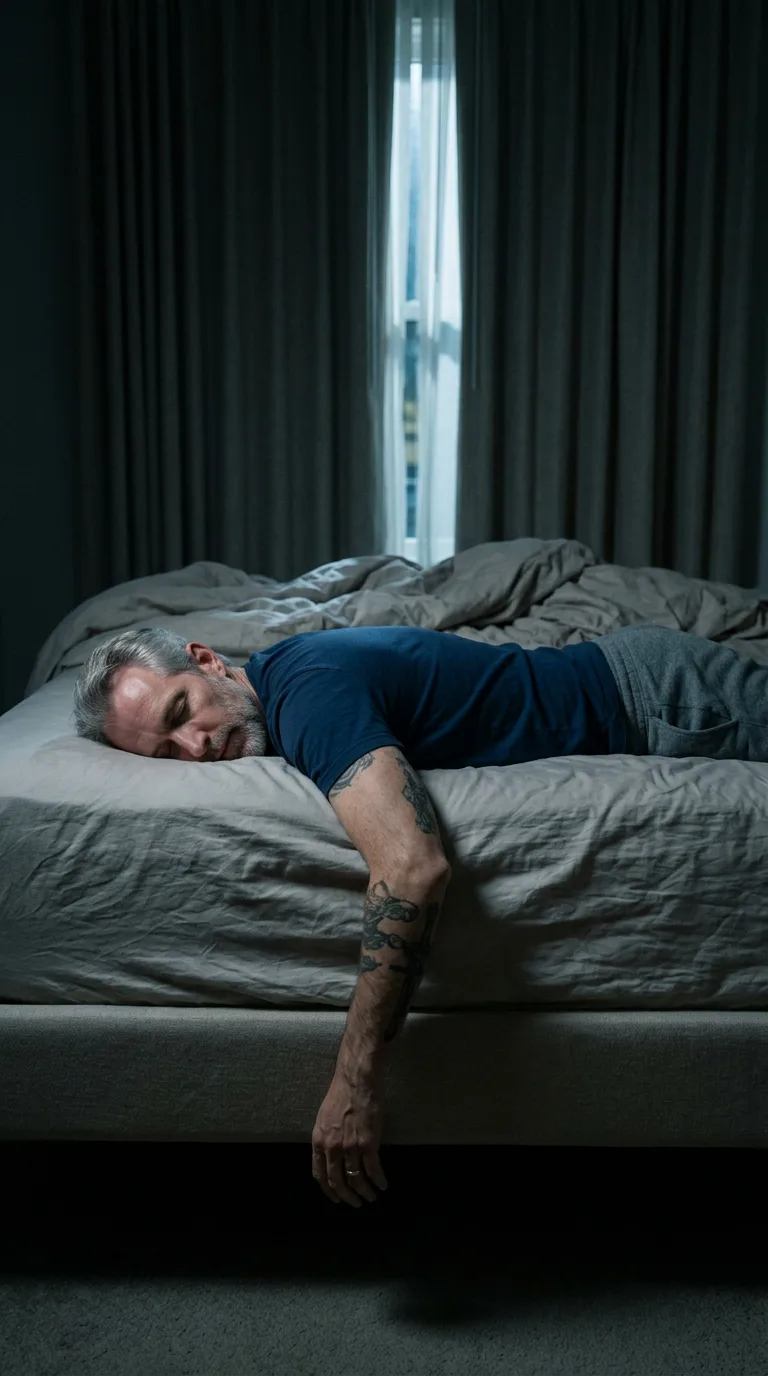
Rarest thing about him: 6'4" — uncommon, 1 in 103
Season 1seed 1679497153 · engine v11
Character card
lineage 2NZHHJ
His body-swap story
@colin.hasbrook, wearing Rogelio Nava, rolled the wheel on and woke up as Preston Argyle, spent under a minute in him, then spun the wheel and woke up as Colby Merchant
You are mopping the fourteenth floor when the fluorescent hum starts sounding like an accusation.
Rogelio Nava's knees ache going down the hallway, the bucket wheel squeaking on tile that never quite comes clean no matter how many times you drag the string mop over it. Fifty-four years old, gray in the beard, a beauty mark on the cheek that women used to tease him about before this body got heavy and slow. You have been him less than a minute and already you know the whole shape of tonight: the vending machine on three that eats dollars, the supervisor who calls at 6 a.m. sharp, the specific ache behind the left kneecap that never leaves. It isn't bad. It isn't anything. That's the trouble — you spun once and landed here, and here is a bucket and a mop and forty more years of exactly this if you let it run. You are not interested in finding out what Rogelio Nava's life adds up to. You still have the phone in his pocket, and the site loads slow on the cheap data plan, and the wheel spins the way it always does, cheerful, indifferent, already looking for someone better.
You land face-up.
That's the first thing — not face-down anymore, on your back, hands folded on your own chest like a man laid out for a viewing, though the breath still moves through you even and slow. Streetlight slats across the ceiling through a gap in heavy curtains. There's weight here you haven't had in ages, a long body, an ache that isn't in the knees this time but low in the back, and a ring pressing cold and thin against a finger that was, a second ago, someone else's. You didn't ask for this one. You never do. The wheel doesn't take requests, it just opens a door somewhere on a Thursday and shoves you through it, and this time the door was a bedroom in a house that smells like cedar and dryer sheets and, underneath that, faintly, bourbon.
The room gives you nothing yet. It's dark, it's quiet, somewhere below you a garage door's motor ticks as it cools — a big house, built into a hill, the kind where the garage swallows the whole ground floor and the bedrooms float above the bay window looking down at the street. Then your hand — his hand — brushes the sheet pulled up over your chest, and that's the key turning.
Cotton, expensive, five hundred thread count, a gift from her — the memory arrives with a name attached to it before a face does: Carol. Twenty-two years married and she still buys the sheets because he never learned to care about that kind of thing, never had to, because his mother did it before her and before that nobody did it because there wasn't money for six-hundred-dollar linens when he was a kid in Fresno with a paper route and a father who preached hard and drank harder behind a locked bathroom door. That's where the beard comes from, he'd say if you asked him — kept short, kept neat, nothing like his father's, nothing like anything from that house. He built something else. He built it out of spite and long hours and a business degree paid for on loans he didn't finish repaying until he was forty, and now there's a company with his name nowhere on the door but everywhere in the numbers, and a corner office forty floors up where he watches the fog roll over the Bay Bridge at six p.m. most nights, phone against his ear, another deal closing, another quarter beaten.
Your feet find the carpet without the sheet even needing to be kicked off — his feet, and they know this floor, cold in November, the runner by the closet worn thin from twenty-two years of the same four steps to the bathroom. Height comes up through you all at once, 6'4" of it, the specific vertigo of a body that's spent a lifetime ducking doorframes and folding into economy seats, skinny through the shoulders but going soft at the middle the way desk men go soft, muscle he never had to begin with just quietly leaving. Nothing hurts exactly. Everything is a little tired in a way that thirty years of scotch after dinner does to a liver, a way a body just carries without complaint because complaining was never modeled for him, not once, not by anyone.
The shirt from this morning is draped over the chair — you didn't put it on, this body hasn't moved yet, but touching the doorknob on the way to nowhere in particular pulls the memory anyway: white oxford, sleeves he rolls himself because he likes doing one thing with his own hands before the assistants and the calendar take the rest of the day, top button open, no tie until the car, pen already clipped in the breast pocket before he's even eaten. He clicks it without noticing — has for thirty years, clicked pens in meetings, clicked them at his daughter's soccer games, clicked one so much once that his oldest, maybe nine then, reached over and took it out of his hand mid-sentence and just held onto it, and he'd laughed so hard the whole sideline turned to look.
Three kids. Four, if you count the one Carol lost at eleven weeks that they never talk about anymore, that he still turns eleven weeks over sometimes on a plane with a glass of something amber in his hand. Two of the three are in college now, the youngest still home, sixteen and furious at him for reasons he suspects are fair. And underneath the marriage, folded flat the way a man folds a thing he isn't proud of but isn't done with either — Denise, from before, from the Fresno years, a name he doesn't say and Carol has stopped asking about and he still, twenty years on, sometimes catches himself composing a text he'll never send.
The church he goes to on the Sundays he's in town believes very clearly in forgiveness and just as clearly in consequence, and he has spent forty-six years trying to hold both of those at once without dropping either. He gives generously. He does not always feel it.
You bring the hands up in front of your face, this stranger's hands, big-knuckled, the wedding band catching the last of the streetlight.
You turn them over once, like checking they're still attached, and something in you — Rogelio's forty years of aching knees, six hundred and thirty-five other men before him, and now this — goes quiet and pleased in a way that has nothing to do with Preston Argyle at all.
"Well," you say, to the dark, to no one, "that's a start."