Rigo Cantú
Fictional. Generated by AI — not a real person, and no likeness of one is intended.
40, refrigeration technician in Rural Texas · rolled by @colin.hasbrook · card — no film
History
who has worn him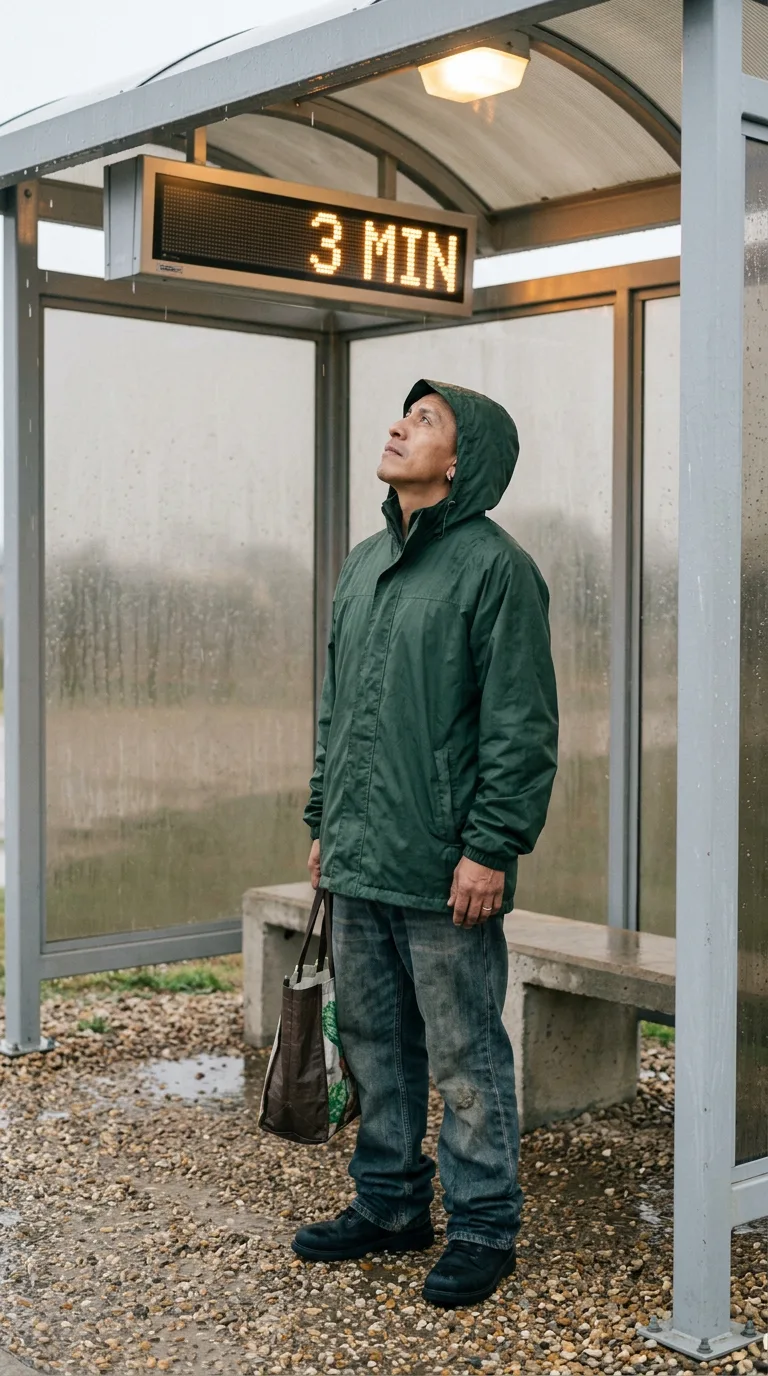
Rarest thing about him: One earlobe — epic, 1 in 28
Season 0seed 737935333 · engine v10
Character card
lineage 2NZHHJ
His body-swap story
@colin.hasbrook, wearing Danny Cabrera, rolled the wheel on and woke up as Rigo Cantú, spent under a minute in him, then spun the wheel and woke up as Danny Iwasaki
You are Danny Cabrera for three minutes and forty seconds, and in that whole stretch of time the only thing you can think about is how small his hands are on the flat-top grill, how the ticket rail is jammed with orders nobody else is going to fire, how the line cook life is a hot, cramped, twenty-two-year-old thing with a scar through the eyebrow that some man gave him before you ever arrived. You stand there in his kitchen clogs with grease popping at your wrist and you think: this was supposed to feel like something. It felt like Tuesday. It felt like somebody else's Tuesday, and you are tired, suddenly and completely, of other people's Tuesdays being the whole prize.
So you go back to the wheel. You don't clock out, you don't tell the expo you're stepping out, you just thumb the phone half-hidden under the counter, vessel.cards loading slow on kitchen wifi, and you spin it standing in the heat with a spatula still greasy in Danny's fist, because the greed isn't really about money — you already know that whatever comes up, you can afford anything about it — the greed is about not yet, not this one, not for good.
The wheel turns and lands.
You are standing under a bus shelter roof in the rain, and it is the middle of the day, and your face is tipped up into the runoff coming off the plastic eave, mouth a little open, hood shoved back off dark hair. Water needles down onto your face and you do not flinch from it. Your hand is closed around the strap of a canvas tote bag with something soft and green printed on the side. Beside you, unseen, an arrivals board ticks over: 3 MIN. Your body — his body — is short and wiry, five-six, and standing very still, like being cold has stopped meaning anything to it a long time ago.
The jacket is what gives you the first of him. Green nylon, worn at the cuffs, and touching it — your own arm inside its sleeve — throws back a flicker: a mudroom, a coat hook shaped like a fish that his niece made in second grade, his wife's voice from another room asking if he remembered his gum. Then more, unrolling the way water finds a low place. Rigo Cantú, forty years old, out past Comanche where the highway forgets to have a shoulder and the water tower says nothing on it because nobody ever painted the town's name back on after the hail took it. He fixes the coolers at the Lowe's grocery, the gas station coolers, the funeral home's walk-in where they keep the flowers, and today it's Wehner's IGA, a compressor that won't hold suction, and his hands already know before you do how to seat a gauge manifold, how to bleed a line, how the R-404A smells faintly sweet when it's leaking and how that sweetness used to make him uneasy until it just became Tuesday too.
The tote bag comes next — cloth handle warm from his palm — and it opens a whole marriage: Marisol packing him lunch even though he tells her every week he can buy it, the avocado she tucks in because his blood sugar runs high and she read somewhere that fat slows the sugar down, the insulin kit zipped into the inside pocket that his fingers know by feel without looking, the small ordinary tenderness of a woman managing a disease that is not hers. He met her at his cousin's quinceañera, seventeen years ago, and she has told the story at every anniversary since, the part where he didn't dance, just stood by the punch table chewing gum like it was a job, and she thought: this one's shy, I could love a shy one.
The gum. His jaw has been working at nothing this whole time, an empty motion, muscle memory with no gum left in it, because the pack ran dry on the walk over and he hasn't stopped at a store yet. It bothers him more than the rain does. Under your — his — tongue there's the ghost-taste of spearmint gone flat hours ago.
The hoop in his ear is cold, rain-slicked, and touching it flashes his mother's voice, years back, saying only your father wore those and look what that got him, not unkind, just old, just Catholic, just worried in the specific way mothers from a certain generation worry about small silver things on men. The wedding band on his left hand is warm compared to the hoop, warm the way skin under jewelry stays warm even in cold rain, and it gives you nothing but a held quiet, the kind of memory that isn't a scene, just a fact he's carried so long it doesn't need one: married, still married, going to stay that way.
His body is thin under the jacket, ropy rather than strong, forty and skinny in the way some men stay skinny their whole lives no matter what they eat, and something in the knee on the left side pulls faintly when weight shifts onto it — an old thing, a ladder, a bad landing years ago that never got looked at properly. His feet are cold in his boots. His blood sugar is a low simmering unease he doesn't consciously register anymore, a low battery light left on so long it's just part of the dashboard. He put these clothes on before dawn, jacket first then the tote last, kissed Marisol's hair while she was still half under the blanket, and drove the truck to town to leave it at the shop because the transmission's been slipping, which is the whole reason he's standing at a bus shelter at all, waiting for a ride he wouldn't normally need, on a road with a water tower on the horizon that says nothing, under a sky that has been the same gray since six in the morning.
You feel all of it land in a body that is not built like Danny's, not quick, not young — this one aches faintly and permanently in ways that have nothing to do with what just happened to it — and you feel how used the ease of money is in him, how a man can be worth most of a million dollars and still be standing in the rain waiting on a bus like anybody, because the truck needed the shop and that was just what today required.
You lift your hand — his hand, thin fingers, the band catching a bead of rain — and turn it over in front of your face like you've never seen the inside of a palm before.
"Hijo," you say, quiet, not really to anyone, the word arriving in his voice before you've decided what you meant by it, and you don't look away from your own hand for a second longer than you have to before your eyes come up, off it, into whatever is watching.