Reynaldo Cabral
Fictional. Generated by AI — not a real person, and no likeness of one is intended.
57, retired in Pittsburgh · rolled by @colin.hasbrook · card — no film
History
who has worn him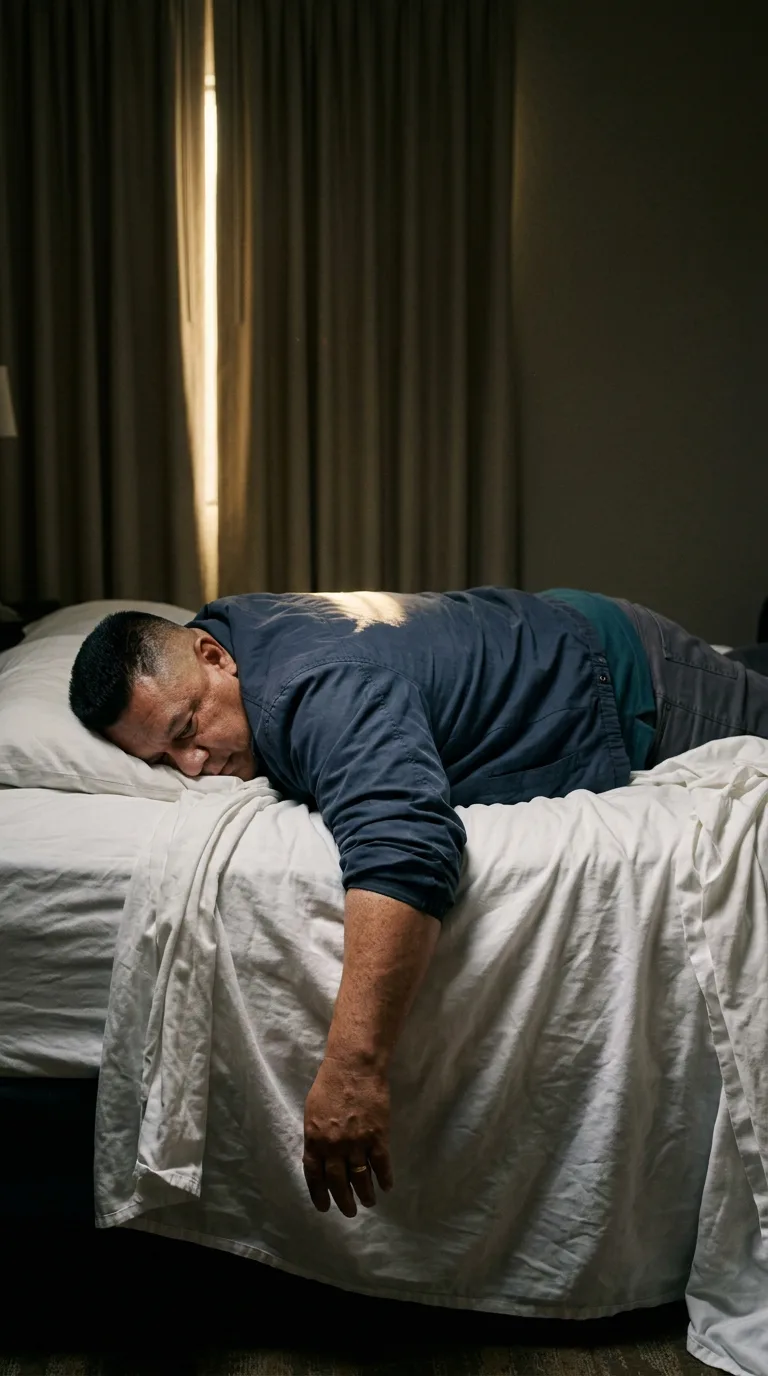
Rarest thing about him: Jehovah's Witness — epic, 1 in 145
Season 0seed 1977610441 · engine v10
Character card
lineage 2NZHHJ
His body-swap story
@colin.hasbrook, wearing an unnamed body, rolled the wheel on and woke up as Reynaldo Cabral, spent under a minute in him, then spun the wheel and woke up as Bryce Halloran
The tow truck driver's kitchen smells like burnt coffee and the inside of a busted radiator, and you are standing in it, in him, with a mug in a hand that broke its knuckle in 2019 and never quite forgave the world for it. You have been him for less than a minute, and already you know you don't want to be. It's not the nose, crooked from something you haven't learned yet. It's not the gut hanging soft over the waistband. It's the boredom coming off the morning like heat off asphalt — a Monday with nothing in it, dispatch quiet, the dad bod aching in a chair that's too small for it, and behind your ribs a hunger that has nothing to do with the coffee. You spun this man 125 spins ago for reasons you don't remember anymore, and you are done with him already. You set the mug on the counter, still full, and you open the site on a phone with a spider-cracked screen, and the wheel is already spinning before you've decided anything.
It lands.
You come up out of nothing into the smell of laundry detergent and a body that is heavier than the last one, low and wide and settled, and for a second there is no room in it, no window in it, just weight — a gut resting where your last gut wasn't, shoulders thick, a face pressed into a pillow that smells like somebody else's sleep. The arm that was hanging off the mattress draws itself up on its own, and you feel the shoulder complain about it, feel the whole torso roll over like something docking, hands folding at the chest in a posture this body has never once made in fifty-seven years of nights. Streetlight through the curtain gap, except it isn't streetlight, it's afternoon, thin and gray and coming through a gap that shouldn't have light in it at all if the hour is what your last body's kitchen clock said. Something is wrong with the math of it. You don't chase that yet.
What comes first is the ring. Left hand, plain band, and it opens onto her like a door left open in a house you've never lived in — Marisol, forty years married in six months, her voice saying *Rey* in a particular flat Pittsburgh way that means she's annoyed and fond of him both at once, and under that a whole Tuesday: her at the stove, him behind her not touching, just standing there because after this long standing near her is its own kind of touching. You didn't ask for that. It comes anyway, the way the facts said it would, riding in on the metal against your finger.
The sheets underneath — cheap cotton gone soft with washing — give you the apartment before this one, and the one before that, three moves in thirty years, each one a little further from downtown and a little closer to quiet. Retirement four years back, a pension from the mill supply company he outlasted by a decade, longer than the two men who trained him. You feel his knees on the stairs he takes to the porch every morning, the specific ache in them that isn't pain exactly, just forty years of asking too much of them. You feel the reflux sitting low and hot behind the sternum, a permanent tenant, worse after the coffee, worse after the whiskey, and there is always whiskey — nightly, steady, a thing he does not call a problem because problems get talked about at the Kingdom Hall and this does not. Wednesday meetings. Sunday meetings. Jehovah's name said plain and often, no cross on the wall, no candles, just a clean unbothered faith that has never once needed decoration. He believes it the way he believes the sun comes up — not examined, just there, holding the shape of every week.
The shirt is still on him, the navy jacket too — he fell asleep dressed, which the body already knows was wrong, which means the whiskey did it, means there's a glass somewhere on a nightstand he doesn't remember filming himself finish. The morning comes back through the sleeve: pulling the polo over his head in the bathroom mirror, teal, the one Marisol likes on him because it isn't black, buttoning the jacket he didn't need but wore anyway out of habit, the jeans already going gray at the knee from wear, the New Balances he bought because his podiatrist told him to and has never once regretted. Small, ordinary vanity — he likes how he looks leaving the house. He does not know he is fifty-seven and heavy and short and none of that has ever once been the thing he thinks about when he catches himself in glass. He thinks about the porch. The coffee. The particular slant of light on Beulah Street in the mornings, the stairs down between the yards, wet leaves going black and slick this time of year, how he takes them slow now, one hand on the rail he built himself.
None of that explains why it's afternoon and he's asleep and dressed and drunk enough at Monday's early hours to not remember lying down. That part you don't get from the shirt. That part just sits there, a small wrongness inside a life that otherwise reads as decent and finished and whole — a man loved, a man believing, a man carrying something quietly in the evenings that nobody at the Hall would ever hear about.
You lift the hand off your chest. Turn it over — thick fingers, the ring catching what little light there is, a scar you didn't put there across one knuckle from some year you'll never be given. It is not your hand and it is now the only hand you have.
You look up, past the gap in the curtain, into nothing in particular, and you say, out loud, to no one:
"Marisol, I'm up."
She isn't in the room. You don't know yet if that matters, or for how long.