Bryce Halloran
Fictional. Generated by AI — not a real person, and no likeness of one is intended.
25, priest in Phoenix · rolled by @colin.hasbrook · card — no film
History
who has worn him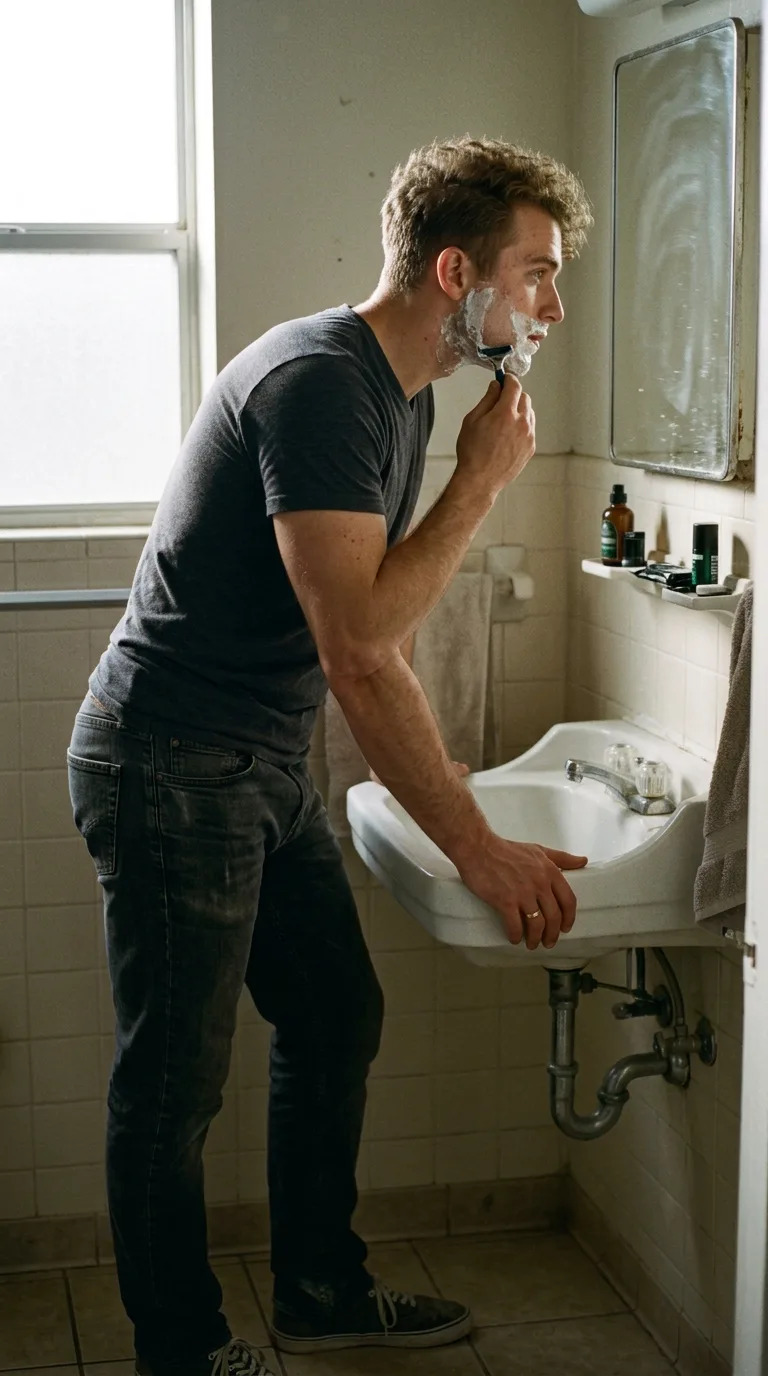
Rarest thing about him: It's a problem and it shows — rare, 1 in 33
Season 0seed 58747697 · engine v10
Character card
lineage 2NZHHJ
His body-swap story
@colin.hasbrook, wearing Reynaldo Cabral, rolled the wheel on and woke up as Bryce Halloran, spent 1 minute in him, then spun the wheel and woke up as Cole Bertrand
---
Reynaldo Cabral's knees hurt sitting down, which is a special kind of insult, because standing hurt worse. Less than a minute in that chair, in that flesh, and already the inventory was running: the ache behind the hip, the way breath came shallow and had to be planned for, the taste of the mouth like it hadn't been rinsed since he arrived in it. Fifty-seven years soft and heavy and none of it his own doing, and out the window Pittsburgh sat gray on gray like it had never once considered being anything else. He did not even get up. He reached for the tablet on the arm of the chair with a hand that was not quite obeying yet, found the site out of habit before the body had finished being strange to him, and told himself it was only to look. He has told himself that before. A hundred and twenty-six times before.
It is not boredom, exactly. It is the specific and total absence of anything left to feel in a body he has occupied for under a minute — no history in it yet, no weight of a life half-lived-with, nothing to be curious about because nothing has happened. An empty room is worse than a bad one. He spins to get somewhere the walls have paint on them.
The wheel turns the way it always turns, without sound, without ceremony, and hands him a stranger the way a hand of cards is dealt facedown.
—
The razor is already moving before you know you are the one moving it, and it does not stop the way it should — the way it was stopping, half a second and a whole life ago, at the tender skin near the corner of the mouth where a man learns early to go slow. You do not go slow. Up the jaw, against the grain, clean, no flinch, no hesitation, because you carry none of the twenty-five years of small carefulness that taught this mouth's corner to be handled gently. The second half of the shave finishes faster than the first ever has. Steam sits on a mirror gone soft at its silvering. Foam, cool now, drags away in one motion and leaves skin pink and bare on a jaw that is shorter than the one you left ninety seconds and two thousand miles ago, on a face with a curl of dark-blond hair falling loose over the brow, on a body that stands two sink-widths closer to the tile than the one you just stepped out of, compact and hard through the shoulders in a way the old one never was and never will be again.
The window behind you is going white with a light that has no business existing at a Pittsburgh eleven a.m. — this is a Phoenix noon, a wall of sun instead of Monday cloud, and your stomach doesn't know yet why the day tastes different.
Water in the basin, still running. Your left hand — his hand — sits flat against the porcelain rim, and the ring on it is the first thing that speaks.
It comes up through the metal like heat off a road: a hotel ballroom in Scottsdale, string quartet playing something nobody chose, and her in white with her mother crying into a napkin, and him — you, Bryce, though you don't have the name yet, only the feeling of it — terrified in the specific, holy way that has nothing to do with doubt. Her name arrives a half-second later, riding the same current: Colleen. The vows he wrote and rewrote four times because he kept sounding like a homily and she kept laughing at him for it, gently, the way she laughs at everything he takes too seriously. That laugh is worth more to him than the collar ever was, though he'd only admit that to the mirror, and only after a drink.
The razor itself gives up something meaner. Not a memory so much as a rhythm — how many mornings, how many sinks, how the vape pen sits in the same shirt pocket the collar tab will sit in an hour from now, how the leg starts bouncing under the vestry table before he's even aware he's nervous, every homily, every funeral, every christening where he stood at the font promising a God he privately can't feel anymore that this baby would be watched over. He believes in none of it. He has believed in none of it for three years, since a Tuesday nobody knows about, a length of time he has learned to hold like a stone in a coat pocket — always there, never shown. He gets up Sunday and says the words anyway because the parish needs somebody standing at the front of the room saying them, and because stopping would cost more than continuing does, and because — this is the part that comes through last, through the terrycloth of the towel hung by the sink, worn soft from a hundred washings — Colleen doesn't know either. Not really. She thinks the second glass is because the job is hard. It is. That's not why.
The jeans against your legs remember being pulled on this morning in a dark bedroom so as not to wake her, her breathing slow and even on her side of the bed, one bare foot outside the sheet. The gray shirt over your shoulders remembers being chosen because it was on top of the basket, nothing more romantic than that, and under it your chest remembers gym mornings, actual strength earned and kept, the only discipline that never slipped. Somewhere in the muscle of the jaw there's an old girlfriend too — Dana, unbidden, a name with a whole college semester folded into it, a version of himself that almost went a different direction entirely before the seminary took him instead, and some nights that other life still stands in the doorway of his head not asking to be let in, just standing there.
Your knees don't hurt. Your breath doesn't have to be planned for. Twenty-five years old in every joint, and it is, God — if there were a God left to thank in this body honestly — it is good to stand up straight.
You look down. The razor's still in your hand, foam-flecked, dripping faintly onto the porcelain. You turn your hand over slow, like checking it for something that isn't there, watching the ring catch the window's flat white light.
"Not bad," you say, to the fogged mirror, to nobody, in a voice that isn't yours and fits like it always was.
Somewhere behind that face a leg has already started bouncing, waiting on nothing, the way it does.