Rey Cabrera
Fictional. Generated by AI — not a real person, and no likeness of one is intended.
30, wrestling coach in Philadelphia · rolled by @marco.villagrana · card — no film
History
who has worn him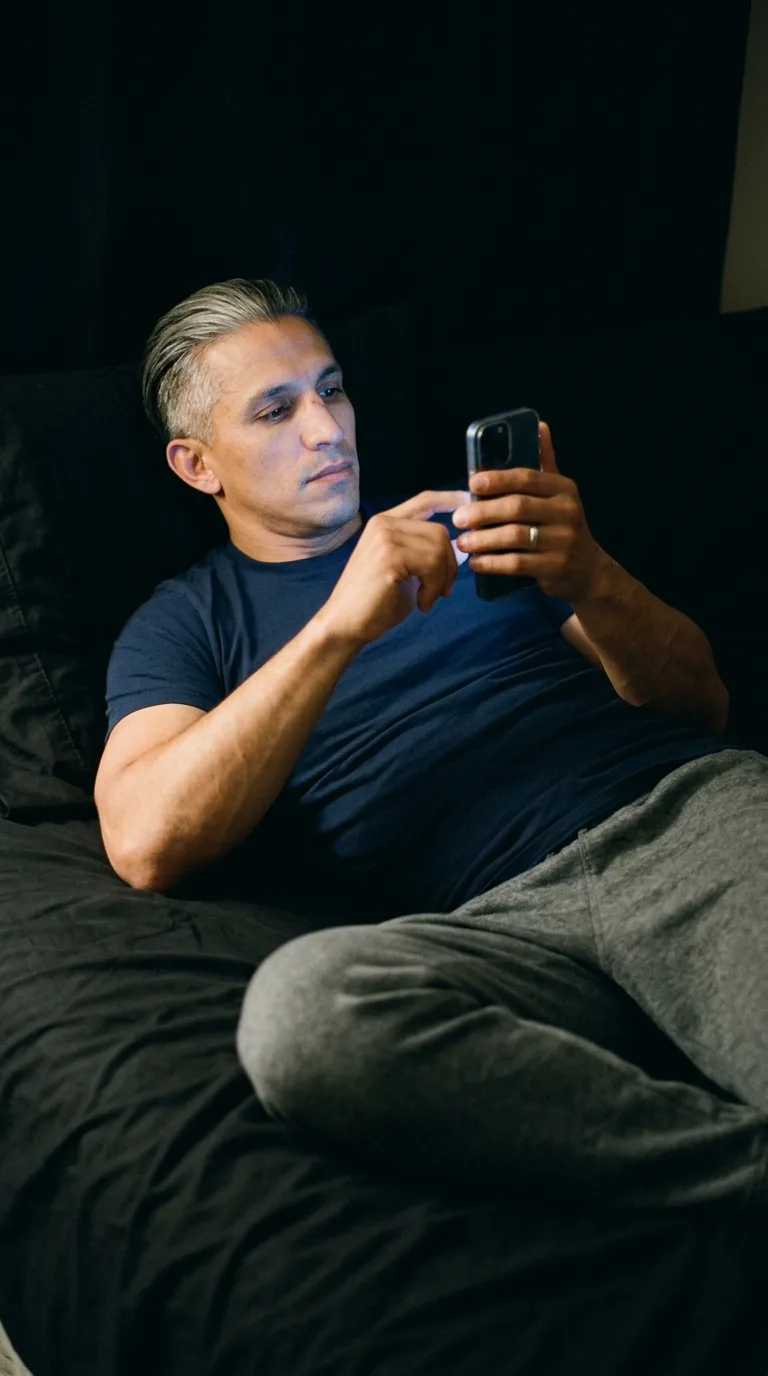
Rarest thing about him: Gray / silver — rare, 1 in 19
Season 0seed 1965608507 · engine v10
Character card
lineage LJL8SV
His body-swap story
@marco.villagrana, wearing Anil Prabhakaran, rolled the wheel on and woke up as Rey Cabrera, spent 20 hours in him, then spun the wheel and woke up as Danny Wisniewski
The line ticket printer is still chattering when you decide. Anil's knees ache — 44 years old and every one of them lived on a kitchen floor — and the burn on his left forearm from Sunday's fryer oil throbs when the tongs brush it. You have been him for three minutes and already you know the whole rest of it without wanting a page more: the rent behind, the sous chef who hates him, the phone in his back pocket buzzing with a number he owes. There is nothing here to want. You wipe your palm — his palm — on the apron, step back from the line like you're going to the walk-in, and instead you find the corner where nobody's watching and you take out the phone that isn't yours to keep and you open the page with the wheel on it.
You pay with a card that will not be his problem in a minute. You spin.
—
The scroll keeps going without you.
That's the first thing — the thumb, moving faster than the moment it interrupted, flicking through people you never stopped for, in a rhythm too clean to be a man thinking. The room is dark except for the phone. There is a weight along your side that wasn't Anil's — heavier through the shoulders, shorter, a body used to bracing against other bodies — and a mattress that gives different than his mattress did, and somewhere behind your head a window with somebody else's streetlight coming through the curtain instead of the alley glow off Halsted.
Your thumb stops. The blue light holds on a face that has quit blinking at the right intervals.
—
The phone case is warm from a hand that had been holding it for forty minutes before you got here, and it comes first: a boy — nine, ten — pinning another boy twice his size on a mat that smelled like bleach and feet, and the sound this man made that wasn't a cheer so much as a shout torn straight up out of the chest, both fists in the air. Rey Cabrera. Coach Cabrera to a room full of kids who call him that with more respect in it than they give their own fathers. The name arrives with the memory, not before it, the way his own name always would to a man who never has to think it.
The T-shirt against your back is old enough to be soft in one specific way, laundered four hundred times, and it gives you the hamper it usually lives in, and a woman's hands pulling it out and folding it anyway even though he tells her not to bother. Marisol. Nine years married. The ring is on your left hand right now, resting against the phone, and it brings the day itself — a backyard in Fishtown, folding chairs, his mother crying before anyone else did, Marisol's dress catching wind off the river two blocks over. You loved her before you had the vocabulary for it. You still do, in the particular tired way of a man who works evenings at a school and mornings at practice and falls into bed by ten most nights, except tonight, when something kept him up scrolling instead.
There is another woman under that, older, further back — Danielle, nineteen years old, a diner on Aramingo, the two of you split up over something so small neither of you can name it anymore, and some nights — not many, not proud of it — his thumb finds her name in his contacts and does nothing with it. Didn't tonight. Won't. But the wanting to is its own kind of true, and it comes through with the rest, unfiltered, exactly the shame he keeps it in.
The mattress under your hip has fifteen years of a body that got thrown, that threw, that broke its own nose at twenty-two taking a headbutt in a scramble he still won, and never had it reset right because there wasn't money and there wasn't time. It aches a specific way in the joints that nothing but heat helps. It is strong through the shoulders and forearms in a way that has nothing to do with a gym and everything to do with grown men trying to put other grown men on their backs for a living, three seasons a year, since he was fourteen.
The nightstand, if your hand went to it, would give you a Bible with a cracked spine, opened more out of habit than certainty lately, and a jar with a few toothpicks in it because his jaw wants something to work on and it isn't a cigarette, was never a cigarette. Somewhere downstairs the gym bag by the door still smells like the mat, and that smell alone would give you a whole practice — Tuesday's, six hours ago, a kid named Isaiah he's worried isn't eating enough to make weight without hurting himself, and how Rey stayed forty minutes after everyone left just talking to him about it, man to boy, the whistle still around his neck the whole time, not because he needed it but because taking it off never occurred to him.
The sweatshirt from this morning — maroon, someone else's college on the chest, a gift, worn anyway — comes back sleeve by sleeve: pulling it on in a cold locker room before six a.m. practice, whistle looped over his head after, the particular satisfaction of a Tuesday that had gone according to plan until it hadn't, until practice ran long and dinner was quiet and Marisol went up before him and he came up after with his phone in his hand instead of anything to say.
—
You look at your hands. Not his hands — never were, not now, not going to be for longer than the wheel decides — but they answer to you anyway, and the ring catches the last of the phone's light when you turn the left one over.
You lift your eyes off it into the dark of the room, toward wherever the camera would be if there were one.
"Marisol didn't marry a stranger," you say, quiet, to nobody awake to hear it. "Neither did I."