Rene Bautista
Fictional. Generated by AI — not a real person, and no likeness of one is intended.
34, machinist in Houston · rolled by @colin.hasbrook · card — no film
History
who has worn him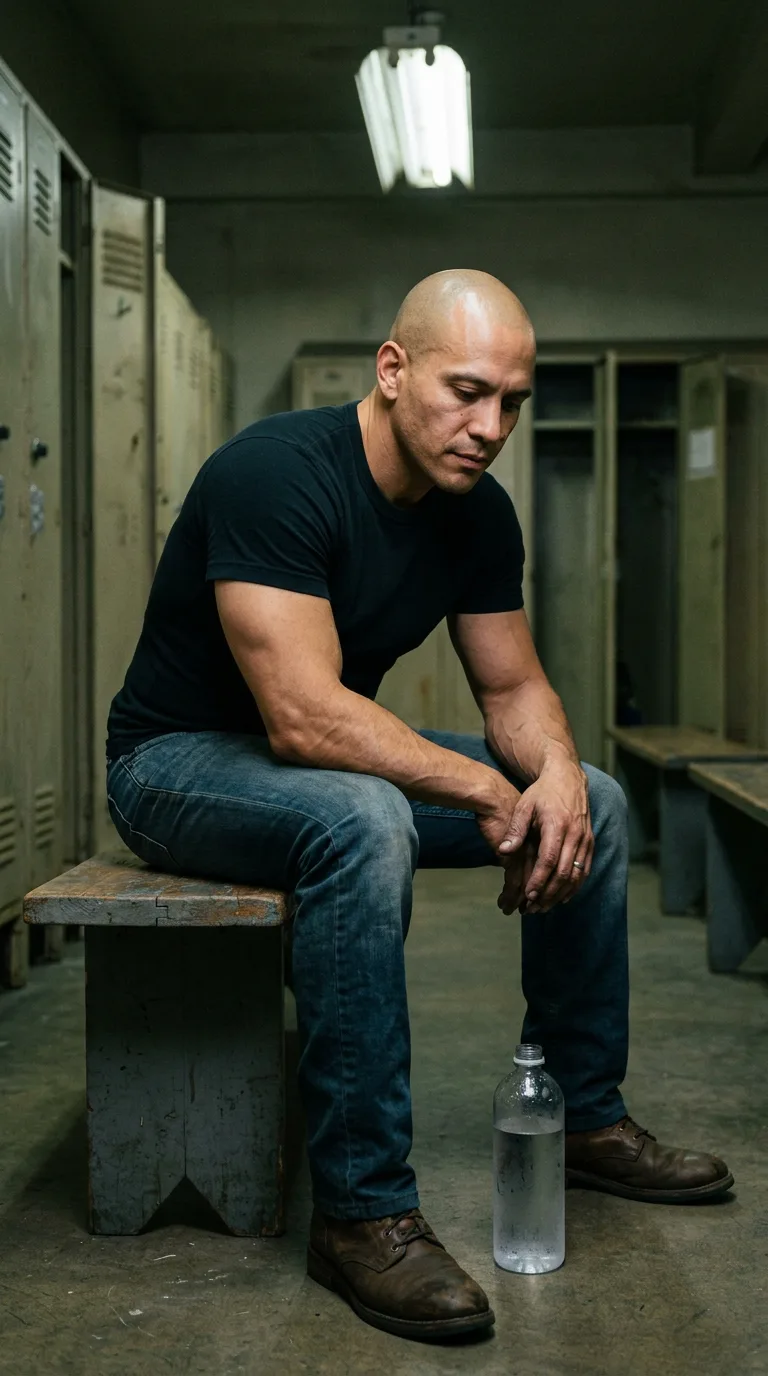
Rarest thing about him: Three or more — rare, 1 in 17
Season 0seed 983274471 · engine v10
Character card
lineage 2NZHHJ
His body-swap story
@colin.hasbrook, wearing Melvin Ashcraft, rolled the wheel on and woke up as Rene Bautista, spent 1 minute in him, then spun the wheel and woke up as Gordon Aldrich
The lamp over the number 4 shaft entrance flickers the way it has for six years, and you stand under it in a fifty-year-old miner's body that has done its job fine tonight — coal dust in the creases of the knuckles, a low ache riding the left knee, the taste of the thermos coffee gone cold in the back of the throat. It is not a bad body. It has never been a bad body. But you are standing at the man-trip landing between loads with nothing to do but wait, and waiting is the thing that always does it: some idle five minutes where the wanting comes up out of nowhere like water finding a seam, and your thumb is already walking to the phone in this man's Carhartt pocket before you have decided anything. Three hundred and seventy-six of him and him and him before this one, and here you are again, at the edge of a shift, telling yourself it's only a look.
The screen loads slow underground. The wheel spins on its own before you touch it, a courtesy, a tease. You touch it anyway.
You are a hand closing on a bar.
The bar is cold-knurled steel, familiar in a way that isn't yours yet, and your palms are wider than they were a half-second ago, the grip two inches out from where muscle memory — someone's muscle memory, not any you own — says it should be. Fluorescent light. A smell of chalk and rubber matting and hot iron. The breath in your chest is already most of the way out through clenched teeth, and you do not finish blowing it — you stop, mid-exhale, and grind the last rep down slow instead, slower than a last rep has any business going, because whatever was driving this body a half-second ago is not driving it now.
The mirror across the rack shows you a bald head, a mole riding high on one cheek like a period at the end of a sentence, hazel eyes that don't yet know they're being looked through.
Then the shirt.
It is against your back before you can call it a shirt — a plain black tee, worn thin at the collar — and it gives you, sleeve first, a Monday morning: him standing in a bathroom with the water still running, pulling this same shirt down over his head one-armed while the other hand steadies a toothbrush, his wife's voice from the hallway asking if he remembered the boys' cleats were in his trunk, not hers. Rene. You get the name off the dog tag charm one of his sons made him in shop class, still on the same keyring as everything else, and it comes with the boy's face, nine years old, tongue between his teeth cutting sheet aluminum badly and proudly. Three or more kids in that house — the memory doesn't hand you a headcount so much as a noise, cleats and backpacks and somebody always needing a ride, a wedding band worn thin and plain that never once, in nine years, has come off his finger, not for the lathe, not for the gym, not for anything, because his father told him a married man keeps it on.
The jeans against your legs give you the drive in this morning — hot already at seven, AC dying in the truck, a rosary hung off the mirror that was his abuela's and that he touches at red lights out of habit more than belief. The boots give you the floor of shop number two, steel chips curling blue-silver around the toes all shift, the particular ring of a good facing cut, the foreman's voice saying nice and slow like Rene invented patience. There is a raise coming in October that he has not told his wife about yet because he wants to see her face. There is a Saturday two months back, a big night out for their anniversary, margaritas at the place on Westheimer, her laughing so hard at something dumb he said that she had to put her drink down — and under all of it, quieter, unwilled, the small tell of who he actually is: fingers drumming on the steering wheel, on the workbench, on his own knee in Mass, always four counts and a pause, since he was a boy, since before he can remember not doing it.
The body under all this is thirty-four and built like it works for a living — shoulders that carry the bar like it's an argument he's already won, a knee that doesn't complain yet, forearms roped from years of the same three motions. It carries nothing he'd bring up. No sins worth confessing past the ordinary. A Catholic who still goes, mostly for her, mostly for the kids, and finds he means it more than he expected to by the time he's kneeling.
You set the bar back on the rack. Your hands — his hands — come down in front of your face, palms up, and you turn them over slow the way a man checks for something he dropped.
You look up into the locker room mirror, into hazel eyes that used to be someone else's problem to worry about, and you hear his voice come out of your mouth, low, almost amused at itself:
"Two more reps. Then I go home to them."