Melvin Ashcraft
Fictional. Generated by AI — not a real person, and no likeness of one is intended.
50, miner in Pittsburgh · rolled by @colin.hasbrook · card — no film
History
who has worn him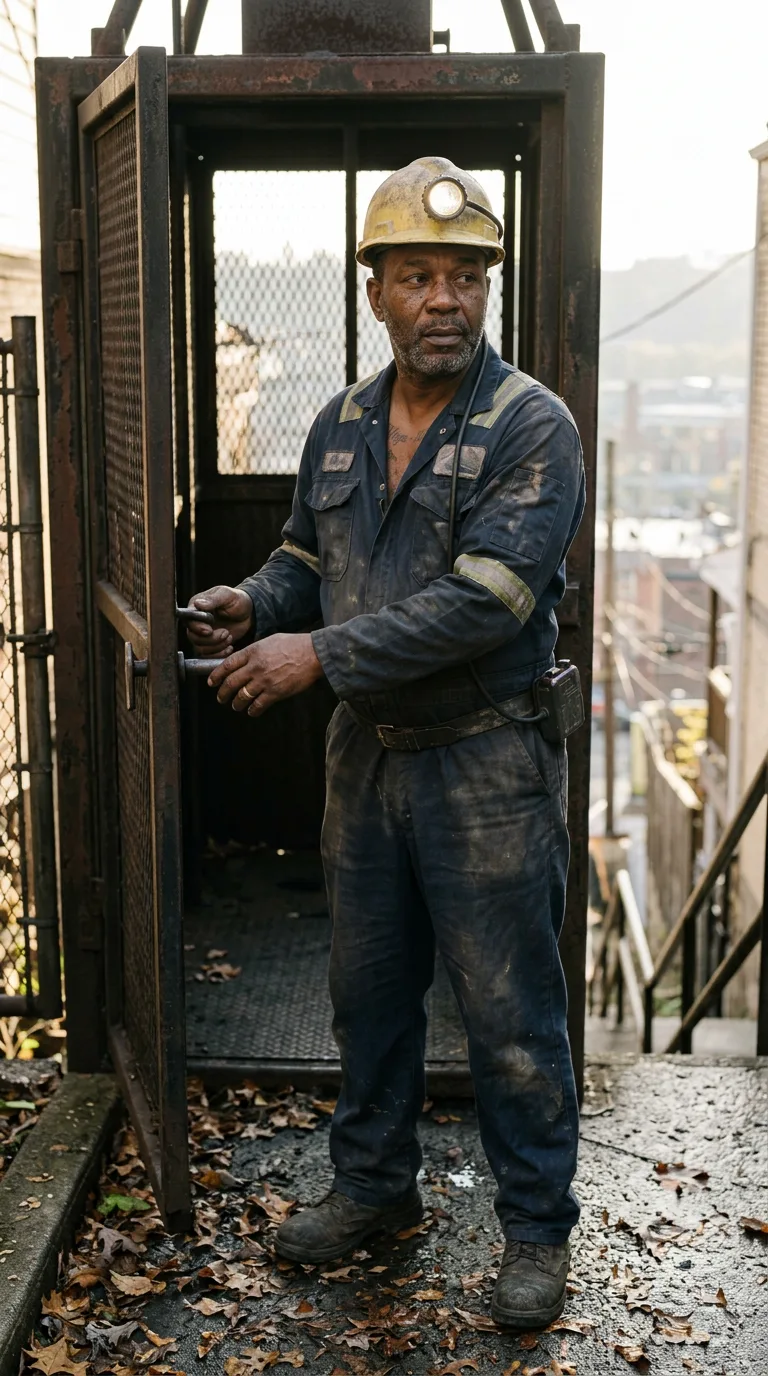
Rarest thing about him: One, chest — epic, 1 in 39
Season 0seed 1260181441 · engine v10
Character card
lineage 2NZHHJ
His body-swap story
@colin.hasbrook, wearing Terrence Aubuchon, rolled the wheel on and woke up as Melvin Ashcraft, spent under a minute in him, then spun the wheel and woke up as Rene Bautista
---
Terrence Aubuchon's apartment smells like fixer and old coffee, and his hand is shaking a little, which is new. Not the body's fault — you've had it thirty-three seconds, maybe forty, and already you know: skinny, city light through blinds, a camera bag on the counter he hasn't opened all day. This is the least of what's wrong. What's wrong is you spent the last one — Terrence's whole waking life to you — inside a man who flinched at his own reflection in shop windows, who apologized to strangers for existing near them. You didn't come back for adventure. You came back because thirty-three seconds of him was already enough, and the wheel is sitting right there on the counter glowing like it always does, patient, and you are not a patient person, you have never once in three hundred and seventy-five spins let a body cool before reaching again.
You reach again.
The screen does what it does. There is no countdown you can feel, just the drop —
— and you are bent at the waist with your forearm across a control lever, work glove gone stiff with old grease, the cage shuddering under your boots. His boots. Fifty years old and heavier through the middle than you've been in months, a body with weight that settles rather than moves, and your hand — his hand — pulls the lever a half-second late, wrong, and you correct it, slow and deliberate, and the cage catches properly. You do it again. And again. Ten times checked, careful, a motion so old in these arms it should not need watching, and you are watching every inch of it like a man reading a language he used to speak fluently and has just, this instant, forgotten and relearned in the same breath.
Nobody notices. Down here nobody has time to notice a man checking his own hands.
The glove is what opens first — worn smooth at the palm from a grip repeated ten thousand times, and it comes with the memory of cold mornings, thermos steam, a joke his crew tells every single day about the Steelers that nobody has found funny since 2019 and everybody still laughs at. Then the collar, damp with sweat and coal dust gone into the seams permanently, years of it, and under it, faint against his skin: the tattoo. Script. A name — Yolanda — and a date under it, and the date comes with her face the way she looked the morning after, twenty-six years old in a hospital bed holding something small and furious, and him crying in a way he never let the other men at the mine know about, not once, not in three decades.
The wedding band is the loudest thing he owns and you're not even looking at it, just feeling its weight against the lever, the particular groove worn into his finger from thirty-one years of never taking it off, not for showers, not for shift, not even the year the ring finger swelled and it had to be cut free and re-fit and he wore the new one home like an apology. Yolanda at the stove. Yolanda's laugh, which is louder than his, which fills a kitchen the way his never has. Three kids — no, more than three, a fourth grown and moved to Cleveland, a fifth who calls every Sunday without fail — and all of them taller than him now, and all of them, every single one, with his freckles scattered somewhere on their faces like he handed out pieces of a map.
The coveralls remember getting put on this morning — no, not morning, it was still dark, always dark, the zipper stuck a third of the way like it's stuck every day of his working life, and he swore the same soft curse he swears every day, and pulled his belt through the same worn hole, and checked his sugar before he checked anything else because the doctor said if he didn't he'd end up checking it in a hospital instead. His leg is bouncing right now — has been the whole time, a tic so old it isn't even nervousness anymore, just a rhythm his body keeps like a second pulse, and it does not stop even now, even checked and careful and slow, his knee going like a metronome nobody's listening to.
The hard hat's weight on his skull is a memory of every morning for twenty-six years, the light on it dead now, unclicked, and under it his scalp itches faintly the way it always does by hour four, sweat working down through waves he brushes in every morning before the mirror fogs, three minutes, the only vanity he lets himself keep. His knees ache already, low and constant, the particular ache of standing on concrete and rock for half his life. His lower back has an opinion about the last decade. His hands — thick-fingered, sure, unbothered — know this lever, this gate, this cage, better than they know his own children's current phone numbers.
You look down at them anyway. At his hands. Turn one over slow, like it might tell you something the memories didn't, freckles across the knuckles same as his nose, same as his cheeks, the one thing anybody would notice about him first and last.
You lift your eyes to whatever's watching — the cage's grimy little window, the daylight past the leaves outside, nothing, everything.
"Yeah," you say, out loud, to no one, in his voice, low and unhurried and not yet sure it's not still him. "Yeah, I got it."
The leg keeps bouncing. Somewhere in Cleveland, in a kitchen, a phone is charging that will ring on Sunday. You do not know yet how long you'll let it.