Reginald Achebe
Fictional. Generated by AI — not a real person, and no likeness of one is intended.
35, manager (mid-level) in Rural Texas · rolled by @connor.waskiewicz · card — no film
History
who has worn him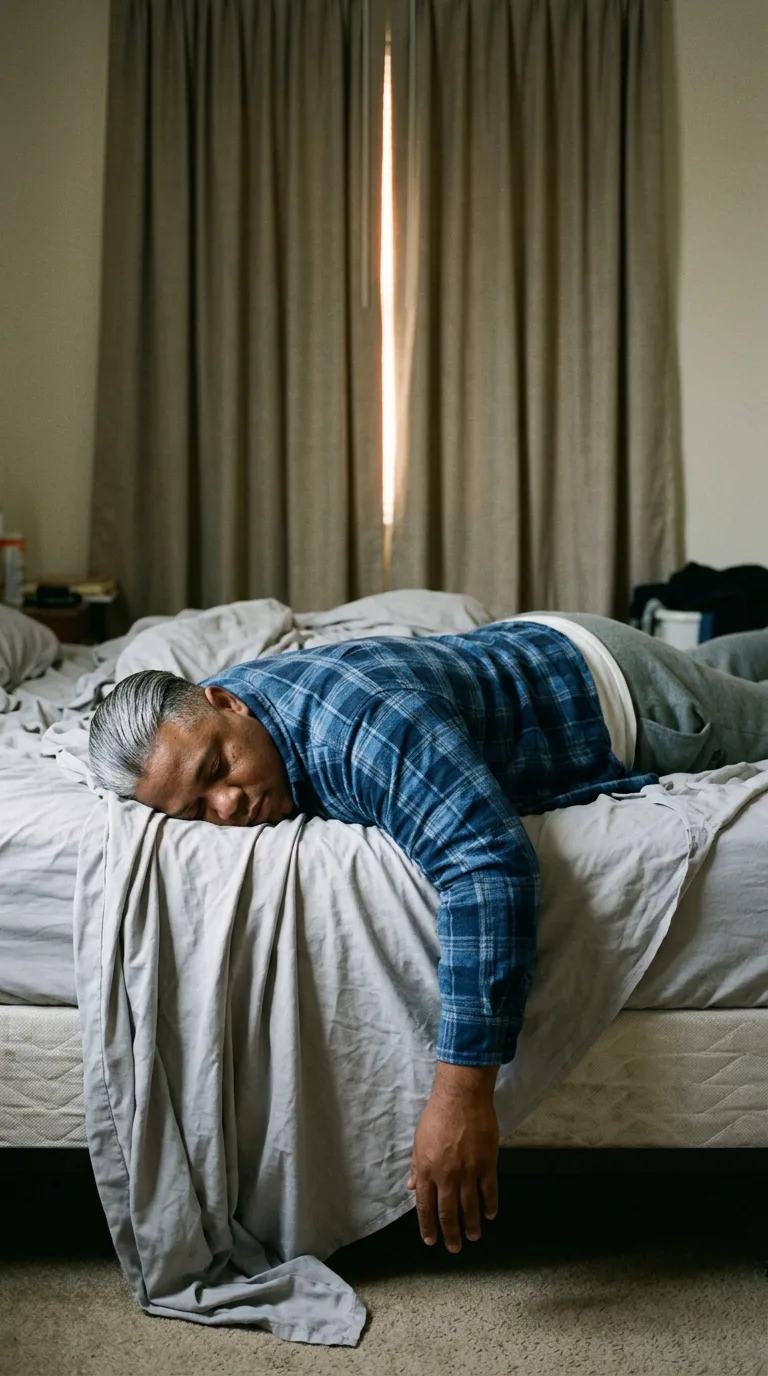
Rarest thing about him: A cleft chin — common, 1 in 25
Season 1seed 1159812975 · engine v11
Character card
lineage 2NZHHJ
His body-swap story
@connor.waskiewicz, wearing Colton Braswell, rolled the wheel on and woke up as Reginald Achebe, spent under a minute in him, then spun the wheel and woke up as Marcos Villareal
Sixteen minutes ago you were somebody. Now Colton Braswell's studio apartment smells like old pizza boxes and unwashed gym socks, and his phone won't stop buzzing with texts from a route manager about a missed 6 a.m. shift, and his knee — his knee, twenty-three years old, should not ache like this — throbs from a fall off a porch step three weeks back that never healed right because Colton doesn't have insurance worth the paper it's printed on. You stood in his kitchen eating his cereal out of the box with his freckled hand and thought: this is not what I paid for. Boredom set in around minute four. By minute ten it curdled into something meaner — a want with teeth. You go back to the site standing at his counter, phone light blue on your face, and you spin, because the wheel does not care that you are tired of a man before his coffee's even cooled.
The room that comes up is dark and smells like fabric softener and the mineral tang of well water. There is a body under you already turning — an arm that hung off a mattress edge draws itself up like a tide coming back in, the hand finding its way to the chest, its twin folding over it. Breath that was ragged goes smooth in one pull. You are heavy in a new way, low and settled, a gut that presses the plaid shirt tight, a jaw with grey stubble-that-isn't — no, clean-shaven, you register the smoothness of it against the pillow crease, sixteen minutes of Colton's patchy scruff gone like it never was. Streetlight comes through a two-inch gap in tan curtains, one bright seam of it laid across the sheets.
The shirt is what opens first — flannel gone soft as paper from washing, and the memory comes with the softness: him buttoning it two nights ago, half-drunk, laughing at something on the phone, the phone propped against the bathroom mirror while his girlfriend's voice came through tinny and warm, and him saying *baby I already told you Marissa's not gonna be a problem no more,* and meaning it, and not quite meaning it, because Marissa still texts sometimes, late, and he still answers, and he hates that about himself in the particular way a man hates a thing he has no plan to stop doing.
The mattress under your hip gives you the water stain shaped like Texas he's meant to flip for eight months. The barbed wire fence outside — you don't see it, but your body knows it's there, forty yards past the window, because his hand has mended three broken strands of it with pliers that live in the truck bed, and his shoulder remembers the particular strain of pulling wire taut in July heat. The water tower on the horizon he's looked at every morning of his life out here, rust-red, WELLINGTON stencilled in paint half gone. His office comes next, glass-walled, door propped open on purpose because his last district manager taught him an open door reads as a man with nothing to hide, and he has believed that instruction the way he believes most instructions given to him kindly.
His children arrive through the pillow — a girl's drawing taped inside his truck's visor, a boy's height marked in pencil on a doorframe two towns over, in a house that isn't his anymore, in a marriage that ended with more tiredness than anger, which was somehow worse. And his hand, lifting now on its own old habit, finds his jaw — the cleft in his chin, the one thing people always say when they meet him, *you got a Kirk Douglas thing going on* — and the touch brings back his mother's hand doing the same to a five-year-old version of this face, tracing the cleft like she was checking it was still there.
You surface into the two folded hands on his chest, unfamiliar in their new stillness, unfamiliar in their weight. You bring one up in front of your face in the dark and open and close it, watching gray-silver knuckle and heavy palm answer you exactly, obediently, a stranger's hand doing what you tell it on the first try.
"Reggie," you say into the empty room, trying the name in his own low voice, "you sleep like the dead."
Somewhere beyond the window a dog starts up at nothing. You lie there a while longer with his heart going even and slow under your borrowed hands, already wondering how far this one'll take you before the wheel starts calling again.