Raymond Takahashi
Fictional. Generated by AI — not a real person, and no likeness of one is intended.
49, paramedic in Detroit · rolled by @connor.waskiewicz · card — no film
History
who has worn him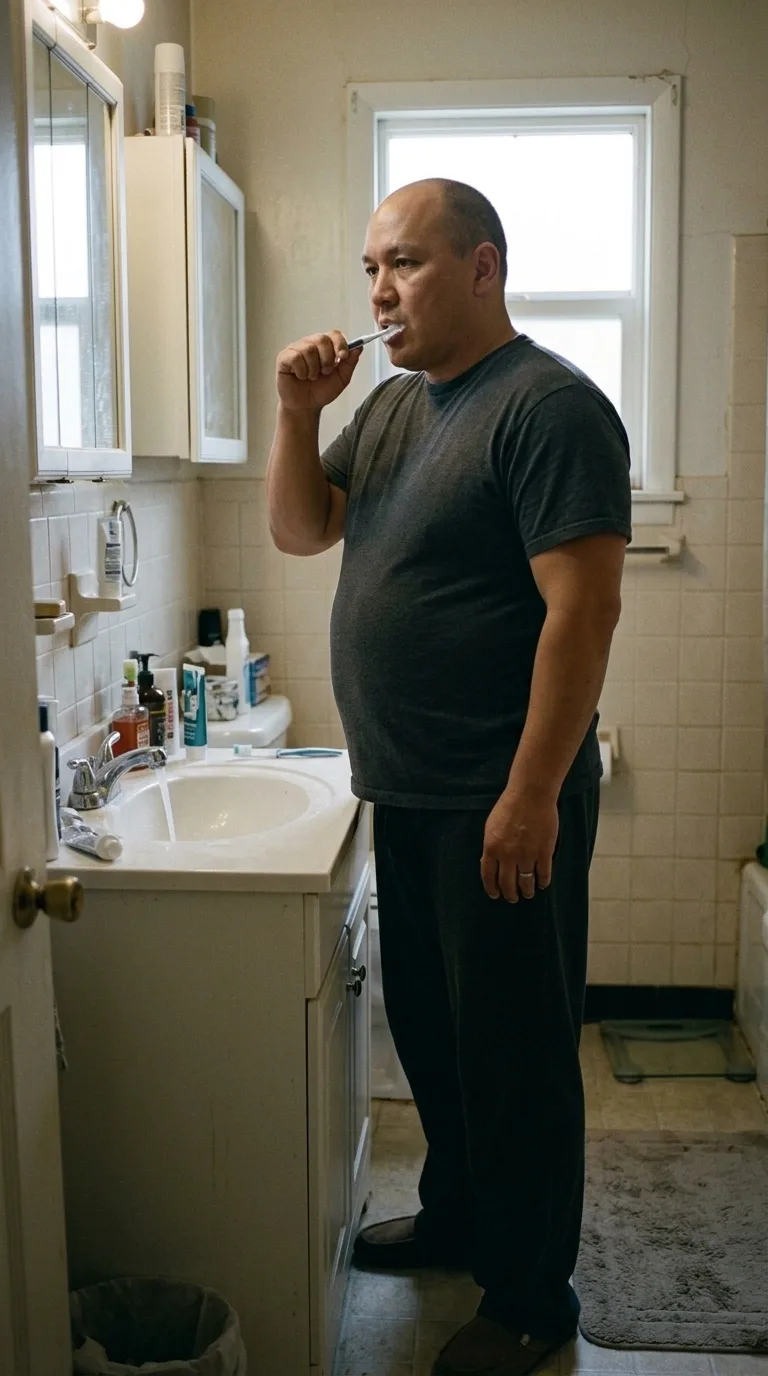
Rarest thing about him: Paramedic — common, 1 in 505
Season 1seed 42186356 · engine v11
Character card
lineage 2NZHHJ
His body-swap story
@connor.waskiewicz, wearing Kevin Moriarty, rolled the wheel on and woke up as Raymond Takahashi, spent under a minute in him, then spun the wheel and woke up as Adrián Quezada
The first thing I do in Kevin's body is stand at the kitchen window of a house in Dorchester and notice that my knees don't hurt. They didn't hurt yesterday either, which was the problem. He is fifty-five, five-seven, soft in the middle, and everything works. His mug is warm. His caseload is nine families, and his phone buzzes on the counter with a name I know only because his thumb knows it. I have been him for eleven minutes, and I am bored of being someone who is never in a hurry.
Nothing went wrong. That is the part I wouldn't say aloud. I want a body with something at stake in it. I want to be a man whom the morning needs. So I open the page with the wheel, pay, and spin. Kevin's thumb does the pressing, and he is gone from it.
The sink is cold under a warm hand. A toothbrush is moving in my mouth, mid-stroke, and the tap is running. Foam sits on my lip. The window is white with low sky, and I am taller by four inches, heavier by something that sits forward on me like a held breath. My scalp is bare on top and prickly at the sides.
I finish the stroke on the other side, slower. The back molars give me the first thing: a dentist's chair, his jaw sore from a night of clenching, and a vow to stop. Then the shirt. The gray T-shirt is soft from a hundred washes, and its hem lifts as I breathe. It gives me this morning in his hands: the drawer sticking, the uniform hanging on the closet door in its dry-cleaner plastic for the shift to come, and his wife's side of the bed already empty and cool. He stood there a second, because he does, and said something small in his head. It wasn't a prayer. It was the habit of one.
My right hand rises and runs over the crown of my head, the smooth skin, the horseshoe of bristle. It does this without me. I feel what it feels: forty-nine years of finding himself a little less hairy, and being fine with it.
The cabinet handle is brass and cold. I touch it, and there is a night in the back of a rig on a street like this one. A boy, a seatbelt, a long minute, and the scar through his eyebrow, which he got years before from a gurney rail and which a child later asked about. He said, "A door." He always says a door.
The tile under the slippers is gritty. I get the girls arguing over the one mirror. I get the ring, a plain band, turning on his finger when he is thinking. I get a Saturday at a temple he does not talk about, a cushion, and his knees, and the quiet that he keeps the way other men keep a bottle. He has never touched a drink. I can feel the clean absence of it, like a room with the light on.
I rinse twice. The water in the basin is gray. I stand the brush bristles-up on the shelf, where it has never gone, and he would have noticed that if there were anyone left to notice.
I look at my hands. They are wide, steady, and scrubbed. The ring is the thing I keep looking at. I turn them over. Then I lift my eyes to the mirror's white glare and say, quiet, to a man I have never met:
"All right, Raymond. Let's see how long."