Adrián Quezada
Fictional. Generated by AI — not a real person, and no likeness of one is intended.
38, store manager in Denver · rolled by @connor.waskiewicz · card — no film
History
who has worn him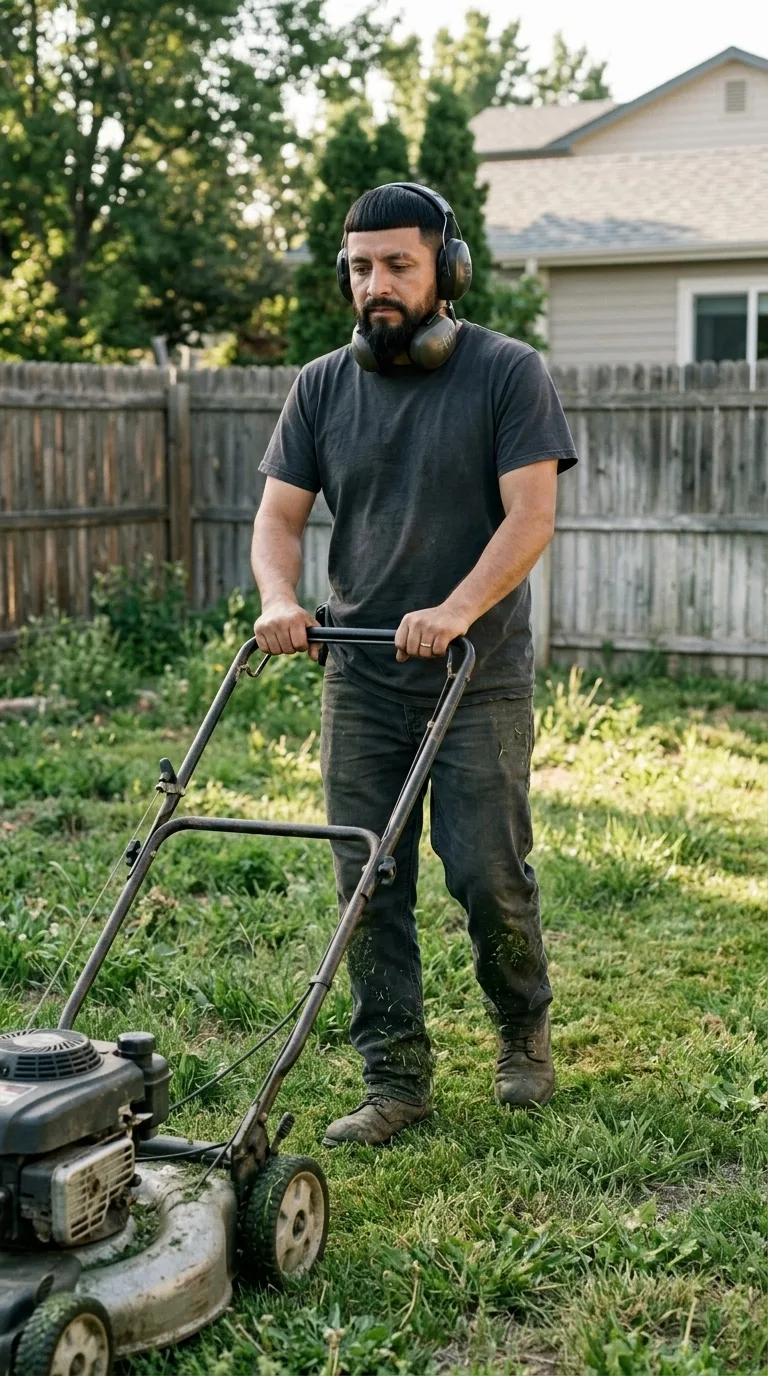
Rarest thing about him: Mowing the lawn — common, 1 in 57
Season 1seed 313529418 · engine v11
Character card
lineage 2NZHHJ
His body-swap story
@connor.waskiewicz, wearing Raymond Takahashi, rolled the wheel on and woke up as Adrián Quezada, spent under a minute in him, then spun the wheel and woke up as Octavio Benítez
You are in Raymond Takahashi, in the middle of a Thursday morning in Detroit, and his knees are the reason. Not the knees only. Forty-nine years of lifting strangers off bathroom floors live in the low back, and when you sat on the edge of his bed with the phone, the whole frame was a ledger of weight carried. It is a good body. It has never once let you down. That is almost the trouble. You have been him for under a minute of your own time, and already you know exactly how this ends: he gets up, he works, he goes home tired and decent. Nothing in him is wanted by you. Something in you has gone quiet and hungry, the way it does, and the thumb knows the page before you do. The wheel turns. You let him go like a coat left on a chair.
The engine drops a note and catches.
You are standing. That comes first: the ground under both feet, the long push of the bar in both palms, a vibration climbing the forearms into the shoulders. Grass is being thrown against your shins, wet and cold through the cloth. One earmuff has slid off your ear, so the world arrives in two layers, a muffled roar on one side and on the other a bright cold morning, birds, a sprinkler somewhere, a dog. Your hands are already on the bar and do not let go. The air smells of cut green and gasoline. Somewhere behind the roofs there is a wall of mountains you do not turn to look at yet.
Then he starts to come, through what you touch.
The bar first. The grip is cracked rubber, taped at the left where it split, and the tape is his doing: a Saturday in the garage, his wife holding the flashlight, saying he could just buy a new mower, and him saying this one was fine. The feeling is stubborn tenderness. It is not about the mower.
The shirt, soft and washed thin, black going gray at the seams. It is the one he wears to cut grass because it no longer matters, and the memory behind it is of dressing in the dark so the closet door would not wake her: the shirt pulled over the head, the old jeans, the boots by the back door with the laces left tied. Underneath that, the other shirt, the pale blue one with the button collar, hanging ready on the door for the store. He ironed it last night. Hands that know how to do a cuff.
The jeans are stiff with grass at the shin. His knee is fine; his back is not. A low, polite ache sits where the belt would go, thirty-eight years old and already bargaining.
Your right hand wants to click something. Your thumb curls around nothing and presses, press, press, a pen that is not there. In the shirt pocket there is one. A flash: a back office, an inventory sheet, pallets waiting in the aisle before opening, the number on the sheet that does not match the number on the floor. Money. A figure he does not say aloud to anyone, owed, always owed, sitting under the house like water under a floor. The fear is steady and old and very quiet.
The ring on the left hand is warm against the metal bar. And here the memory comes up whole and is not about the wife at all. It is about a woman in a different year, a parking lot, a car door, her saying his name once and him not answering. He still thinks of her at red lights. He was married by the time he stopped waiting for the phone. He loves the wife anyway, with a clean plain love, and carries the other one as well, and neither cancels the other. Sunday Mass, the kneeler hard on the knee. He prays badly and keeps going.
The row beside you is crooked. Every pass he made this morning wandered, because he was thinking of her, the one in the lot, or of the sheet. You push the mower and the next line runs dead straight beside them.
You push the earmuff back over your ear, unhurried. The roar goes soft.
You let go of the bar with one hand, and the engine dies back to idle, and you look. The ring. The short blunt nails, the grass stain across the knuckles, a pale seam in the skin. You turn the hand over. It is smaller than the last one. It is warm and it is yours for now.
You look up past the fence at the mountains, then say, to no one, quietly, in a voice that is still strange in your mouth: "Okay. Let's see how long you last."
The thumb clicks once on the air. You do not know whether it is a question for him or for you.