Raymond Kenji Nakamura
Fictional. Generated by AI — not a real person, and no likeness of one is intended.
61, restaurant manager in New Orleans · rolled by @caleb.dean.whitfield · card — no film
History
who has worn him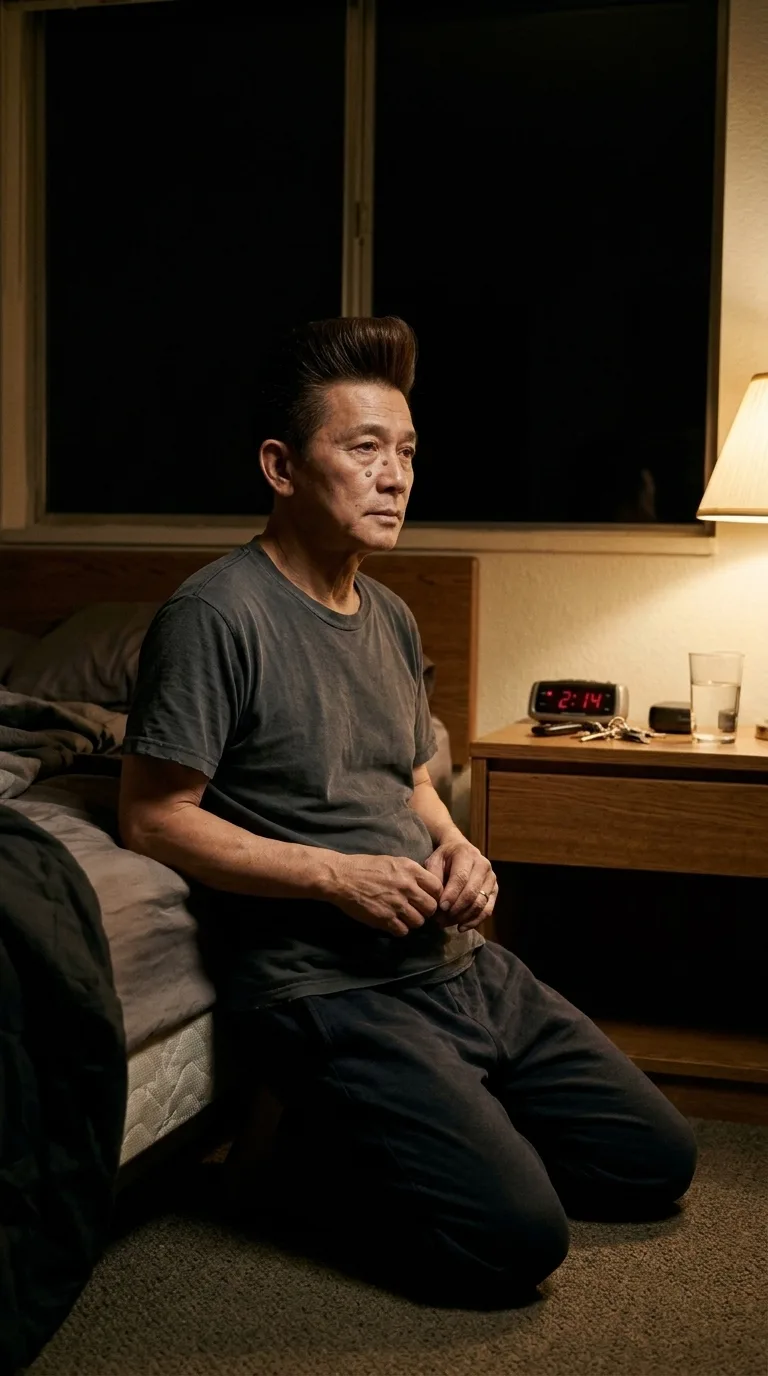
Rarest thing about him: Praying, not very seriously — common, 1 in 44
Face-off rating 1499 · not ranked yet
Season 1seed 1317137583 · engine v11
Character card
lineage A8GP7H
His body-swap story
@caleb.dean.whitfield, wearing Anil Mehra, rolled the wheel on and woke up as Raymond Kenji Nakamura, spent under a minute in him, then spun the wheel and woke up as Curtis Allen Bloom
You are standing in Anil Mehra's kitchen with his phone in his hand, and the screen has been dark for a while. You have been him for less than a minute. His stubble itches under your thumb. The dad-belly presses the counter edge. The wedding is not his, the divorce papers are on the fridge, and you can already tell this body is a good one that you do not want. Nothing is wrong with him. You wanted a man who could do something, and Anil can do a deposition. He has a good chair and a cold lawyer's calm. The wheel has no calm. You open the page, the wheel is there, and you pay.
It happens with no door. Your knees are carpet. You are kneeling at the edge of a bed, and the amen is still in your mouth, half a laugh in it. You were already rising, and now you are not. You come down onto both knees and your forehead meets the bedspread. It smells of cotton and dryer, and under that of a house that has rained on all week.
The first thing is the knees. Sixty-one years of them, and they know the carpet. They ache in a plain, honest way, like a kept appointment. Your breath comes slow and deep through a chest that is mostly muscle. The shoulders are narrow, and the body is small and strong and well kept.
The t-shirt is soft from a thousand washes, and it gives him up first. This morning, which is not your morning, he put it on in the dark because the closet light wakes his wife. The left sleeve, then the right. Then you have a restaurant. A full dining room, Friday, and his hand flat on the host stand, the pen going into the black shirt pocket, the keys swinging on his belt loop like a small bell. He is never rushed. He says *Welcome, how many?* as if it were the best news of his week. Nobody has told him he does this.
Your fingers are drumming on the bedspread. They do it without you, a quick patter against the fabric, and the rhythm opens something. It is a pew, a long one, and his daughter at six kicking the wood in time to the hymn. He tapped her ankle twice to make her stop, and she tapped back.
The ring is cool against your other palm. Under it is a wife asleep down the hall, the small noise she makes, and a kitchen at dawn. Then, thinner and further off, comes a woman who is not her, on a different street, laughing at something he said in another decade. He kept that one folded small. It does not hurt anymore. It is only there, like a coin in a coat.
The glass of water on the nightstand has no drink in it. He gave that up on purpose, and the choice sits in the body like a held door. The clock says what it says in red. The room is lit gold by one lamp, and the windows are black. The night is huge out there.
You lift your head. Your hands are in front of you. You turn them over. They are brown and square, and the ring is on the left. They are steady, and they are strangers to you.
"Well," you say, and his voice is lower than you expected. "Hello."
Nobody answers. The clock changes by one. You wonder how long you will keep the knees, and the ring, and the daughter's kicking foot. Already something in you leans toward the dark window, quietly, and asks what is next.