Rayaan Sethi
Fictional. Generated by AI — not a real person, and no likeness of one is intended.
22, pro athlete in Rural Texas · rolled by @colin.hasbrook · card — no film
History
who has worn him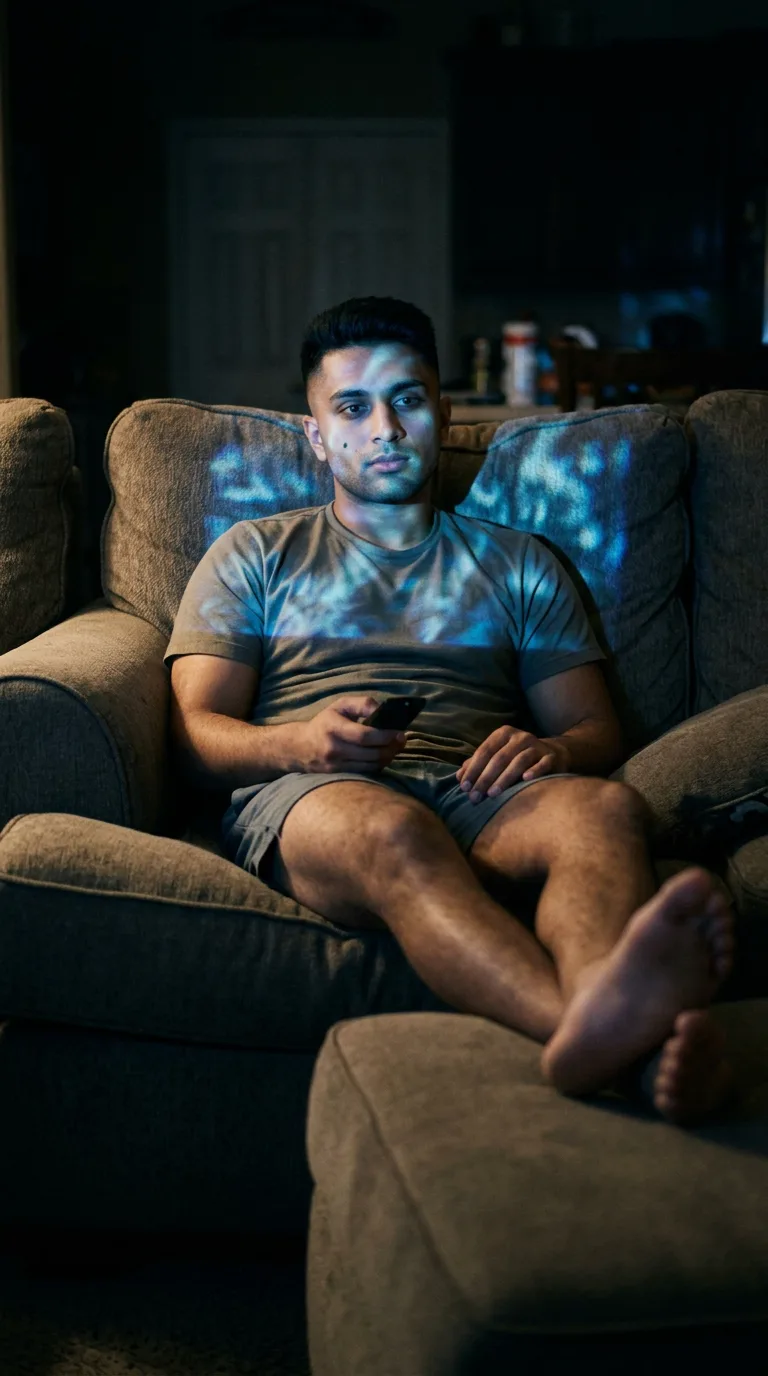
Rarest thing about him: Unitarian or liberal faith — epic, 1 in 87
Season 0seed 1792006822 · engine v10
Character card
lineage 2NZHHJ
His body-swap story
@colin.hasbrook, wearing Manuel Ochoa, rolled the wheel on and woke up as Rayaan Sethi, spent 16 minutes in him, then spun the wheel and woke up as Todd Farriday
Manuel Ochoa's grading pen is still uncapped on the kitchen table, and you have been him for less than a minute when you already know you're not staying. It isn't the body — the body is fine, big through the middle in a way that isn't unhandsome, a cleft chin some student probably has a joke about. It's the quiet. Friday, nobody home, a stack of freshman essays about *The Crucible* and a silver-haired man's whole patient life laid out ahead of you like a lesson plan you didn't write. You spun for this. Thirty-seven years of somebody's decency is not what you spun for. You push back from the table, walk to the spare room where the laptop is always open to the page with the wheel on it, and you do not sit down so much as you arrive there, already leaning in.
You pay. You spin. The wheel does not care that it's evening in Pittsburgh and hasn't decided yet what hour it is anywhere else.
The room comes up dark and cold-blue, moving light sliding over a couch arm, and you are sitting low and folded, a remote gone loose and unimportant in your hand. On the screen something cuts from a dim scene to a hard bright one, and your spine straightens before you've decided to straighten it — not your reflex, his, still finishing on its own the half-second before you got here. You set the remote down on the couch arm. Small hands. A smaller frame than Manuel's, tighter, drawn in on itself like a fist that hasn't opened all the way in years. Bare feet on a coffee table that isn't yours yet. The television keeps going, a joke lands somewhere in the dialogue, and you don't laugh, because whatever used to laugh at that line is not sitting here anymore.
The shirt is what opens first — plain gray, worn thin at the collar from a hundred washes, and through it comes a locker room smell, bleach and turf and the particular ringing quiet after everyone else has cleared out. Rayaan. The name comes with the smell, the way names do. Twenty-two, practice ended hours ago, cleats in a bag somewhere by a door you haven't seen yet. There's a coach's voice in this shirt too, something about touch inside the box, said kindly, said too many times, and under it a low current that never fully goes quiet in him — a hum behind the sternum that has a pill bottle attached to it, orange, a name on the label you don't need to read to know is his, taken every morning with water because a doctor in Round Rock told him to and he listened, actually listened, which the shirt seems almost proud of.
The couch cushions under you give up the rest. This house, this room — a rental with popcorn ceilings and a water tower visible from the kitchen window if you stand at the right angle, gravel crunching under tires whenever anyone comes or goes. A girlfriend's laugh from another doorway, not in the room right now but recently in it, her sweater still slung over the chair across from you, and something in his chest goes soft and grateful just brushing against the memory of her, no drama in it, just two people who decided this house together. Neither of you talks about money out loud but the shirt knows there's a number sitting quiet in an account, not huge, not nothing, built one paycheck at a time by someone who still checks the balance more than he needs to.
Your leg is already going — bouncing, heel drumming the floor in a rhythm that started before you arrived and doesn't stop for you either, a habit worn so deep into this body it isn't nervous so much as structural, like a second pulse. Your hand finds a phantom itch for a cigarette that isn't there, a pack-a-day itch, and somewhere behind your sternum sits the flatter, older weight — some Tuesday two years ago that the shirt won't fully hand over, just the edge of it, a bad stretch, a therapist's office with a fake plant in the corner, a prescription that helped enough to let him play again. Practice this morning comes back sharper: a whistle, a ball taken clean off his left foot, a joke with a teammate about somebody's truck, sweat drying tight on his neck on the drive home, the gravel road, the barbed wire fence line going gold in low sun, the tower standing over all of it like it's been there longer than the town.
The remote is still warm from his palm. You feel that specifically — the warmth of a hand that was, until four seconds ago, deciding nothing.
You look down at it. At the hand. Small-knuckled, brown, a callus riding the base of two fingers that isn't from holding a remote. You turn it over once, like checking it still works, and the television keeps flickering its blue across your knees, unwatched now, background noise to something it will never be smart enough to notice.
You lift your eyes off the hand and into the dark of the room, past the TV, toward wherever the lens of the world usually sits when a man realizes he's alone with a decision.
"Didn't even get to the good part," you say, to no one, in his voice, and you don't yet know if that's a joke or the truth.