Ray Nighthorse
Fictional. Generated by AI — not a real person, and no likeness of one is intended.
58, family caregiver in Small-town Ohio · rolled by @colby.streeter · card — no film
History
who has worn him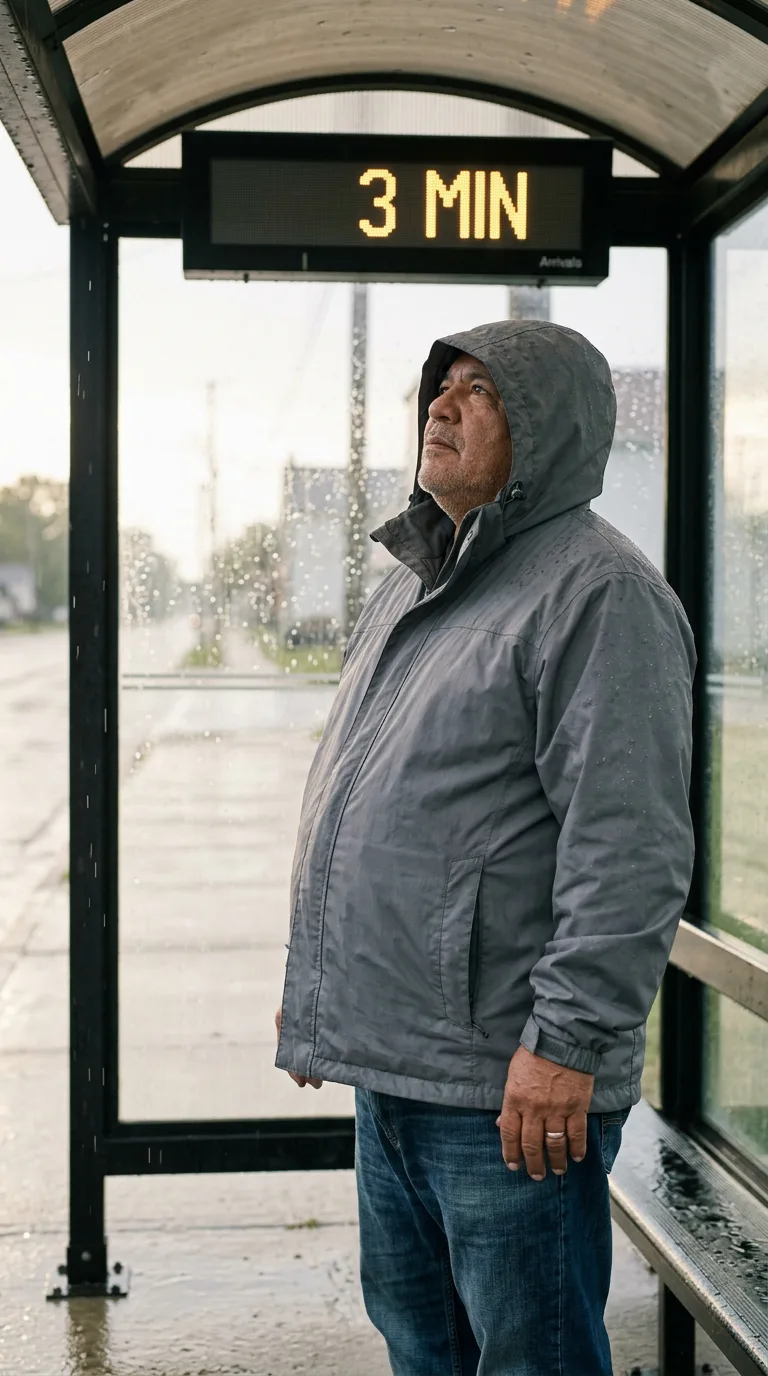
Rarest thing about him: Family caregiver — uncommon, 1 in 682
Season 1seed 1296516728 · engine v11
Character card
lineage KEPHG1
His body-swap story
@colby.streeter, wearing Klaus Dietermann, rolled the wheel on and woke up as Ray Nighthorse, spent 3 minutes in him, then spun the wheel and woke up as Kevin Straczynski
---
Klaus's knees ache getting up off the couch, that's the thing you notice first, every time, before you even decide anything — forty-seven years old and dad-bod thick through the middle and the knees complain like he's seventy. Two days and twenty-three hours in him and you've had enough of the knees, enough of the flat gray Berlin afternoon light through the blinds, enough of a job that isn't yours to be tired of but that you feel anyway, cable spools and other men's ceilings. It isn't hatred. It's just that the apartment is quiet and the laptop is open on the table where you left it last night, the wheel still spinning lazily in its little window like it's waiting on you specifically, and there is a whole ordinary Monday afternoon with nothing in it, and you think: one more. You always think one more. You pay, out of an account that isn't Klaus's anymore in any way that matters, and you put your thumb — his thumb, the cable installer's blunt scarred thumb — on the spin.
—
The water is already on your face when you arrive, which is the strange part, the part that never stops being strange: not falling toward you, already there, already run into the collar of a jacket that isn't yours yet either. Rain. A hood pushed back off gray-silver hair. Weight low and heavy through the hips and gut, a body built close to the ground, 5'5" and solid, and the cold doesn't reach the way cold should — he has not been cold in a long time, some deep patient warmth banked under the fat and the years, and you are standing in it with your face turned up into the runoff like a man finishing something rather than starting it. Somewhere behind you a board still reads a number counting down. You do not turn out of the water.
—
The jacket is the first thing that talks. Gray nylon, damp through at the shoulders, and it comes back to you in his hands — a Tuesday in October, zipping it against the cold in a front hall with a coat rack that has too many coats on it, his own hook, his wife's good wool coat, and a smaller jacket, a woman's, that used to be his mother's and that nobody has moved in nine years. You feel that nine years the way you'd feel a bruise pressed on by accident — not yours, and it aches anyway, borrowed grief with nowhere to put it down. His mother, gone. His father before her, longer gone, and something else in that house that isn't gone yet, something that needed him there this morning before light, a chair by a window with a good angle on the driveway so someone can watch for the bus without getting up.
The jeans give you less — just denim worn soft at the thigh from a recliner's armrest, hours and hours of sitting — but the wedding band on the left hand gives you everything at once, a flood: a wedding in a VFW hall with folding chairs, a woman named Denise laughing so hard at somebody's toast she had to put her drink down, thirty-one years of her, her hand still finding his in a dark room without either of them waking all the way. One child, a daughter, grown now, calling on Sundays from two states over, guilty and grateful in the same breath because she can't be the one in the chair by the window. He never made her feel it. He decided that early and held to it the way he holds to most things, quietly, without announcing the deciding.
His hands know things without being told: how to change a diaper on a person twice his size without hurting either of them, how to hold a cup of water at the correct patient angle, how to laugh at a joke that isn't funny because the joke is the only thing left that's his father's own, some stubborn little joke that survives when so much else doesn't. The leg starts bouncing on its own, right now, standing in the rain, an old tell he's had since before any of this, since a classroom decades back where a teacher told him to sit still and he never fully learned how. His knees are fine — better than Klaus's ever were — thick sturdy legs that have carried this weight fifty-eight years and complain about nothing except late in the day. There's a softness in the belly and the cheeks that isn't failure, it's just what caregiving does to a schedule, meals eaten standing at a counter between things, a drink or two most evenings, never more, never nicotine, an orderly small comfort taken and put back on the shelf.
The stubble is two days old because two days ago there wasn't time to shave, there was a fall in the bathroom at 4 a.m. that turned out to be nothing, thank God, but cost him the morning and every morning since has cost him something too. The freckles across his nose he's had since he was a boy on his grandmother's land, and she used to touch them and say his name — his real name, the one his mother gave him, not Ray, not the one on the paperwork — and that memory comes in soft and whole and entirely his, no bitterness in it at all, just an old woman's hand and a boy's face turned up, not unlike the way this face is turned up now, into the rain, at a bus stop, in a town with one stoplight and a diner that closed years ago and never reopened.
He was riding the bus this early because Denise has the car this week for her sister's, and because the day center for his mother's old friend group — the one thing that gives him three hours to himself twice a week — starts before the sun really commits to coming up. He stood under that shelter watching the board count down from three minutes with the specific stillness of a man who has learned to be patient inside small windows of freedom, and he stepped out early into the rain not because he forgot himself but because, for one full seven-second stretch, he remembered that he liked how it felt.
—
You look down at the hand — his hand, freckled at the knuckle, the band dulled with age, still wet — and turn it over slowly, like you're checking it still works, and it does, better than the last one did.
"Three minutes," you say, out loud, to no one, to the empty shelter and the arrivals board, and you almost laugh, because it isn't clear anymore whether that's a joke about the bus or about how long you'll stay.