Raúl Figueroa
Fictional. Generated by AI — not a real person, and no likeness of one is intended.
42, cop in Houston · rolled by @oliver.benstead · card — no film
History
who has worn him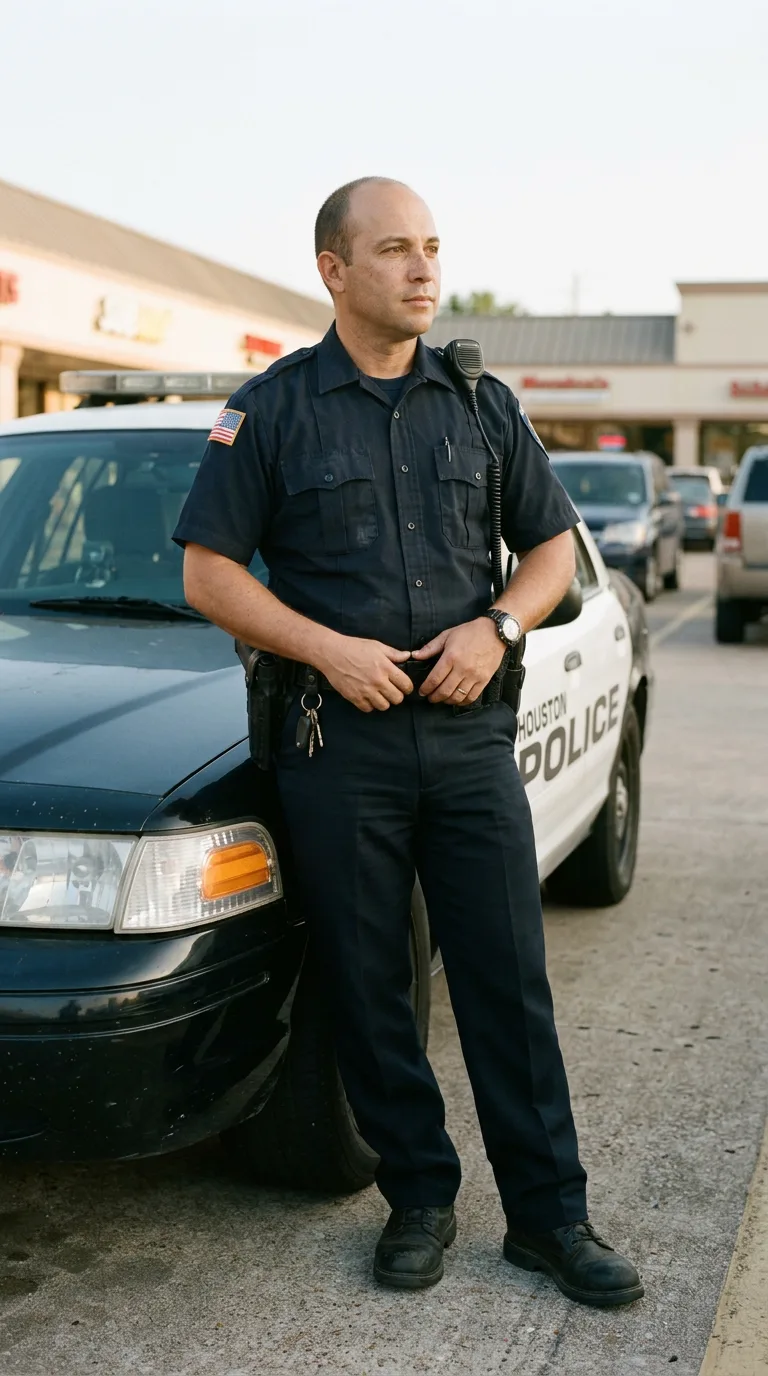
Rarest thing about him: A horseshoe, kept short — common, 1 in 81
Season 1seed 77460327 · engine v11
Character card
lineage ANU73D
His body-swap story
@oliver.benstead, wearing Colton Maddix, rolled the wheel on and woke up as Raúl Figueroa, spent 2 hours in him, then spun the wheel and woke up as Kyle Branford
Colton Maddix's body is heavy in a way you have not gotten used to, fifty-seven minutes in and already you hate the sweat that collects under his chin when he breathes through his mouth, which is always, because Nashville restaurant managers apparently never learned to breathe any other way. You are sitting on the edge of his bed in his dark apartment at an hour he should be asleep, and instead he is wide awake, keyed up, phone already out, the site already loaded, because that is the thing about Colton's hands — they are not patient, and neither are you wearing them. There was no real reason. You told yourself there was. Something about his shift tomorrow, something about the ache already starting in his lower back from a body that carries itself badly, something about knowing there are six more behind you and wanting, suddenly and only, to not be the seventh thing that bored you. You spin before you can think better of it.
The wheel does not ask twice.
You are leaning against the warm hood of a Crown Victoria and your hands are already moving, already three motions deep into tucking a shirt hem under a belt, and the fourth motion is wrong — your fingers catch the buckle backwards, fumble it, and something in you that is not you notices the mistake before you do. You redo it. Slow. Correct. Then the next ten motions come out checked, each one, a body double-checking itself on a task it has not needed checking on in fifteen years. Dusk is somewhere behind the strip mall, but it does not feel like dusk to the part of you arriving — it feels like early morning, that specific gray quiet, which makes no sense against the orange light until it does: his clock and yours never agreed to begin with.
The belt is heavy. Real leather, worn soft at the curve where it has sat against this hip ten thousand times, and the second your fingers close fully around the buckle it gives you something — a flash of a locker room, fluorescent light, a younger version of these hands threading this same belt through these same loops for the first time, nervous, twenty-four years old and sure everyone could tell. Then gone. You keep holding it and it keeps giving: the weight on the left side where the holster sits is a weight he stopped noticing around year three; his right hip has a small ache from leaning on car doors exactly like this one for exactly this many years, and it never fully goes away, not even on days off.
The shirt against your back is warm from his skin and it gives you the morning. Not this morning — a hundred mornings folded into one, the sameness of it: pulling it from the hanger, sleeves first, left arm then right, done without looking because looking was never necessary, not since the first year. Today's version of it comes with a small, specific tiredness — he'd been up since four, because the shift starts at six and ends past dark, because he traded with Ibarra for a weekend he needed for his daughter's thing, the recital, and that trade is still sitting in him as a small debt he intends to collect on later, good-naturedly, the way men who like each other collect on things.
The keys at his hip are a short, bright jolt — his apartment door, his truck, a third key he doesn't use anymore but hasn't taken off the ring because it was his father's, to a house in the Heights that isn't in the family anymore. His father, who wanted him to be a mechanic and settled, slowly, grudgingly, proudly, for a cop. Confession once a month, communion most Sundays when the shift allows it, candles lit for an abuela whose name you don't get, only the warmth of the wax and the smallness of the chapel.
The radio mic clipped at his shoulder gives you dispatch chatter from a hundred different nights, blurred together, and under it, steadier: Marisol. Not his wife — he never married, somehow, through two kids and nine years with her, a fact that used to needle him and doesn't anymore. Her laugh in the kitchen of an apartment that smells like comino. His son's glove, too big for his hand still, waiting by the door for Saturday. His daughter's recital dress, pink, hung on the closet door so nobody forgets it exists. None of it dramatic. All of it his, completely, the way a life is when nobody's watching it from outside.
The cigarette pack in his breast pocket presses flat against your chest when you shift your weight, and it gives you the small, guilty pleasure of the first one after the lot goes quiet, leaned on this same hood, Marisol's voice in his head telling him to quit, forty-two years old telling himself he will, eventually, probably.
Your hand finishes the belt buckle on its own, the correction complete, and you stand there a second too long, a cop who has just relearned, in real time, something his hands have known since before you were anyone at all.
You look down at them — the freckles across the backs, the clean half-moons of the nails, a callus along the trigger finger that is not new, that has been there for decades of a man you have never been — and then you lift your eyes to the lot, the strip mall, the dusk light going copper on the hood of the car, and you say, quiet, mostly to no one:
"Okay. Okay, let's go."
Somewhere behind that there's a dispatch waiting, a shift that doesn't end for hours, a daughter's recital still days off, and no telling — not to you, not to him, not to anyone — how long you intend to be the one who shows up for it.