Colton Maddix
Fictional. Generated by AI — not a real person, and no likeness of one is intended.
24, restaurant manager in Nashville · rolled by @yusuf.brannick · card — no film
History
who has worn him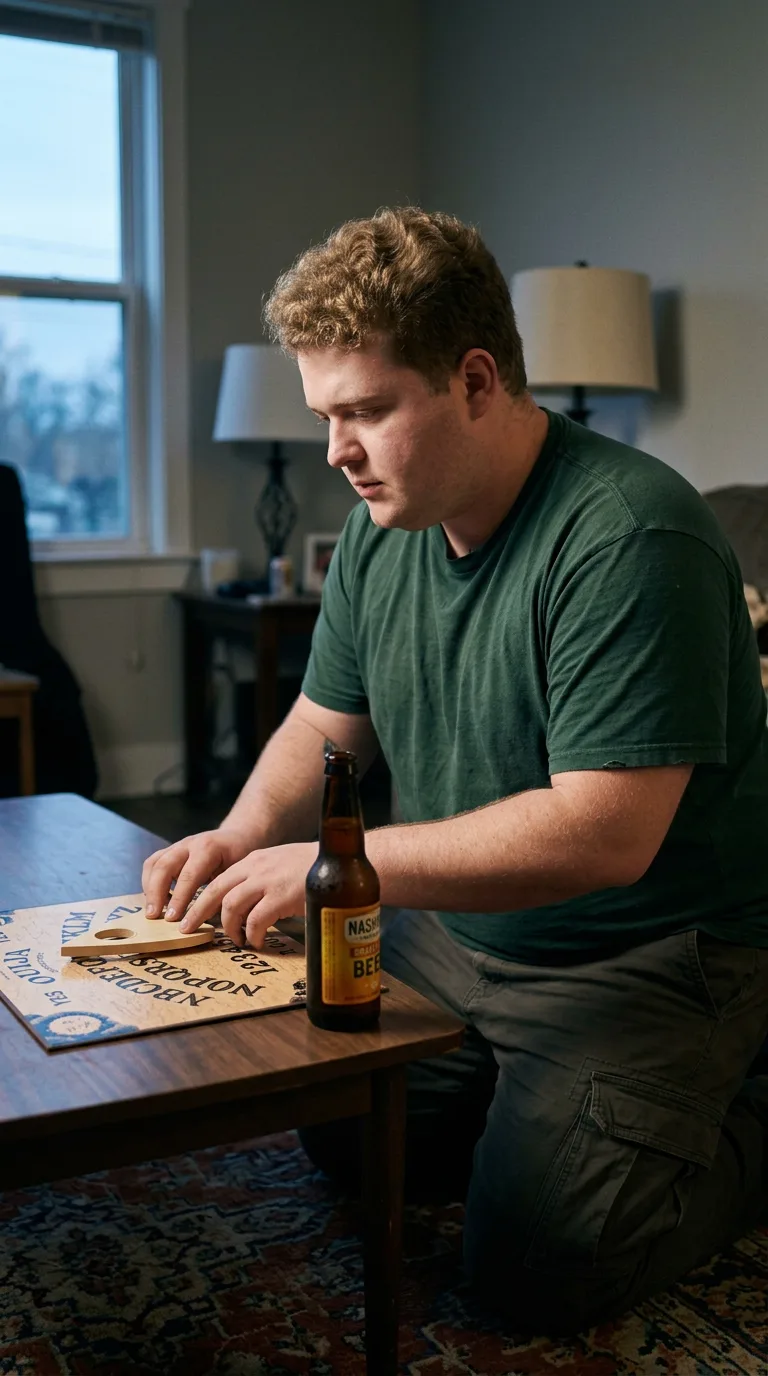
Rarest thing about him: Reading something he was not meant to — uncommon, 1 in 148
Season 1seed 1777404175 · engine v11
Character card
lineage ANU73D
His body-swap story
@yusuf.brannick, wearing Ray Fasano, rolled the wheel on and woke up as Colton Maddix
---
The nails are the first thing Ray Fasano's hands do every morning, before coffee, before the alarm even finishes — thumbnail between the front teeth, a habit worn into this stranger's body you've been driving for twenty-seven days. You sit on the edge of a mattress that is not yours in an apartment that is not yours, and you look at the clock and you look at the hand chewed down to pink at the edges and you think: not this again. Not the mine, not the cough that comes up black some mornings, not the ache behind the knee that never fully left since some accident Ray had before you got here. You never asked what it was. You never cared enough to ask. That's the thing nobody warns you about the wheel — not the guilt, there isn't any, but the boredom, how fast a whole stolen life turns into just another bad apartment you're stuck paying rent on. Ray Fasano, forty-three, skinny fat, bald by razor not by God, worked a mine and complained about his knee and bit his nails same as you're about to make someone else do. You get up. You don't make coffee. You open the laptop at the kitchen table and the wheel is already loaded from last time, like it knew, like it's patient, and you spin it before the sun's done anything but think about coming up over Denver.
It lands on him mid-motion, which is the only way it ever lands — no fall, no flash on your end, just the simple replacing of a nobody with a nobody, except now the nobody is you.
His hand is already moving when you arrive, knuckles and fingertips heavier than you expected, built thick the way a man gets when wanting is easier than discipline — and the hand is sliding the planchette, slow and deliberate, past a hand-painted GOODBYE, three letters forming under fingers that are suddenly yours and weren't a half-second ago. You feel the carpet first, something old and patterned under a heavy knee. You feel a shirt sleeve shoved up a thick forearm. You feel a beer bottle's sweat two inches from your other hand, and the window behind you is doing the particular blue-gray thing a window does in a city an hour before the sun actually shows up, which means this body has been awake all night, which this body's clock has nothing to do with the clock you just left.
The shirt is the first door. Dark green cotton, soft from washing, and it comes with a hand — another man's hand, Colton's own, pulling it over his head an hour before midnight because his work shirt, the black one with the pen in the pocket, was sweated through after a ten-top sent back two steaks and a four-top walked on a $140 check and the dish pit flooded for the third time this month. Colton Maddix, twenty-four, manager of a restaurant three blocks off Broadway that smells like fryer oil and spilled Jack even after close. You get the host stand under his palms, laminate worn pale where a thousand hands before his rested waiting for a table. You get the weight of him, heavy through the gut and shoulders in a way that makes stairs a small tax paid daily, and a back that itches sometimes along the shoulder blades where the ink sits — a unit insignia, his father's unit, not his, never his, inked into his own skin anyway because the old man never would and somebody in the family had to carry it. You get the particular ache of standing a ten-hour shift in shoes a half size too small because the new pair hasn't been broken in yet.
You get the drive home after, windows down despite the cold because the neon off the alley makes him feel something he can't name and doesn't try to. You get the three beers already in him by the time he dropped onto the floor by the coffee table, alone, nobody to come over on a Thursday-into-Friday-night off-shift, and the dumb board he bought at a gift shop on Broadway as a joke, still shrink-wrapped until an hour ago. You get him grinning at it. You get him saying "alright, spirit, gimme a yes" out loud to an empty apartment and the planchette drifting, his own hand doing it, he knows that, everybody knows that — and then it stopping dead on YES anyway, and something in his chest going quiet and cold for just a second before he laughed it off too loud, reached for GOODBYE to kill the joke before it got good enough to actually scare him.
His nails are bitten short — you feel that now too, feel the rawness at the thumb where he worried it during a table complaint tonight, a two-top sent back a wine that was fine. You feel a single mother's worth of tips in his back pocket from a shift that ran long, folded bills he hasn't counted. You feel, distant and warm, a memory of his mother ironing this exact shirt once, years ago, before he lived alone, before any of this — not sexual warmth, just a boy's gratitude that someone cared whether his collar sat right.
And under all of it, the body itself: twenty-four and heavy and strong in the way heavy men are strong without training for it, a back that can carry two bus tubs stacked, knees that don't hurt yet, a jaw shaved clean this morning for a shift that's since worn off into nothing because he never grows stubble fast. Healthy. Unhurt. Nothing wrong with him at all, which after Ray's knee feels like walking into a warm room from outside.
You look down. The hand is still traveling, past GOODBYE, spelling something of its own that you didn't choose and don't remember choosing, three letters already drying into stillness on the board. You stop it there. You turn the hand over, palm up, in the blue almost-morning light, and you see the ragged thumbnail, the chip of key-ring tucked into denim at the hip, the forearm ink peeking from a rolled sleeve that isn't rolled right now because this is a different shirt than the one in the picture, and none of it is yours and all of it now is.
"Okay," you say, to the empty apartment, in his voice, trying the weight of it out loud. "Okay, that's — that's enough of that."