Ramon Estep
Fictional. Generated by AI — not a real person, and no likeness of one is intended.
45, contractor in Eastern Kentucky · rolled by @colin.hasbrook · card — no film
History
who has worn him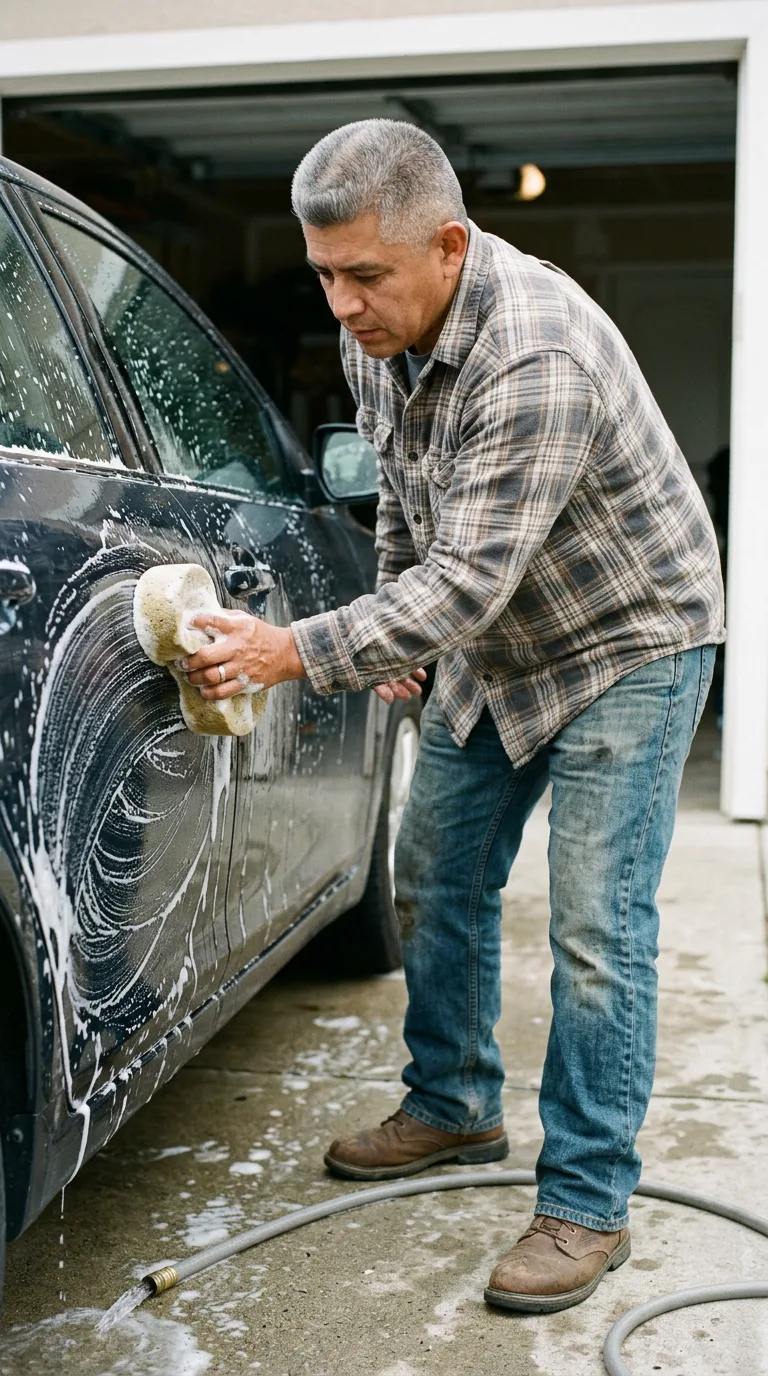
Rarest thing about him: It's a problem and it shows — rare, 1 in 33
Season 0seed 640825464 · engine v10
Character card
lineage 2NZHHJ
His body-swap story
@colin.hasbrook, wearing an unnamed body, rolled the wheel on and woke up as Ramon Estep, spent under a minute in him, then spun the wheel and woke up as Colin Dressler
The groundskeeper's knees ache in a way that makes you tired before you've done anything. That's the first thing, every time you're him for more than a minute: the knees, then the low simmer under the sternum that never quite resolves, that his doctor calls something and his sister calls something else. You are standing at the edge of a mowed lawn in Small-town Ohio holding a rake you don't remember picking up, and the light is doing that late thing, gold going rust, and none of that matters, because the only thought in this skinny-fat 62-year-old body is thirty-one hours old and will not sit down: Colin Wharton has him now.
You know Colin Wharton the way you know a bruise, from the inside, pressing on it to see if it still hurts. Eight spins back you wore the janitor — Philadelphia, mop bucket, blue eyes that watered in the chemical air — and you left him after less than a minute, barely long enough to feel the ring of keys at his hip, and less than two days later you spun into this groundskeeper and heard, secondhand, in some idle unkillable itch that isn't memory but isn't nothing either, that Wharton got him. You do not know what Wharton is doing with him. You have an idea, made of everything you'd have done in that hour if you'd stayed, and it will not leave you alone. You did not spin again to rescue him. You are not that. You spun again because you cannot stand not knowing, and knowing means being someone who could plausibly find out, and that means being someone with hands, with money, with a truck — being anybody but this old man raking a lawn he'll never remember raking. So you set down the rake mid-stroke and you go to the site on your phone with his thumb, and you pay, and you spin, already gone before the wheel stops.
The hose is warm rubber under one hand and the sponge is cold and gritty in the other, and your spine is bent at an angle this body has held ten thousand times, and swirl marks stop climbing behind you because whatever changed in the wrist just changed. The car door is a wall of black going gray under suds. Your body — no, his — is shorter, thicker through the middle, and the light out here is farther along than it had any business being, day sliding down into the trees, green shade deepening off the ridge behind the house. Somewhere off past the tree line, water: a creek, close.
The wedding band is the first door. It's cool, then it's warm from your own hand, and it opens onto a kitchen — small, yellow light, a woman's laugh cut short and turned into something gentler, her hand flat on his chest telling him to sit, eat, you'll wear yourself into the floor — Teresa. Not a name you were given. A name that arrives with the ring, the way a smell arrives with a room. Fourteen years of it. No kids, and there was a year that hurt around that, a year that isn't gone, just quiet now, filed somewhere behind the noise of everything since.
The shirt gives you more, because the shirt remembers being put on. Sleeve first, the left, because the ring makes the right hand slower in the mornings after a bad night, and there was a bad night — three beers turned into more before Teresa came out to the porch and didn't say anything, just stood there until he came in. That was Sunday. This is a different day, a better one, the kind where the leg under you — his leg, this leg, still bouncing faintly against nothing even now, a motor that never fully cut — feels almost like it belongs to somebody who isn't tired.
The tool belt isn't on him now but its ghost is in the hands, in the callus map across the palm, in the specific ease of a wrist that has hung a hundred doors and knows, without being told, how much pressure a screw takes before it strips. Sawdust smell, ghosted in from somewhere behind the soap and the hose-water smell. A framed house going up somewhere, ribs of lumber against a white sky, him standing back from it with a cigarette he wasn't supposed to have, counting studs, feeling — for one clean minute — good at something.
The sponge remembers other Saturdays. An ex before Teresa, a name that comes with less weight than it should, Dana, a fight in a parking lot outside a Kroger over something neither of them could name afterward, and somewhere under that a softness that never fully closed, the kind you keep a small locked room for and never open, just check the door sometimes. He checks it. Not often. Today, a little, standing here — you feel it pass through and go, like weather.
The body itself: five-eight, no more, and solid in the way a man gets solid from lifting, not from a gym, forty-five and starting to know it in the right shoulder, in the knees on ladders, in how the second beer these days goes down easier than it used to and the fourth doesn't stop him anymore either. The pack of cigarettes is a shape in a shirt pocket somewhere behind you, felt more than seen. The pills are a small orange fact in a bathroom cabinet, taken most mornings, not all. The leg bounces even now, standing, weight rocking almost nothing from foot to foot, an idle current with nowhere to go.
You feel, coming through all of it at once, that this man is fine. Not happy exactly. Fine. Married, working, drinking a little too much, worried about nothing in particular in the specific overfull way his prescriptions only partly quiet — and none of it touched by Wharton, none of it touched by Philadelphia, none of it touched by you at all until four seconds ago.
You lift the sponge off the door. Suds run down into the gutter in a long clean line. You look at the hand holding it — brown, ring on it, a scar you did not put there across one knuckle from some old job — and you turn it over once like it might answer something.
"Wasn't you I was looking for," you say, to no one, to the hose, to the car, "but here we are."