Rafael Quintero
Fictional. Generated by AI — not a real person, and no likeness of one is intended.
35, lawyer in Miami · rolled by @colin.hasbrook · card — no film
History
who has worn him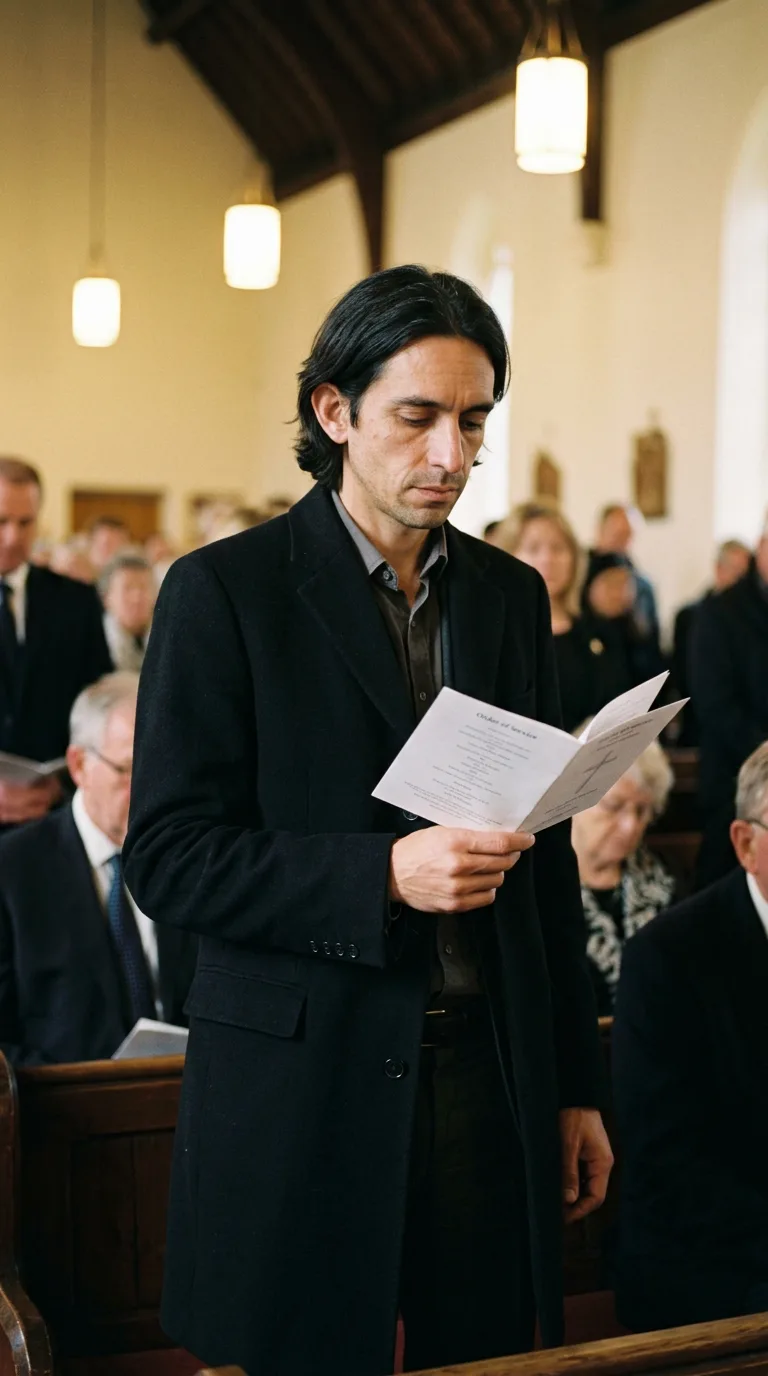
Rarest thing about him: At a funeral, at the back — rare, 1 in 107
Season 0seed 367075202 · engine v10
Character card
lineage 2NZHHJ
His body-swap story
@colin.hasbrook, wearing Todd Wysocki, rolled the wheel on and woke up as Rafael Quintero, spent under a minute in him, then spun the wheel and woke up as Nadim Farhat
You are standing behind a steering wheel that smells like coffee gone cold three hours ago, and Todd Wysocki's stomach is doing the thing it does around two in the afternoon, a low acid complaint from a gas station burrito he ate before the route started. Route's on a layover. Fourteen minutes at the depot, engine ticking, and you have spent every one of the last three hundred and forty-four bodies learning that a layover is exactly enough time. You are not bored of Todd exactly. Todd is fine. Todd has a bad knee and a daughter who calls him on Sundays and a cleft chin you've caught in the big mirror more than you'd admit. But the phone is right there in the cupholder, and the site loads fast on a Monday, and there is a specific itch that has nothing to do with Todd and everything to do with the number 345 sitting there wanting to become 346. You spin. You do not decide much of anything. Your thumb is already moving before the page finishes loading the wheel.
The organ note is still dying in the rafters when you arrive, and the whole room is rising around you in a scrape of shoes and pews, so you rise too, a half-beat late, borrowed coat pulling tight at shoulders that are narrower than Todd's, everything narrower, everything lighter, like you've been carrying less all along and didn't know it. There's a folded paper program in your left hand. Your right hand is already smoothing the coat front, learning two buttons it has never touched, fingers thin and quick where Todd's were blunt. Nobody looks back at you. You are at the back of a crowded chapel and it smells like lilies and candle wax and the particular cold of air conditioning fighting Miami through a closed door.
The coat is the first thing. Wool, good wool, not his — a friend's, a dead friend's, actually, and that's the joke of it that arrives with the fabric against your wrists: Marcos lent him this coat two winters ago for a deposition in New York and never asked for it back, and now Marcos is not the one in the casket up front but close enough in years that Rafael's hands went cold dialing the funeral home this morning. The coat carries February in it, a courthouse hallway, cold that Miami never gives you, and underneath that a whole friendship — law school study rooms, a shared bottle of mezcal the night they both passed the bar, a joke about Marcos's ties that Rafael can't remember the punchline to anymore, just the warmth of it.
The paper in your hand is a different door. Order of service, cheap card stock going soft at the fold already from his own thumb worrying it. Through it comes the man in the box — not Marcos after all, you understand now, wrong guess, this is Tío Beto, his mother's older brother, the one who taught him to drive stick in a parking lot in Hialeah when Rafael was fifteen and furious at everyone, who never once in twenty years asked him a question about the divorce, who called him "abogado" like it was a nickname and not a job title. The grief in the paper is real and specific and sits behind your borrowed sternum like a stone that was already there when you arrived.
Then the shirt. Dress shirt, gray-green, no tie — he almost wore a tie, stood in front of the mirror at six-forty this morning with one in his hand, decided a funeral for a man who hated ties didn't need one. The morning comes back through the collar against your neck: the apartment on the fourteenth floor, balcony doors open to let the haze in because he likes the smell of the ocean even when it's just wet asphalt and diesel from the marina, coffee made too strong, the picture of his kids on the kitchen counter that he touched once, quick, on his way out, the way he does every morning whether he's thinking about them or not. Two kids. A boy who's eight and losing a tooth on schedule, a girl who's eleven and furious at everyone the way he was at fifteen, and an ex-wife he still calls when the girl won't talk to him, because Marisol always knew how to get their daughter to open a door Rafael couldn't. There's no bitterness left in that, just a working arrangement, the kind you build after enough years of trying the other way.
Your feet, in shoes he polished last night without really meaning to, out of habit, the same habit that makes him check a brief four times before filing it. Courthouse steps come back through the leather soles — hundreds of mornings, briefcase, humidity fogging his glasses for the two seconds before the AC hits, a win last month that felt like nothing and a loss two years ago that still visits him at three a.m. Your body is thin under the coat, tires easily on the fourth flight of stairs, aches faintly in the lower back from a mattress he keeps meaning to replace. Cholesterol number the doctor frowned at in March. A cigar on the balcony maybe twice a week, the good kind, alone, watching the neon come up wet on the tile. A drink most nights, never past two. Rosary beads somewhere in a drawer he doesn't use enough and feels guilty about exactly here, in this room, surrounded by people who go to Mass more than he does.
The room stays standing. Nobody has noticed a single thing.
You look down at the hand holding the program, thin fingers, a faint white ghost-line on the fourth finger where a ring used to sit and doesn't anymore, and you turn it over slow, like it might answer to a different name than the one it's had for thirty-five years.
"Está bien," you say, quiet, to no one, to the room, to Beto maybe — and it isn't, not really, but the room believes you, and so, for now, do you.