Rafael Osorio
Fictional. Generated by AI — not a real person, and no likeness of one is intended.
21, house painter in Small-town Ohio · rolled by @colin.hasbrook · card — no film
History
who has worn him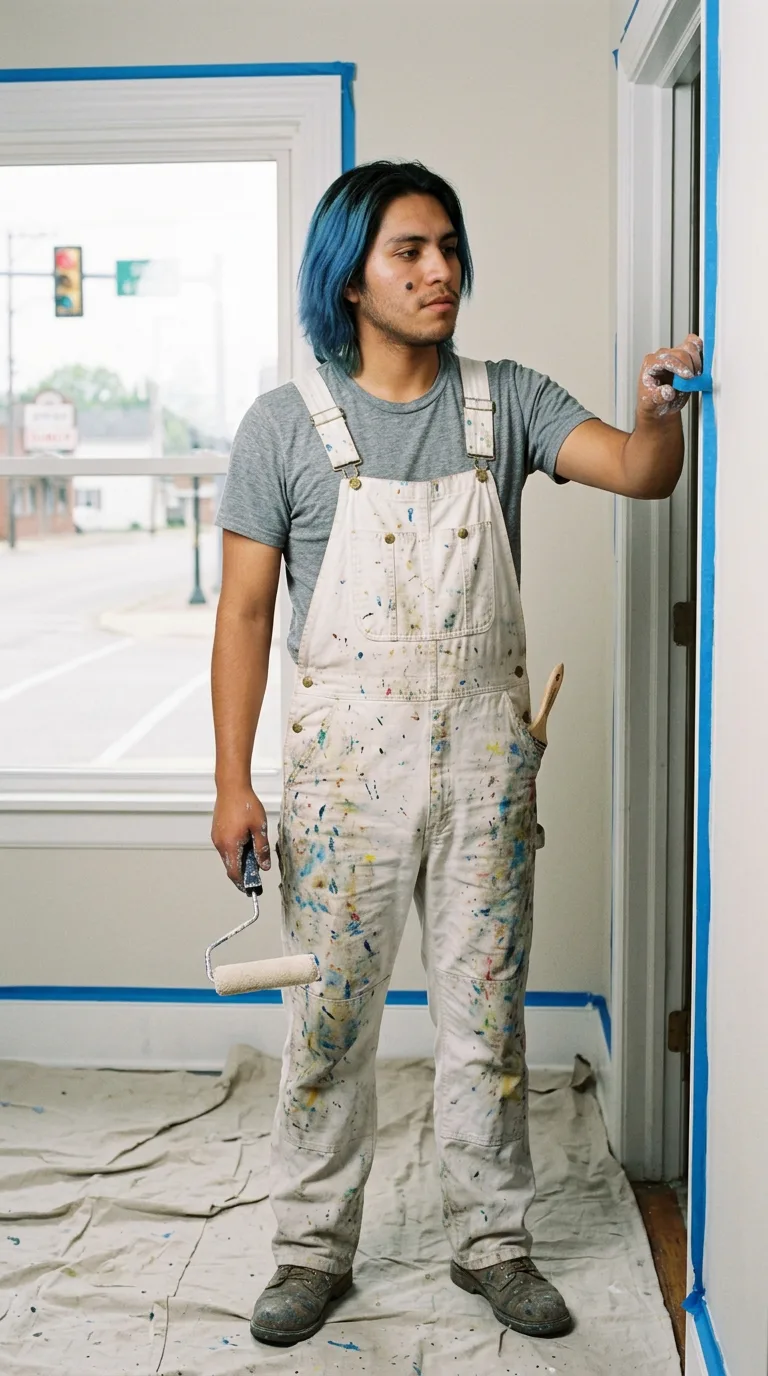
Rarest thing about him: High cholesterol — epic, 1 in 137
Season 0seed 92817922 · engine v10
Character card
lineage 2NZHHJ
His body-swap story
@colin.hasbrook, wearing an unnamed body, rolled the wheel on and woke up as Rafael Osorio, spent 2 minutes in him, then spun the wheel and woke up as Peter Wozniak
You've had the route memorized for eleven minutes now, which is eleven minutes too long. The dashboard smells like somebody else's cigarettes even though you don't smoke in this body either, and the vitiligo patch on your forearm — his, the last one, the one before this — catches the bus's dome light every time you check the mirror. Miami traffic doesn't move. A woman with a stroller doesn't move. You have been sitting at the same four-way stop, in your head, for what feels like a year, though the clock says it's been under a minute. Somewhere back there a kid asked if the bus goes to the mall and you said yes without meaning it. That's the whole problem with this one: he was fine. Heavyset, easy laugh, a joke for every regular, vitiligo like a map of somewhere you'd never been. He was fine and that's exactly the trouble — a body that works is a body you stop noticing, and today you noticed, three stops ago, that you were bored the way you get bored in a chair that's too comfortable. You pull the emergency brake at a red light nobody made you stop at, and you take out your phone, and you open the page with the wheel on it, and your thumb — his thumb, thick and sure on the wheel he actually drives — taps spin.
The paintbrush is already in your hand.
Not a phone. Not a wheel of a bus. A brush, loaded, held an inch off a strip of blue tape that runs the length of a door frame, and the light coming through the window beside you is flat Ohio-afternoon light, gray-white, nothing like Miami. Your body is thinner than you left it, wound tighter, weight distributed differently across feet that are planted on a canvas drop cloth instead of a bus floor. The stroke was already moving when you arrived — his hand had already committed — and for half a second your hand does not know the difference, finishes it clean, perfect, the way his hand has done ten thousand times before you were in it. Then the next stroke comes out wrong. Too much pressure. You correct, slow, deliberate, watching the bristle line like it might betray you. The ten after that you check one by one, a beginner's carefulness, in a hand that used to not need it at all.
The overalls are the first thing that talks to you. Paint-stiff at the knees, gone soft with washing everywhere else, and touching the bib strap where your thumb rests brings back a kitchen — small, yellow-curtained, his mother at the stove — and a morning nine, maybe ten years further back than today, him at eleven sliding these same suspender clips (a smaller pair, the ones before these) over his shoulders because his father was already outside loading the truck. Rafael. The name arrives with the memory, not before it, the way his mother said it, two syllables warm and used-up with affection. Rafa. Ra-fa-el, get your boots. Áfuera, the truck's running.
The brush handle gives you more: the particular grain of a job three weeks ago, a bedroom in a house on Elm where the owner, an old woman, sat in a folding chair the whole afternoon and told him about her husband, dead six years, while Rafael painted around her like she was furniture too. He liked her. He thinks about her sometimes on nothing days, wonders if she got that guest room repainted like she wanted, wonders if she's lonely in it now that it's the color she wanted instead of the color her husband picked.
The taped window frame under your other hand gives you this room specifically — a rental above what used to be Denny's grill before it closed, before half of downtown closed, the stoplight outside cycling red-yellow-green over a street that doesn't need it anymore. He took this job because Ted Wysocki's crew needed a fourth and because Rafael likes rooms best when they're empty, before anyone's moved their furniture back in and made them belong to somebody again. He likes the smell. He likes that a room like this doesn't ask him anything.
The shirt against your back — gray, thin, worn translucent at the shoulder blades — gives you this morning, specifically: him pulling it over his head in a apartment two blocks from here, the mattress on the floor because he hasn't gotten around to a frame, his phone face-down because there was no one texting him he wanted to hear from. Church at nine tomorrow, he'd thought, pulling the shirt down, and then not thought about it again. He prays sometimes without deciding to — mid-stroke, mid-drive, a habit more than a belief he examines, though he'd tell you the belief is real if you asked him straight. He had a girl for a while, in high school, and it ended the ordinary way, and there's been no one since who mattered enough to leave a mark on him the way this brush handle has left a mark, permanent, on the pad of his palm.
His jaw is tight. Has been the whole time, you realize — some low hum of clenching that isn't about the room or the paint or anything you can find a memory attached to, just a thing his body does instead of feeling something on purpose. You let it go slack on purpose, and it feels like undoing a knot nobody tied on purpose either.
He is twenty-one and his knees don't hurt yet and his shoulders are honest, working shoulders, and there's a mole high on his cheek that his mother used to touch when he was small, an anchor point, this-is-you. Twenty-five to seventy-five thousand dollars sits in an account he barely thinks about, money from three years of steady work and nowhere particular to spend it, saved out of the same instinct that makes him check his strokes instead of trusting them.
You look down. The brush is still loaded, still an inch off the tape, blue paint bleeding faintly at the ferrule where it's been dipped too many times without cleaning right. You turn your hand over — his hand, calloused at the base of each finger in a way no bus wheel ever made — and watch the paint catch light along the creases.
"Okay," you say, out loud, to the empty taped room, to nobody. "Okay."
You lift your eyes to the window, to the one dead stoplight cycling for no traffic, and you don't finish the stroke yet.