Paul Yankovich
Fictional. Generated by AI — not a real person, and no likeness of one is intended.
34, glazier in Boston · rolled by @colin.hasbrook · card — no film
History
who has worn him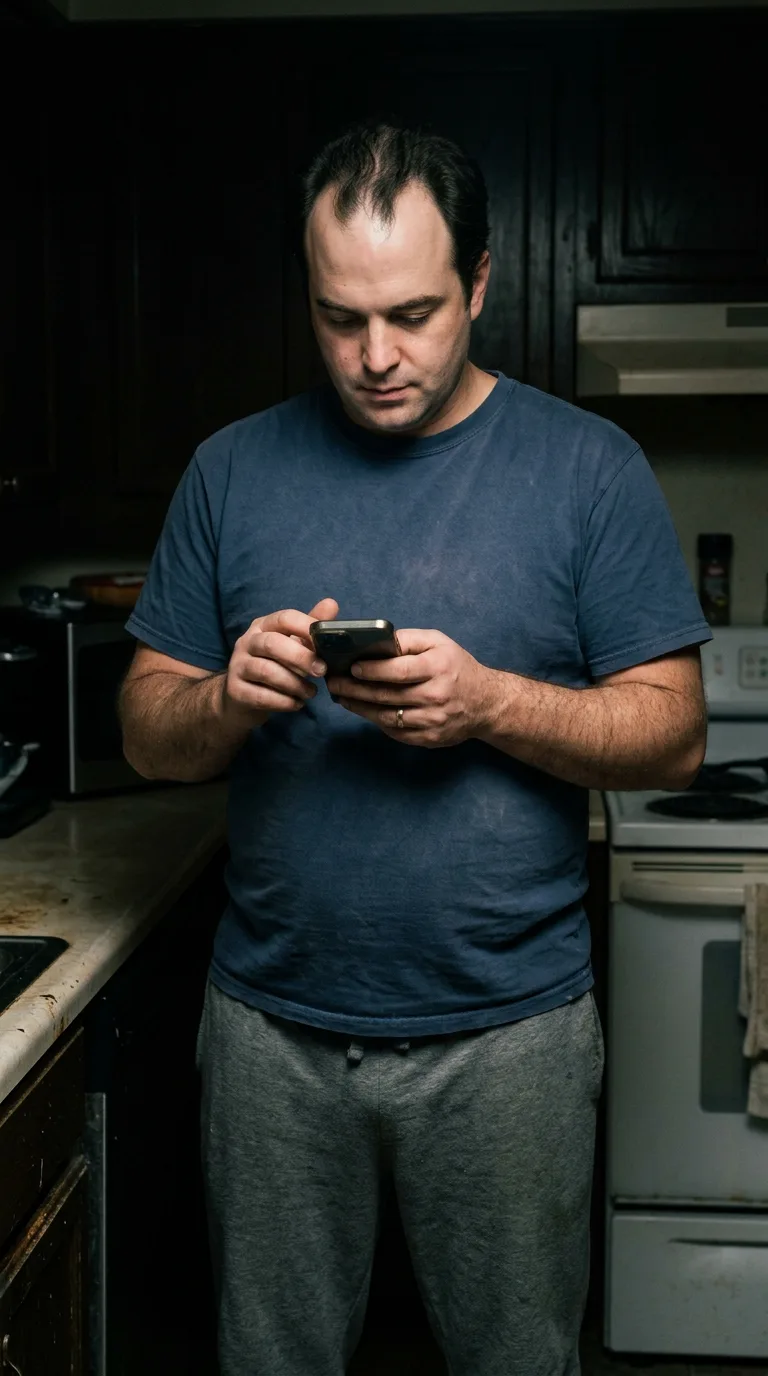
Rarest thing about him: Well off — $500k to $1M — epic, 1 in 120
Season 0seed 1947995826 · engine v10
Character card
lineage 2NZHHJ
His body-swap story
@colin.hasbrook, wearing Wendell Thundercloud, rolled the wheel on and woke up as Paul Yankovich, spent under a minute in him, then spun the wheel and woke up as Ezra Cantu
Wendell Thundercloud's hands smell like formaldehyde no matter how long he scrubs them, and that is the thought that finally does it — not the third body of the day, not the widow who couldn't stop touching her husband's cold sleeve, but the smell that won't come off skin that isn't yours to begin with. Fifty-one years old, a nose that healed crooked forty years ago, a belly that hangs the same tired way over the sink every night. You've been him less than a minute and you already know the rest of the way this Monday goes: reheated dinner alone, television, the particular ache in his lower back from bending over tables all day. You open the laptop instead. The page loads the way it always loads — plain, patient, a wheel waiting on it like it has all the time in the world, which it does, because it isn't the one spending it. You pay. You spin.
The kitchen is dark and it is not your kitchen, and the phone in your hand is not your phone, and your thumb is still lifted an inch off the glass where a price just stopped it cold. Four thousand, two hundred dollars, a watch with a name on it that means nothing to you and everything, apparently, to the man whose eyes you're behind. The hand turns the phone face-down on the counter, on its own, before you've told it anything. It doesn't pick it back up. Somewhere in Boston a storm door is rattling faintly on its hinges from the wind outside, and you are five inches shorter than you were a second ago, and heavier through the middle in a different way, softer, and your knee — his knee — is already going, bouncing against the cabinet under the counter in a rhythm that started before you got here and doesn't know you've arrived.
The countertop under your palm is a memory before it's anything else: Formica, cool, a little tacky near the stove where grease never quite wipes clean, and it comes to you that you — he — scrubbed this same six inches of counter on a Sunday two years ago until his wife told him to stop, that it was fine, that he didn't have to fix everything with his hands. Paul. The name arrives with the counter, the way his mother says it on the phone every Sunday, disappointed-fond. Paul Yankovich, thirty-four, and the sweatpants against your legs remember themselves too: elastic gone soft at the waist, a hole starting at one knee he keeps meaning to throw out and doesn't, because Denise likes them on him, says he looks like himself in them, whatever that means to her. The t-shirt is a workday shirt worn home, and it gives you the morning whole — his hands buttoning nothing because it's a pullover, but the specific ache of pulling it over his head with his shoulder already tender from the suction lifter, from muscling a plate glass storefront pane into a frame that didn't want it, six hours in the cold with his knuckles going white around the handles. His hands know glass. They know it the way some men know wood or dough — the weight of a full sheet before you lift it, the sound it makes when it's about to go, a hair-thin difference between a ping that means nothing and one that means get everyone back. He has cut himself twice in twelve years and remembers both scars like anniversaries, though the facts won't let you find them on him now, only the fear of them, still there under the skin.
The wedding band is warm from his own hand, and that's a whole year by itself: Denise in a dress her sister altered twice, a hall in Dorchester, his mother crying into a napkin, the vows he wrote himself and then panicked and half-forgot, saying I do like it was the last solid thing in the room. He loves her uncomplicatedly, which is rare enough in what comes through that you notice it, the way you notice weather. No children, and there's a small worn place in him around that, touched and left alone quickly, like a bruise he's stopped checking. The pack of cigarettes in the counter's junk drawer — you can feel it there without seeing it, the way you feel a tooth you're not chewing on — brings the porch back, the triple-decker's back steps at six a.m., smoke going up into cold gray light before the shift, the only ten minutes of the day that are only his. There's a pill bottle somewhere in the bathroom cabinet with his name typed small on the label, and touching the thought of it brings a doctor's office, fluorescent, a form with boxes checked, relief bigger than shame the day he finally went in. Church on Sundays, a pastor who knows his name, a God he talks to mostly while driving, mostly about money. Half a million dollars sitting quiet in accounts he doesn't spend from, inherited and invested and untouched, while he stands in a dark kitchen scrolling watches he has decided, every single night, that he cannot have.
The leg is still bouncing. It hasn't stopped since before you got here and it doesn't stop now, small and constant against the cabinet, a motor running under a man who thinks he's still.
You lift the hand off the counter and look at it — thicker fingers than Wendell's, a paler back to it, the ring catching what little light the room has. You turn it over once, like checking it's real, like checking it's yours.
"Denise," you say, to the dark kitchen, to nobody, just to hear whose voice you're borrowing, "I'm gonna head to bed."
It isn't true yet. You don't move. Somewhere a wheel is still warm from spinning, and there is no telling, not to you and not to him, wherever the rest of him has gone, how many Mondays this one gets.