Paul Ferretti
Fictional. Generated by AI — not a real person, and no likeness of one is intended.
26, priest in Boston · rolled by @colin.hasbrook · card — no film
History
who has worn him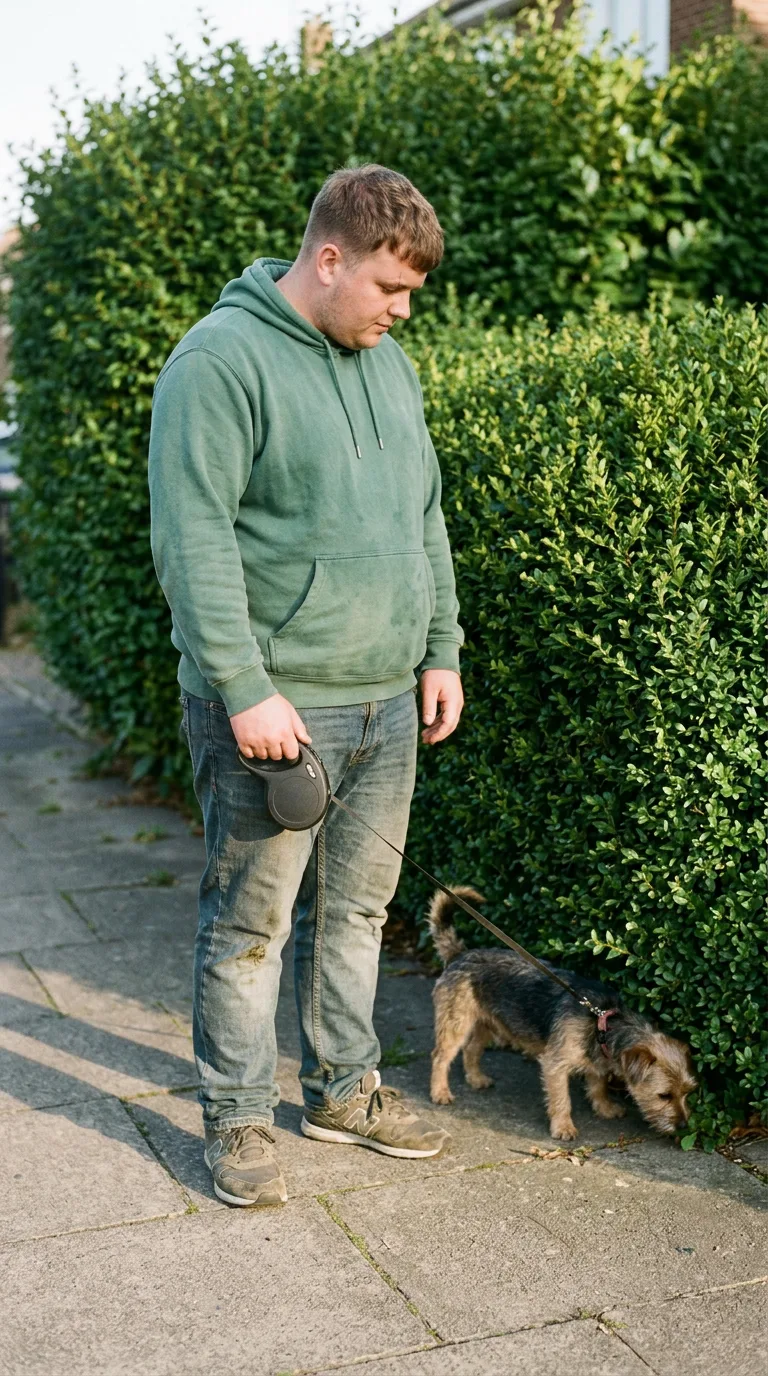
Rarest thing about him: Ex-spouse — rare, 1 in 33
Season 0seed 2054875934 · engine v10
Character card
lineage 2NZHHJ
His body-swap story
@colin.hasbrook, wearing Cody Strasser, rolled the wheel on and woke up as Paul Ferretti, spent under a minute in him, then spun the wheel and woke up as Warren Kaczmarek
You are one minute into being Cody Strasser when you decide he is not the one, and the ring is why.
You spun him up out of boredom with the last guy, and the boredom did not even survive the landing. Cody Strasser is standing in his own gym in Phoenix, the heavy bags swaying from someone who just walked past them, and the smell coming off the canvas is old sweat and liniment, and it is a smell you already know too well from the last twenty bodies who ever laced a glove. Your hand — his hand — throbs low in the knuckles, an old break that never set right, and you understand in the flash of taking him that this is a man made entirely of impact: giving it, absorbing it, teaching other people to do both. You did not want another body that hurts like a stopped clock. You wanted something with a different kind of weight to it. So the wanting comes back before the minute is even up, familiar as a habit, and you are already walking toward the front desk, toward the tablet bolted there for members to check in, because vessel.cards loads on anything with a screen and you have long since stopped needing more than that.
You spin.
The leash is real in your hand before anything else is. It has gone slack, and the slack itself is the first thing you notice — a small mechanical give, a coiled tension gone soft — because a dog has stopped pulling and is nose-down in a hedge that smells, from somewhere very far under this new awareness, like every other hedge on this street. You are standing on a sidewalk. It is not the sidewalk you expected because you did not expect a sidewalk at all. The evening here is grayer and older than the one you left, low autumn light going flat behind clouds, and it is cold in a way Phoenix has not been cold in your memory of it, this month or any month. Your body is shorter, wider through the middle, planted low and solid on two feet that already know how to stand still for long periods. A collar is snug at your throat — no, not a collar, a strip of white plastic sitting in a black band, and above it your own jaw feels heavier than it should, softer, unshaven since morning. Your free hand winds the leash twice around itself, out of some reflex that is not yours yet, and the dog looks up, ears back, waiting to see what you're going to do about it.
The hoodie is the first door in. Green, worn soft at the cuffs, and the moment your fingers brush the drawstring you are standing in a bedroom on the second floor of a triple-decker, morning light coming sideways through a blind that never sits flush, and you are — he is — pulling this exact hoodie over a black clergy shirt he already changed out of an hour before, because Tuesday afternoons after the last confession slot he goes straight to Marisol's to pick up the dog and he learned early that nobody expects Father Ferretti to walk a terrier in his collar. The shirt is folded on the bed behind him in the memory, the white tab still clipped in the placket, waiting for tomorrow's Mass. He likes the hoodie. It is the only piece of clothing he owns that has nothing to do with anybody but him.
The jeans give you more — mud at the knee that means he knelt in Mrs. Okafor's garden last week helping her stake tomatoes that were already dead for the season, because she asked and because saying no to an eighty-one-year-old woman about tomatoes felt like a sin he wasn't equipped for. The sneakers are three years old and have walked the same nine blocks to the rectory so many times his feet correct for a crack in the pavement two doors down without being told.
The leash itself is the deepest one. It belongs to Whiskey, his sister Marisol's dog, and Tuesday evenings are his to take him because Marisol works a shift that runs late and their mother can't manage the stairs anymore, and somewhere in the taking of the dog is the whole shape of a family that leans on him without ever quite saying thank you for it — the older brother, then the only son who became a priest, which in that family was less a calling anyone questioned and more a fact that arrived early and settled like weather. You get his ordination in one long unbroken pull, the incense and his mother crying into a tissue she'd had folded in her sleeve for exactly that purpose, and three feet to his left, in the pew, his wife-that-would-be, though of course she wasn't yet — Colleen, before any of it, before the annulment, before two years of a marriage that cracked under a vocation neither of them had actually finished discerning before the wedding. He does not think about her walking. He thinks about her constantly not-walking, the drills sergeant-quiet part of every evening where he has trained himself not to.
His body carries its own weather too — the blood pressure medication in the cabinet by the sink he takes without water most mornings, the heaviness in his chest after two flights of stairs that he has stopped mentioning to his doctor because mentioning it means more tests, the eyebrow scar that itches faintly in cold weather from a bike accident at nine years old, stitches done badly by a resident in a rush. His hands are a working man's hands wearing a collar's life — thick-fingered, good at small precise things anyway: unlocking the tabernacle, threading a rosary through a dying man's fingers, holding a leash steady while a small dog commits to a hedge.
You look down at that hand now. It is not the hand you had a minute ago in a gym six time zones and one identity away. This one is pale, cold at the knuckle, a groove worn into the third finger where a ring used to sit and doesn't anymore. You turn it over slow, like checking it for damage, and Whiskey finally pulls free of the hedge and looks up at you, waiting, the way he's waited on this same stretch of sidewalk a hundred Tuesdays that were never yours.
"Okay," you say, out loud, to no one, your breath going pale in the cold. "Okay. Let's go home."
You start walking. The dog has to trot to catch the new stride.