Patrick Novosad
Fictional. Generated by AI — not a real person, and no likeness of one is intended.
30, chief executive in Atlanta · rolled by @marco.villagrana · card — no film
History
who has worn him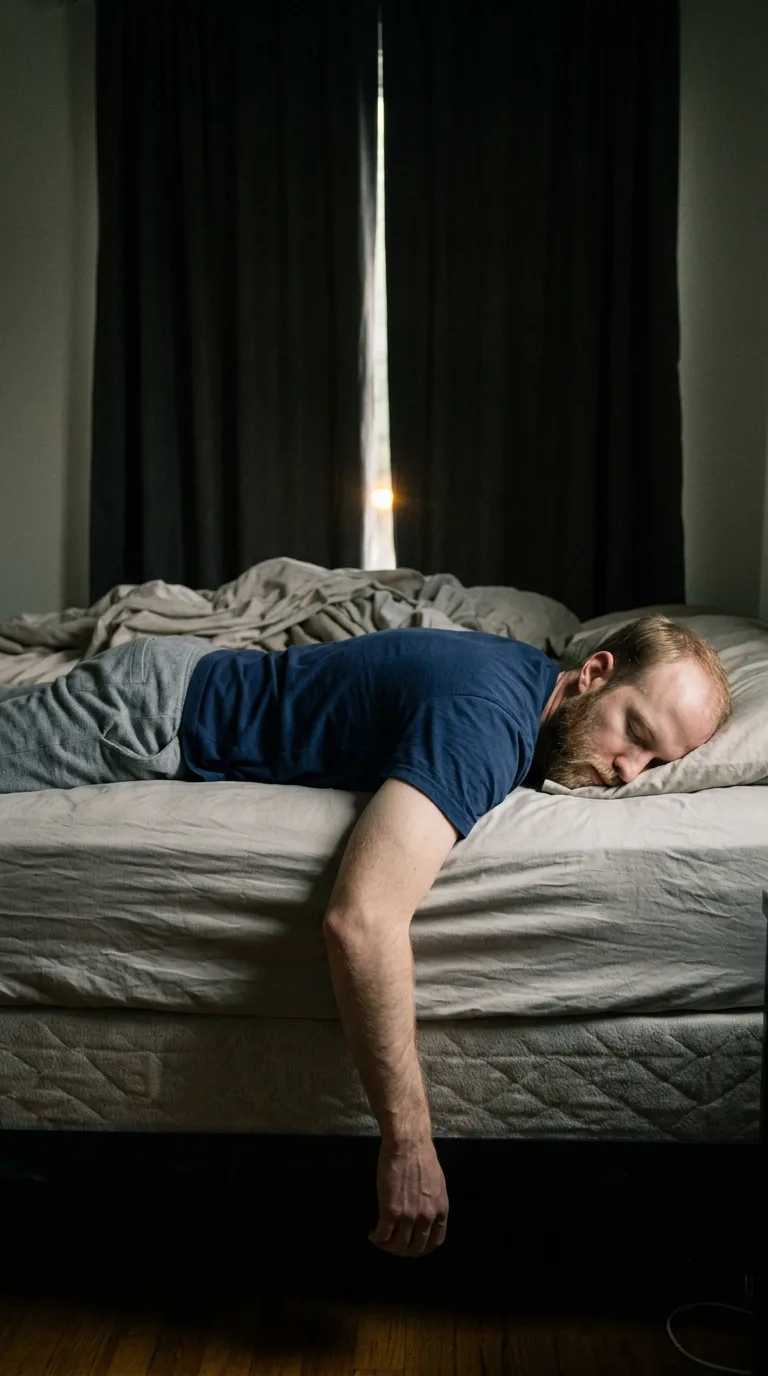
Rarest thing about him: A burn scar — uncommon, 1 in 164
Season 1seed 1748659377 · engine v11
Character card
lineage LJL8SV
His body-swap story
@marco.villagrana, wearing Óscar Peña-Rivas, rolled the wheel on and woke up as Patrick Novosad, spent 4 minutes in him, then spun the wheel and woke up as Kaleo Freitas
The office chair is bad for the back you're borrowing. Óscar Peña-Rivas has a lumbar problem, forty years old, gray at the temples, gold tooth catching the light every time he laughs at a client on speakerphone, and you have been him for three minutes and already you know you don't want the rest of the afternoon inside it. It's not the back. It's the phone call — a man named Reyes going on about quarterly projections in a voice like a dial tone — and it's the sudden, total conviction that El Paso at two in the afternoon is the least interesting place a person could be standing. You paid for Óscar. You spun for Óscar. You are already bored of Óscar, and the boredom feels like hunger, and the hunger has a name and it's vessel.cards, still open in a tab beneath the spreadsheet, the wheel motionless and waiting the way it always waits, patient as a slot machine that never has to hurry because you always come back. You put your gold tooth away behind a smile Reyes can't see, mute the call, and spin.
The breath changes first — ragged in, even out, one single exchange — and then the arm. It had been hanging off the mattress into cooler air, dead weight, and now it draws itself up on its own, elbow bending, and you feel the shoulder take the work of it like a machine coming back online. Hands meet at the chest. You did not put them there. Something in the body did, some old obedient reflex that has never once in thirty years arranged itself this way in sleep, and you understand, distantly, that you are new here and the body is not, and for a second the two facts sit uneasily on top of each other before the second one wins, because it always does.
Streetlight through a gap in curtains. A queen mattress with a memory-foam give to it. A room that smells like fabric softener and, underneath, very faintly, the ghost of adhesive bandage — burn cream, old and long since finished, the tube probably still in a drawer somewhere out of guilt more than use.
That's the neck. You haven't touched it yet and it's already talking.
Your palm finds it without meaning to — a man checking himself in the dark, an old habit — and the scar gives up its story sideways, the way all of this comes: not a scene, a temperature. Nineteen years old. A grease fire that shouldn't have happened, a restaurant kitchen in Marietta, a manager who screamed the wrong instruction and a boy who obeyed it. Eleven weeks of dressing changes. The reason he keeps the beard exactly as long as it is, joined at the jaw, not for style but because it is the one length that sits over the worst of the shine without looking like it's trying to hide anything. Patrick Novosad has never once discussed this with a stranger who didn't ask first, and most don't ask, and he has decided that not-asking is a kind of grace he extends people, so he extends it back.
The sheets under your back are Egyptian cotton his girlfriend bought him — Denise, thirty-two, a physical therapist, asleep four miles away in her own apartment tonight because Wednesdays are his early-to-bed nights before the Thursday board call, and she has learned, in eight months, to let him have them. You feel the specific fondness of that arrangement, unglamorous and real, the kind of love that shows up as *she knows what night it is without being told.* And behind that, quieter, an old ex-girlfriend's name sitting in the body like a stone worn smooth — Amanda, seven years gone, not missed exactly, just present, the way a scar is present, something the hand goes back to sometimes without deciding to.
The shirt is folded on the chair by morning — you're not wearing it now, you're wearing a navy T-shirt gone soft with washing, but the memory of the white oxford comes anyway, because it's what his hand touched last, hanging it there before bed for tomorrow: cuffs rolled twice, not once, a habit from his first CFO job when a mentor told him rolled sleeves make you look like you do things instead of sign things. Pen in the pocket. Belt looped through by feel, buckle worn shiny on the left side where his gut has, over five years of good catering and long hours, gone soft in a way the gym membership was supposed to fix and hasn't. He knows exactly how his stomach sits over his waistband now and he has stopped hating it, mostly, on the good days.
The scalp under your palm when you drag a hand back through the hair — thin up top, receding at the crown, and he is thirty and has made peace with it the way skinny-fat men make peace with things: quietly, alone, at 6 a.m. in a bathroom mirror, deciding a haircut this short is dignity rather than defeat.
The company comes in through the mattress itself, the exact firmness of it, chosen because his back started going in his late twenties from all the standing — client dinners, ribbon-cuttings, a hundred conference stages — the small quiet cost of being the kind of chief executive who is on his feet more than he sits. You feel that ache now, low and familiar, a body that works and has been worked.
His faith comes through the room, not the objects — a compass app closed on the phone somewhere on the nightstand, Wednesday's fifth prayer already behind him, the ease of a man who has folded it into a corporate day for a decade and stopped finding that strange. No bottle anywhere in this house. Never has been. He doesn't miss it because he never had it to miss.
You are deep in his numbers too — that arrives last and heaviest, a man thirty years old with a title that photographs well and a balance sheet that does not, obligations from an expansion that went bad two years back, the particular exhaustion of being underwater and smiling through the quarterly call anyway. It sits in the chest like the beginning of the burn, dull, old, survivable.
Your hand comes up in front of your face in the dark — his hand, thick-fingered, a plain watch strap ghost-warm on the wrist though the watch itself is on the dresser tonight. You turn it over once.
"Not yet," you say, to the empty room, to Denise asleep across town, to nobody, and it comes out in his voice, low and a little rough with disuse, and you don't yet know if you mean the debt, or the girlfriend, or how long you're staying.