Patrick Muldowney
Fictional. Generated by AI — not a real person, and no likeness of one is intended.
28, welder in Philadelphia · rolled by @colin.hasbrook · card — no film
History
who has worn him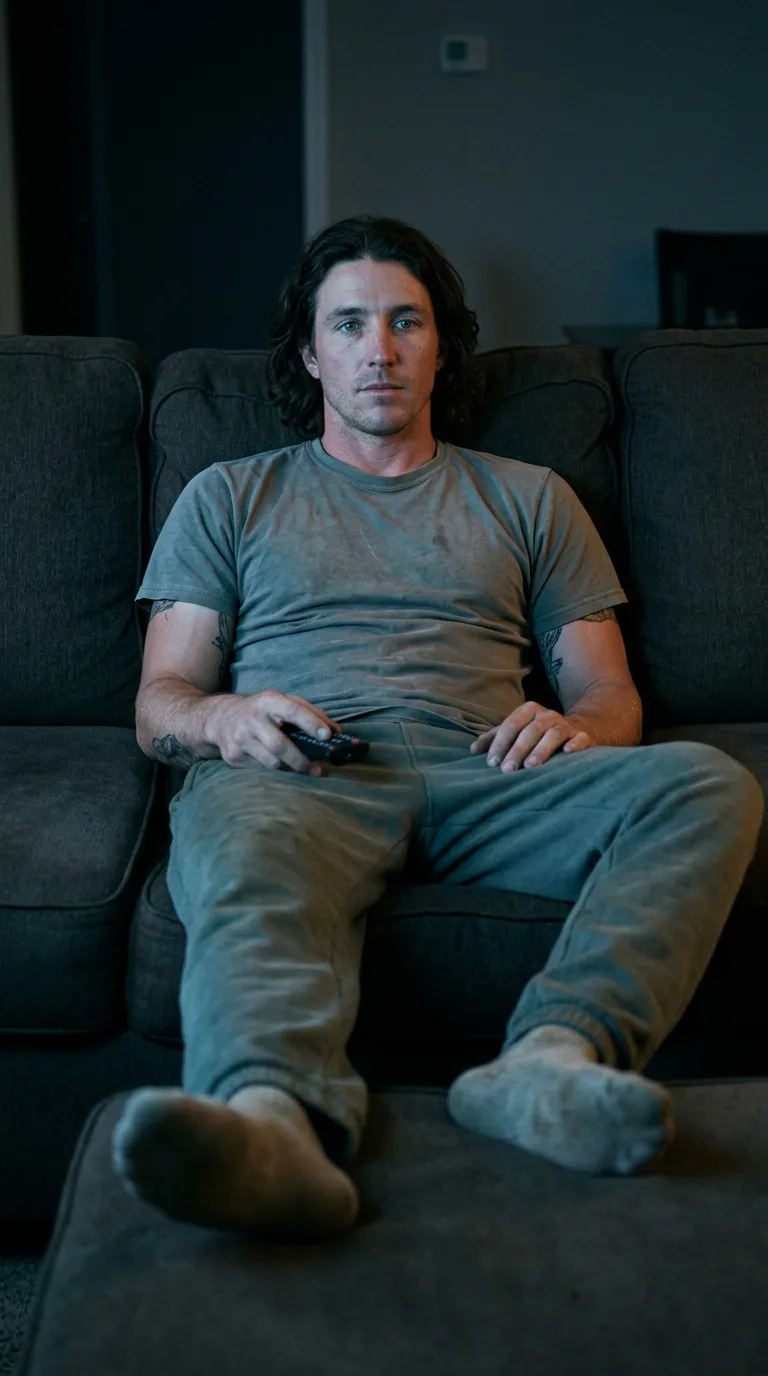
Rarest thing about him: ADHD, diagnosed as an adult — rare, 1 in 31
Season 0seed 1750270629 · engine v10
Character card
lineage 2NZHHJ
His body-swap story
@colin.hasbrook, wearing Sione Havili, rolled the wheel on and woke up as Patrick Muldowney, spent 1 minute in him, then spun the wheel and woke up as Walter Prusinski
Sione's hands are wrong on the tablet — big, careful, a beauty mark riding the second knuckle where you keep noticing it instead of the wheel. Sixty-one years of somebody else's back are already complaining about the folding chair in his own office trailer, over on Ashland, where a job you did not want to think about anymore sits half-invoiced on the desk. You have been him less than a minute and you already know the shape of tonight: a phone call from a wife who is not yours to have a marriage with, a foreman waiting on a change order, the specific tiredness of a body that has done sixty-one years of standing up. None of it is unbearable. That is almost the problem. Eighty-four men and not one of them has been unbearable, and somewhere around forty you stopped waiting for unbearable and started just wanting the next one, the way a hand goes back to a bag of chips after it's not hungry anymore. You open the site with his thick thumb. You spin because the wheel is there and it is a Monday and Sione Havili's Monday, whatever is in it, is not going to be more interesting than this.
It gives you a couch, a dark room, a television going blue and gray across a face that is not looking at you because it is your face now.
The show cuts to something bright — a commercial, an explosion, you don't know yet — and in the flash of it you are sitting up straight before you've decided to, spine unspooling off the cushions on its own, a remote settling onto the couch arm under fingers that already knew where the couch arm was. Your breath goes in through a chest that is narrower than the one you left, younger, a heartbeat that hasn't done sixty-one years of anything. Green light off the TV crosses your knuckles. The room smells like someone microwaved something an hour ago and the smell is the first thing that isn't yours.
The sweatpants are what open first — worn thin at both knees, elastic gone soft at the waist, the kind of fabric that has been washed until it stopped being any particular color — and through them comes a Tuesday two years back, folding laundry on this same couch while a woman named Erin folded across from him, the two of them arguing without heat about whose turn it was to call the landlord about the radiator. Erin is not who he lives with now. The name that comes with these sweatpants is old, and it comes with a specific ache that has nothing to do with wanting her back and everything to do with being twenty-four and thinking a thing would last because it felt like it should.
The remote in your hand is next, small and cheap and missing its channel-up button, and it gives you nothing but repetition — nine hundred nights of exactly this, elbow on the armrest, socked feet up on the ottoman, a body coming down off twelve hours of heat and sparks the only way it knows how, which is by going completely still in front of something loud.
The shirt against your back is the deepest one. Gray, thin at the shoulders, and it remembers this morning whole: an alarm that went off twice before he silenced it, the fifteen minutes he lost to a drawer of socks that should not have taken fifteen minutes, the girlfriend — Dana, the name arrives soft and certain — already gone to work, her note on the counter that he read twice and still can't have told you what it said, because that's how the mind he's borrowing works, sideways, snagging. Pulling the shirt over his head this morning he'd caught himself mid-motion, arm through one sleeve, standing in the bedroom for eleven full seconds not doing anything, not thinking anything, just stalled, the way he stalls, the way the diagnosis three years ago finally had a name for. His hands know this shirt. They know the leather apron that hangs by the door for tomorrow, stiff with old heat, a pocket worn soft on one corner from a lighter he doesn't smoke, carried anyway out of habit from a friend who died young. They know a torch, a bead of weld going silver-white and then dull, the particular good tiredness of a body that made something today that will outlast it. Under your palms his nails are bitten down past where it looks intentional — he does it in trucks, in waiting rooms, doing it right now without you telling him to, teeth finding the ragged edge of a thumbnail before you catch it.
The couch under you holds a whole year of nights like this one — Dana's laugh somewhere down the hall, dishes, a game he half-watches, a mind that would not sit inside any one of them for more than ninety seconds if it could help it, so it doesn't fight that, it just lets the room wash through instead, and calls that resting.
You watch the rest of whatever this show is, and you do not laugh where he laughed twenty minutes ago at something dumb the same character did, because whatever is sitting in his chest now isn't the thing that used to find it funny.
You look down. The nail beds are pink and short, a stranger's hands doing a stranger's old habit without asking you first, and you turn one over slow in the blue light like it might tell you something the shirt didn't.
"Huh," you say, out loud, to no one, and it isn't his voice doing the thing his voice does — and somewhere behind your eyes there's already a wheel spinning, no date on it, no telling how long Philadelphia keeps you before some other Monday, some other body, starts looking better than this one.